
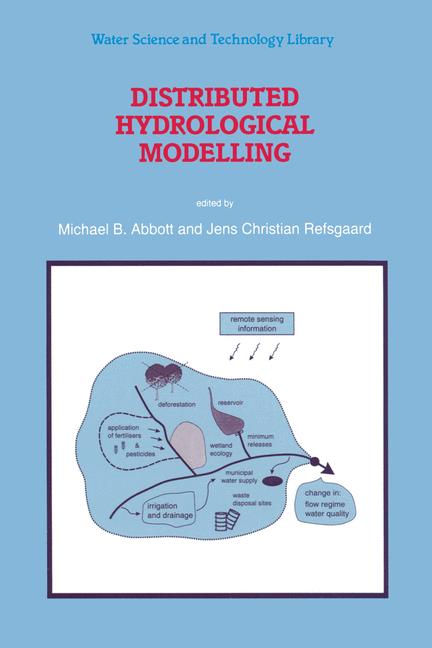
Distributed Hydrological Modelling
☆☆☆☆☆
(0 reviews)
Lowest price (incl. delivery)
21 468,00 JPY
Typical price3 130,79 PLN
Lowest (90 days)129,99 PLN
Offers6
Last updated1 hafta önce
Price history (90 days)
Full history
2026-08-08
2026-08-15
| Güncellenme Tarihi | Fiyat |
|---|---|
| 2026-08-08 | 129,99 |
| 2026-08-15 | 155,99 |
| Satıcı | Product price | Delivery | Toplam | Stok Durumu | Updated | |
|---|---|---|---|---|---|---|
| SP SpringerNatureLink Shop INT | 21 449,00 JPY | 19,00 JPY | 21 468,00 JPY | Mevcut | 3 gün önce | View offer |
| SP Springer Nature Author | 21 449,00 JPY | 29,00 JPY | 21 478,00 JPY | Mevcut | 1 hafta önce | View offer |
| SP SpringerNatureLink Shop INT | 149,99 USD | 29,00 USD | 178,99 USD | Mevcut | 3 gün önce | View offer |
| SP SpringerNatureLink Shop INT | 169,99 USD | 29,00 USD | 198,99 USD | Mevcut | 3 gün önce | View offer |
| SP SpringerNatureLink Shop INT | 169,99 USD | 15,00 USD | 184,99 USD | Mevcut | 3 gün önce | View offer |
| SP SpringerNatureLink Shop INT | 177,00 EUR | free | 177,00 EUR | Mevcut | 3 gün önce | View offer |
Fiyatlar ve stok durumu değişebilir. Son Güncelleme: 08.08.2026 23:33.
0,0
☆☆☆☆☆
0 reviews
5★
0%
4★
0%
3★
0%
2★
0%
1★
0%
Product reviews
No reviews yet — be the first!
It is the task of the engineer, as of any other professional person, to do everything that is reasonably possible to analyse the difficulties with which his or her client is confronted, and on this basis to design solutions and implement these in practice. The distributed hydrological model is, correspondingly, the means for doing everything that is reasonably possible - of mobilising as much data and testing it with as much knowledge as is economically feasible - for the purpose of analysing problems and of designing and implementing remedial measures in the case of difficulties arising within the hydrological cycle. Thus the aim of distributed hydrologic modelling is to make the fullest use of cartographic data, of geological data, of satellite data, of stream discharge measurements, of borehole data, of observations of crops and other vegetation, of historical records of floods and droughts, and indeed of everything else that has ever been recorded or remembered, and then to apply to this everything that is known about meteorology, plant physiology, soil physics, hydrogeology, sediment transport and everything else that is relevant within this context. Of course, no matter how much data we have and no matter how much we know, it will never be enough to treat some problems and some situations, but still we can aim in this way to do the best that we possibly can.
Similar products
 50 Years of Philosophy and Medicine
from $107.30
50 Years of Philosophy and Medicine
from $107.30
 Understanding Cybersecurity Law and Digital Privacy
from $122.63
Understanding Cybersecurity Law and Digital Privacy
from $122.63
 Decisions in International Trade and Logistics
from $122.63
Decisions in International Trade and Logistics
from $122.63
 Advances in Economic Measurement
from $122.63
Advances in Economic Measurement
from $122.63
 Nanomaterials
from $137.96
Nanomaterials
from $137.96
 Sustainable Scaffolds-based Strategies in Tissue Engineering and Regenerative Medicine
from $162.87
Sustainable Scaffolds-based Strategies in Tissue Engineering and Regenerative Medicine
from $162.87
 Narratives in Educational Research
from $162.87
Narratives in Educational Research
from $162.87
 Environmental Biology of the Young Chinese Sturgeon
from $210.78
Environmental Biology of the Young Chinese Sturgeon
from $210.78