
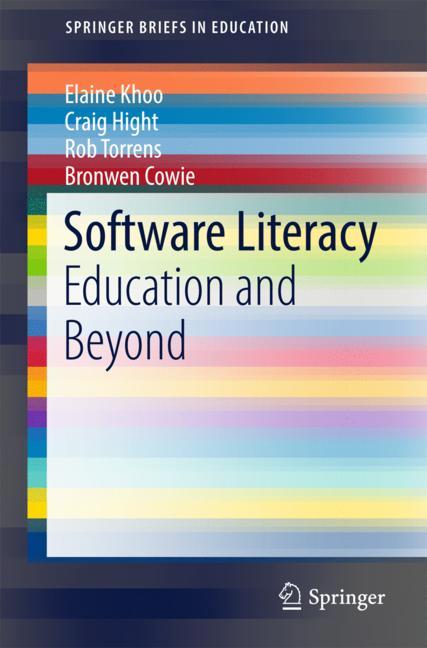
Software Literacy
☆☆☆☆☆
(0 reviews)
Lowest price (incl. delivery)
7 168,00 JPY
Typical price524,57 PLN
Lowest (90 days)35,99 PLN
Offers6
Last updatedhá 1 semana
Price history (90 days)
Full history
2026-08-08
2026-08-15
| Atualizado em | Preço |
|---|---|
| 2026-08-08 | 39,99 |
| 2026-08-14 | 35,99 |
| 2026-08-15 | 51,99 |
| Vendedor | Product price | Delivery | Total | Disponibilidade | Updated | |
|---|---|---|---|---|---|---|
| SP SpringerNatureLink Shop INT | 7 149,00 JPY | 19,00 JPY | 7 168,00 JPY | Disponível | há 4 dias | View offer |
| SP Springer Nature Author | 7 149,00 JPY | free | 7 149,00 JPY | Disponível | há 1 semana | View offer |
| SP SpringerNatureLink Shop INT | 49,99 USD | free | 49,99 USD | Disponível | há 5 dias | View offer |
| SP SpringerNatureLink Shop INT | 54,99 USD | free | 54,99 USD | Disponível | há 5 dias | View offer |
| SP SpringerNatureLink Shop INT | 54,99 USD | 29,00 USD | 83,99 USD | Disponível | há 5 dias | View offer |
| SP SpringerNatureLink Shop INT | 59,00 EUR | 19,00 EUR | 78,00 EUR | Disponível | há 5 dias | View offer |
Os preços e a disponibilidade podem mudar. Última Atualização: 08.08.2026 23:09.
0,0
☆☆☆☆☆
0 reviews
5★
0%
4★
0%
3★
0%
2★
0%
1★
0%
Product reviews
No reviews yet — be the first!
This book explores the notion of software literacy, a key part of digital literacy which all contemporary students and citizens need to understand. Software literacy involves a critical understanding of how the affordances and conceptual approaches of everything from operating systems, creative apps and media editors, to software-based platforms and infrastructures work to inform and shape the ways we think and act. As a cultural artefact, programing code plays a role in reproducing, reinforcing, and augmenting existing cultural practices, as well as generating completely new coded practices. A proposed three-tier framework for software literacy is the focus for a two-year empirical investigation into how tertiary students become more literate about the nature and implications of software they encounter as part of their tertiary studies. Two case studies of software learning and use in university-level engineering and screen & media studies courses are presented, investigating the mapping of students’ trajectory of the learning of desktop applications against this framework for software literacy. Though the book’s focus is primarily educational, its content also has implications for any field that makes use of software and information & communication technology systems and applications. As such, the book will be of interest to all readers whose work involves the challenges and opportunities presented by software-based teaching and learning; and to those interested in how software impacts the workplace and leisure activities that make up our day-to-day lives.
Similar products
 50 Years of Philosophy and Medicine
from $107.30
50 Years of Philosophy and Medicine
from $107.30
 Understanding Cybersecurity Law and Digital Privacy
from $122.63
Understanding Cybersecurity Law and Digital Privacy
from $122.63
 Decisions in International Trade and Logistics
from $122.63
Decisions in International Trade and Logistics
from $122.63
 Advances in Economic Measurement
from $122.63
Advances in Economic Measurement
from $122.63
 Nanomaterials
from $137.96
Nanomaterials
from $137.96
 Sustainable Scaffolds-based Strategies in Tissue Engineering and Regenerative Medicine
from $162.87
Sustainable Scaffolds-based Strategies in Tissue Engineering and Regenerative Medicine
from $162.87
 Narratives in Educational Research
from $162.87
Narratives in Educational Research
from $162.87
 Environmental Biology of the Young Chinese Sturgeon
from $210.78
Environmental Biology of the Young Chinese Sturgeon
from $210.78