
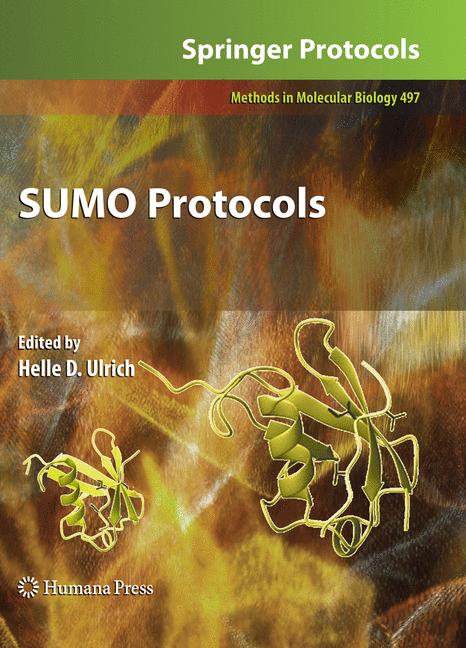
SUMO Protocols
☆☆☆☆☆
(0 reviews)
Lowest price (incl. delivery)
20 759,00 JPY
Typical price5 305,09 PLN
Lowest (90 days)152,96 PLN
Offers4
Last updated1 week ago
Price history (90 days)
Full history
2026-08-08
2026-08-15
| Updated At | Price |
|---|---|
| 2026-08-08 | 159,49 |
| 2026-08-15 | 152,96 |
| Seller | Product price | Delivery | Total | Availability | Updated | |
|---|---|---|---|---|---|---|
| SP SpringerNatureLink Shop INT | 20 734,00 JPY | 25,00 JPY | 20 759,00 JPY | Available | 1 day ago | View offer |
| SP Springer Nature Author | 20 734,00 JPY | 25,00 JPY | 20 759,00 JPY | Available | 1 week ago | View offer |
| SP SpringerNatureLink Shop INT | 144,99 USD | 25,00 USD | 169,99 USD | Available | 1 day ago | View offer |
| SP SpringerNatureLink Shop INT | 171,50 EUR | 15,00 EUR | 186,50 EUR | Available | 1 day ago | View offer |
Prices and availability may change. Last Updated: 08.08.2026 23:33.
EAN
9781617379451
Springer Nature
0,0
☆☆☆☆☆
0 reviews
5★
0%
4★
0%
3★
0%
2★
0%
1★
0%
Product reviews
No reviews yet — be the first!
Post-translational protein modifications by members of the ubiquitin family are widely recognized as important regulatory control systems for a variety of biological pathways. Their influence on eukaryotic cellular metabolism is comparable to that of other modifi- tions such as phosphorylation, acetylation and methylation. The small ubiquitin-related modifier SUMO uses a conjugation and de-conjugation system closely related to that of ubiquitin itself; yet, the functions of the SUMO system are highly diverse and largely independent of the ubiquitin system. SUMO modification controls the activity of tr- scription factors and can influence protein stability, but it also contributes to nucleo-cy- plasmic transport, chromosome segregation and DNA damage repair. As a consequence, the SUMO system pervades virtually all areas of basic molecular and cell biology, and scientists from different backgrounds, including medical researchers, are likely to enco- ter SUMO in the course of their studies. This volume, SUMO Protocols, therefore aims at presenting a collection of methods relevant to SUMO research in order to make these tools available to biochemists, molecular and cell biologists as well as research-oriented clinicians not yet familiar with the system. In contrast to the ubiquitin system, which has been the subject of several reviews and methods collections, no practical compendium entirely devoted to SUMO has been p- lished.
Similar products
 50 Years of Philosophy and Medicine
from $107.30
50 Years of Philosophy and Medicine
from $107.30
 Understanding Cybersecurity Law and Digital Privacy
from $122.63
Understanding Cybersecurity Law and Digital Privacy
from $122.63
 Decisions in International Trade and Logistics
from $122.63
Decisions in International Trade and Logistics
from $122.63
 Advances in Economic Measurement
from $122.63
Advances in Economic Measurement
from $122.63
 Nanomaterials
from $137.96
Nanomaterials
from $137.96
 Sustainable Scaffolds-based Strategies in Tissue Engineering and Regenerative Medicine
from $162.87
Sustainable Scaffolds-based Strategies in Tissue Engineering and Regenerative Medicine
from $162.87
 Narratives in Educational Research
from $162.87
Narratives in Educational Research
from $162.87
 Environmental Biology of the Young Chinese Sturgeon
from $210.78
Environmental Biology of the Young Chinese Sturgeon
from $210.78