
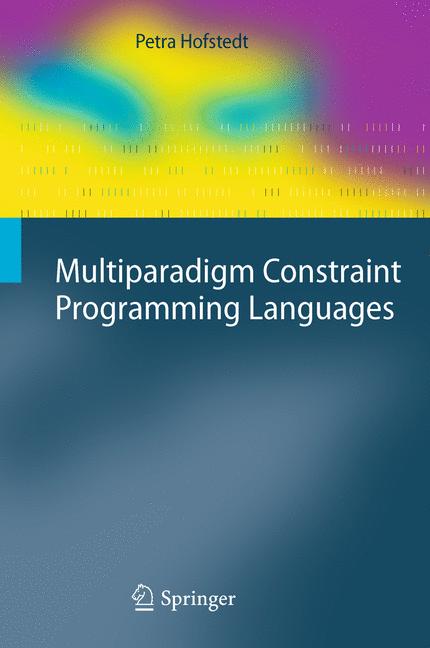
Multiparadigm Constraint Programming Languages
☆☆☆☆☆
(0 reviews)
Lowest price (incl. delivery)
14 324,00 JPY
Typical price1 131,22 PLN
Lowest (90 days)71,50 PLN
Offers6
Last updated6 days ago
Price history (90 days)
Full history
2026-08-08
2026-08-15
| Updated At | Price |
|---|---|
| 2026-08-08 | 84,99 |
| 2026-08-15 | 71,50 |
| Seller | Product price | Delivery | Total | Availability | Updated | |
|---|---|---|---|---|---|---|
| SP SpringerNatureLink Shop INT | 14 299,00 JPY | 25,00 JPY | 14 324,00 JPY | Available | 10 hours ago | View offer |
| SP Springer Nature Author | 14 299,00 JPY | 29,00 JPY | 14 328,00 JPY | Available | 6 days ago | View offer |
| SP SpringerNatureLink Shop INT | 99,99 USD | 15,00 USD | 114,99 USD | Available | 15 hours ago | View offer |
| SP SpringerNatureLink Shop INT | 109,99 USD | 15,00 USD | 124,99 USD | Available | 14 hours ago | View offer |
| SP SpringerNatureLink Shop INT | 109,99 USD | free | 109,99 USD | Available | 14 hours ago | View offer |
| SP SpringerNatureLink Shop INT | 118,00 EUR | free | 118,00 EUR | Available | 14 hours ago | View offer |
Prices and availability may change. Last Updated: 08.08.2026 23:21.
0,0
☆☆☆☆☆
0 reviews
5★
0%
4★
0%
3★
0%
2★
0%
1★
0%
Product reviews
No reviews yet — be the first!
Programming languages are often classified according to their paradigms, e.g. imperative, functional, logic, constraint-based, object-oriented, or aspect-oriented. A paradigm characterizes the style, concepts, and methods of the language for describing situations and processes and for solving problems, and each paradigm serves best for programming in particular application areas. Real-world problems, however, are often best implemented by a combination of concepts from different paradigms, because they comprise aspects from several realms, and this combination is more comfortably realized using multiparadigm programming languages. This book deals with the theory and practice of multiparadigm constraint programming languages. The author first elaborates on programming paradigms and languages, constraints, and the merging of programming concepts which yields multiparadigm (constraint) programming languages. In the second part the author inspects two concrete approaches on multiparadigm constraint programming – the concurrent constraint functional language CCFL, which combines the functional and the constraint-based paradigms and allows the description of concurrent processes; and a general framework for multiparadigm constraint programming and its implementation, Meta-S. The book is appropriate for researchers and graduate students in the areas of programming and artificial intelligence.
Similar products
 50 Years of Philosophy and Medicine
from $107.30
50 Years of Philosophy and Medicine
from $107.30
 Understanding Cybersecurity Law and Digital Privacy
from $122.63
Understanding Cybersecurity Law and Digital Privacy
from $122.63
 Decisions in International Trade and Logistics
from $122.63
Decisions in International Trade and Logistics
from $122.63
 Advances in Economic Measurement
from $122.63
Advances in Economic Measurement
from $122.63
 Nanomaterials
from $137.96
Nanomaterials
from $137.96
 Sustainable Scaffolds-based Strategies in Tissue Engineering and Regenerative Medicine
from $162.87
Sustainable Scaffolds-based Strategies in Tissue Engineering and Regenerative Medicine
from $162.87
 Narratives in Educational Research
from $162.87
Narratives in Educational Research
from $162.87
 Environmental Biology of the Young Chinese Sturgeon
from $210.78
Environmental Biology of the Young Chinese Sturgeon
from $210.78