
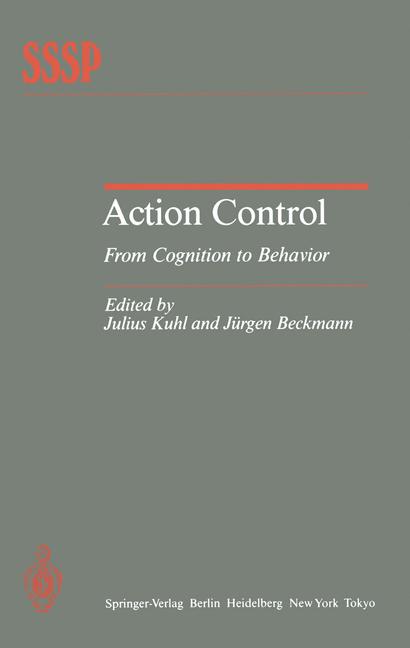
Action Control
☆☆☆☆☆
(0 reviews)
Lowest price (incl. delivery)
18 614,00 JPY
Typical price3 699,14 PLN
Lowest (90 days)135,19 PLN
Offers6
Last updated1 week ago
Price history (90 days)
Full history
2026-08-08
2026-08-15
| Updated At | Price |
|---|---|
| 2026-08-08 | 135,19 |
| 2026-08-15 | 135,19 |
| Seller | Product price | Delivery | Total | Availability | Updated | |
|---|---|---|---|---|---|---|
| SP SpringerNatureLink Shop INT | 18 589,00 JPY | 25,00 JPY | 18 614,00 JPY | Available | 3 days ago | View offer |
| SP Springer Nature Author | 18 589,00 JPY | 29,00 JPY | 18 618,00 JPY | Available | 1 week ago | View offer |
| SP SpringerNatureLink Shop INT | 129,99 USD | free | 129,99 USD | Available | 4 days ago | View offer |
| SP SpringerNatureLink Shop INT | 139,99 USD | 19,00 USD | 158,99 USD | Available | 4 days ago | View offer |
| SP SpringerNatureLink Shop INT | 139,99 USD | 25,00 USD | 164,99 USD | Available | 4 days ago | View offer |
| SP SpringerNatureLink Shop INT | 153,50 EUR | free | 153,50 EUR | Available | 4 days ago | View offer |
Prices and availability may change. Last Updated: 08.08.2026 23:30.
0,0
☆☆☆☆☆
0 reviews
5★
0%
4★
0%
3★
0%
2★
0%
1★
0%
Product reviews
No reviews yet — be the first!
"It is not thought as such that can move anything, but thought which is for the sake of something and is practical." This discerning insight, which dates back more than 2000years to Aristotle, seems to have been ignored by most psycholo gists. For more than 40years theories of human action have assumed that cogni tion and action are merely two sides of the same coin. Approaches as different as S-O-R behaviorism,social learning theory, consistency theories,and expectancy value theories of motivation and decision making have one thing in common: they all assume that "thought (or any other type of cognition) can move any thing," that there is a direct path from cognition to behavior. In recent years, we have become more and more aware of the complexities in volved in the relationship between cognition and behavior. People do not always do what they intend to do. Aside from several nonpsychological factors capable of reducing cognition-behavior consistency, there seems to be a set of complex psychological mechanisms which intervene between action-related cognitions, such as beliefs, expectancies, values, and intentions,and the enactment of the be havior suggested by those cognitions. In our recent research we have focused on volitional mechanismus which presumably enhance cognition-behavior consistency by supporting the main tenance of activated intentions and prevent them from being pushed aside by competing action tendencies.
Similar products
 50 Years of Philosophy and Medicine
from $107.30
50 Years of Philosophy and Medicine
from $107.30
 Understanding Cybersecurity Law and Digital Privacy
from $122.63
Understanding Cybersecurity Law and Digital Privacy
from $122.63
 Decisions in International Trade and Logistics
from $122.63
Decisions in International Trade and Logistics
from $122.63
 Advances in Economic Measurement
from $122.63
Advances in Economic Measurement
from $122.63
 Nanomaterials
from $137.96
Nanomaterials
from $137.96
 Sustainable Scaffolds-based Strategies in Tissue Engineering and Regenerative Medicine
from $162.87
Sustainable Scaffolds-based Strategies in Tissue Engineering and Regenerative Medicine
from $162.87
 Narratives in Educational Research
from $162.87
Narratives in Educational Research
from $162.87
 Environmental Biology of the Young Chinese Sturgeon
from $210.78
Environmental Biology of the Young Chinese Sturgeon
from $210.78