Immunological Synapse
☆☆☆☆☆
(0 reviews)
Lowest price (incl. delivery)
21 464,00 JPY
- Offers
- 6
- Last updated
- vor 3 Monaten
| Verkäufer | Product price | Delivery | Gesamt | Verfügbarkeit | Updated | |
|---|---|---|---|---|---|---|
| SpringerNatureLink Shop INT | Product price 21 449,00 JPY | Delivery 15,00 JPY | Gesamt 21 464,00 JPY | Verfügbarkeit Verfügbar | Updated vor 3 Monaten | View offer |
| SpringerNatureLink Shop INT | Product price 149,99 USD | Delivery 15,00 USD | Gesamt 164,99 USD | Verfügbarkeit Verfügbar | Updated vor 3 Monaten | View offer |
| SpringerNatureLink Shop INT | Product price 169,99 USD | Delivery free | Gesamt 169,99 USD | Verfügbarkeit Verfügbar | Updated vor 3 Monaten | View offer |
| …and 2 more variants from this seller (prices from 149,99 JPY to 21 449,00 JPY) | ||||||
| Springer Nature Author | Product price 21 449,00 JPY ▲ 12 018,1% | Delivery free | Gesamt 21 449,00 JPY | Verfügbarkeit Verfügbar | Updated vor 3 Monaten | View offer |
Preise und Verfügbarkeit können sich ändern. Zuletzt aktualisiert: 08.08.2026 23:34.
0,0
☆☆☆☆☆
0 reviews
5★
0%
4★
0%
3★
0%
2★
0%
1★
0%
Product reviews
No reviews yet — be the first!
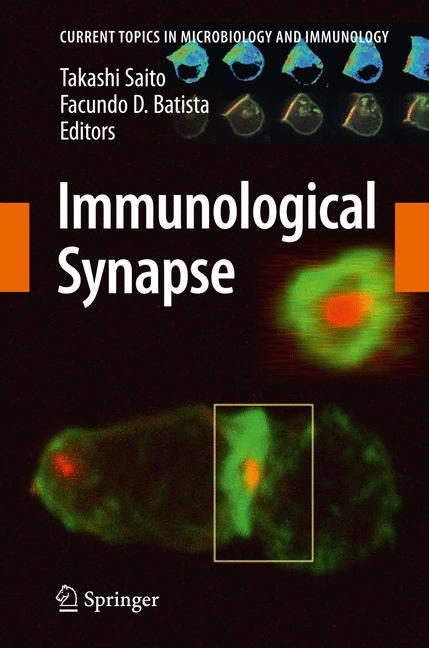
The proper physiological functioning of most eukaryotic cells requires their assembly into multi-cellular tissues that form organized organ systems. Cells of the immune system develop in bone marrow and lymphoid organs, but as the cells mature they leave these organs and circulate as single cells. Antigen receptors (TCRs) of T cells search for membrane MHC proteins that are bound to peptides derived from infectious pathogens or cellular transformations. The detection of such speci?c peptide–MHC antigens initiates T cell activation, adhesion, and immune-effectors functions. Studies of normal and transformed T cell lines and of T cells from transgenic mice led to comprehensive understanding of the mole- lar basis of antigen-receptor recognition and signaling. In spite of these remarkable genetic and biochemical advances, other key physiological mechanisms that par- cipate in sensing and decoding the immune context to induce the appropriate cellular immune responses remain unresolved. TCRrecognition is tightly regulated to trigger sensitive but balanced T cell responses that result in the effective elimination of the pathogens while minimizing collateral damage to the host. The sensitivity of TCR recognition has to be properly tempered to prevent unintended activation by self-peptide–MHC complexes that cause autoimmune diseases. It is likely that once the TCR is engaged by a peptide– MHC and TCR signaling begins, additional regulatory mechanisms, involving other receptors, would increase the ?delity of the response.
Similar products