
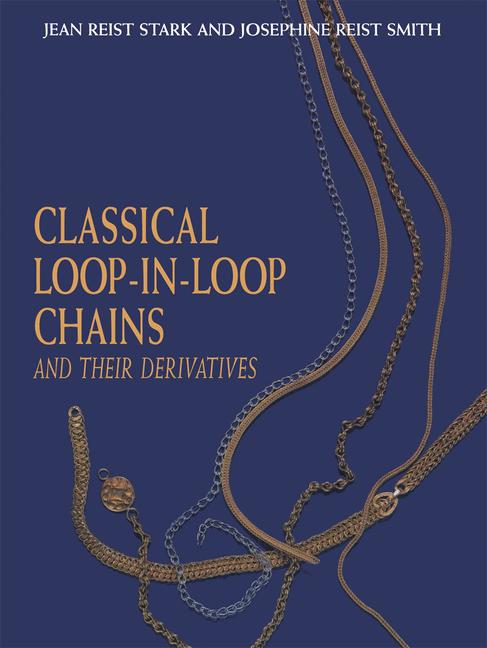
Classical Loop-in-Loop Chains
☆☆☆☆☆
(0 reviews)
Lowest price (incl. delivery)
17 159,00 JPY
Typical price4 390,35 PLN
Lowest (90 days)128,39 PLN
Offers1
Last updated1 天前
| 卖家 | Product price | Delivery | 总计 | 可用性 | Updated | |
|---|---|---|---|---|---|---|
| SP Springer Nature Author | 17 159,00 JPY | free | 17 159,00 JPY | 可购买 | 1 天前 | View offer |
价格和库存可能会有变动。 最后更新: 08.08.2026 23:27.
0,0
☆☆☆☆☆
0 reviews
5★
0%
4★
0%
3★
0%
2★
0%
1★
0%
Product reviews
No reviews yet — be the first!
ThiS is not only a book of instruction in chainmaking but it is also a work celebrating man's continuous creativity over thousands of years. At times something that man creates has far-reach ing effects; an example that quickly comes to mind is the wheel, which has enabled many devel opments, from pottery to computers. At this point it is important to note that these same wheels could not have been made without metal tools. From early Neolithic times on gold was a favorite choice in the making of jewelry. During the Neolithic period these "shining stones," probably alluvial, were prized. Actually gold was cold worked as if it were a stone. There is a surviving example of cold-worked gold from Catahuyuk (present day Turkey) estimated to have been made in 6500 B. C. There were only four metals on the earth's surface that were found in sufficient quantity to be used: gold, copper, silver, and meteoric iron. An understanding of the malleability of gold, and of the annealing effect of fire, changed jewelry making; new forms were found. Gold was no longer a piece of stone but a material that could be flattened and made very thin. Sheet and foil are the oldest forms of worked gold. The smiths' tools were stone, wood, and horn.
Similar products
 Gamma Knife Neurosurgery in the Management of Intracranial Disorders
from $210.78
Gamma Knife Neurosurgery in the Management of Intracranial Disorders
from $210.78
 SDGs in Construction Economics and Organization
from $210.78
SDGs in Construction Economics and Organization
from $210.78
 Emerging Therapies in Neurorehabilitation III
from $210.78
Emerging Therapies in Neurorehabilitation III
from $210.78
 Ground Improvement Techniques
from $220.36
Ground Improvement Techniques
from $220.36
 Anomaly Detection in Video Surveillance
from $220.36
Anomaly Detection in Video Surveillance
from $220.36
 Mechanism and Machine Science
from $287.42
Mechanism and Machine Science
from $287.42
 Protein-Protein Interactions as New Drug Targets
from $287.42
Protein-Protein Interactions as New Drug Targets
from $287.42
 Proceedings of the 7th International Conference of Transportation Research Group of India (CTRG 2023
from $287.42
Proceedings of the 7th International Conference of Transportation Research Group of India (CTRG 2023
from $287.42