
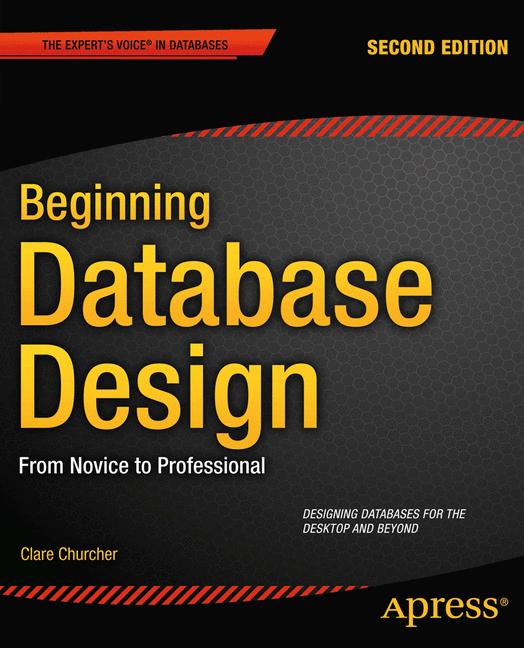
Beginning Database Design
☆☆☆☆☆
(0 reviews)
Lowest price (incl. delivery)
45,71 AUD
Typical price571,52 PLN
Lowest (90 days)17,67 PLN
Offers3
Last updated17 giờ trước
Price history (90 days)
Full history
2026-08-07
2026-08-08
| Cập nhật lúc | Giá |
|---|---|
| 2026-08-07 | 17,67 |
| 2026-08-08 | 26,71 |
| Người bán | Product price | Delivery | Tổng cộng | Tình trạng | Updated | |
|---|---|---|---|---|---|---|
| VI VitalSource | 26,71 AUD | 19,00 AUD | 45,71 AUD | Có sẵn | 1 ngày trước | View offer |
| SP SpringerNatureLink Shop INT | 49,70 EUR | free | 49,70 EUR | Có sẵn | 17 giờ trước | View offer |
| SP Springer Nature Author | 8 579,00 JPY | free | 8 579,00 JPY | Có sẵn | 6 giờ trước | View offer |
Giá và tình trạng có thể thay đổi. Cập nhật lần cuối: 08.08.2026 11:47.
EAN
9781430242093
Springer Nature
0,0
☆☆☆☆☆
0 reviews
5★
0%
4★
0%
3★
0%
2★
0%
1★
0%
Product reviews
No reviews yet — be the first!
Beginning Database Design, Second Edition provides short, easy-to-read explanations of how to get database design right the first time. This book offers numerous examples to help you avoid the many pitfalls that entrap new and not-so-new database designers. Through the help of use cases and class diagrams modeled in the UML, you’ll learn to discover and represent the details and scope of any design problem you choose to attack. Database design is not an exact science. Many are surprised to find that problems with their databases are caused by poor design rather than by difficulties in using the database management software. Beginning Database Design, Second Edition helps you ask and answer important questions about your data so you can understand the problem you are trying to solve and create a pragmatic design capturing the essentials while leaving the door open for refinements and extension at a later stage. Solid database design principles and examples help demonstrate the consequences of simplifications and pragmatic decisions. The rationale is to try to keep a design simple, but allow room for development as situations change or resources permit. Provides solid design principles by which to avoid pitfalls and support changing needs Includes numerous examples of good and bad design decisions and their consequences Shows a modern method for documenting design using the Unified Modeling Language