
Introduction to Quantum Computing
☆☆☆☆☆
(0 reviews)
Lowest price (incl. delivery)
9 309,00 JPY
Typical price992,47 PLN
Lowest (90 days)67,59 PLN
Offers3
Last updated1 тиждень тому
Price history (90 days)
Full history
2026-08-08
2026-08-15
| Оновлено | Ціна |
|---|---|
| 2026-08-08 | 67,59 |
| 2026-08-15 | 67,59 |
| Продавець | Product price | Delivery | Усього | Наявність | Updated | |
|---|---|---|---|---|---|---|
| SP Springer Nature Author | 9 294,00 JPY | 15,00 JPY | 9 309,00 JPY | Доступно | 1 тиждень тому | View offer |
| VI VitalSource | 69,54 EUR | 29,00 EUR | 98,54 EUR | Доступно | 1 тиждень тому | View offer |
| SP SpringerNatureLink Shop INT | 71,49 EUR | 29,00 EUR | 100,49 EUR | Доступно | 3 дні тому | View offer |
Ціни та наявність можуть змінюватися. Останнє оновлення: 08.08.2026 21:18.
EAN
9783031907302
Springer Nature
0,0
☆☆☆☆☆
0 reviews
5★
0%
4★
0%
3★
0%
2★
0%
1★
0%
Product reviews
No reviews yet — be the first!
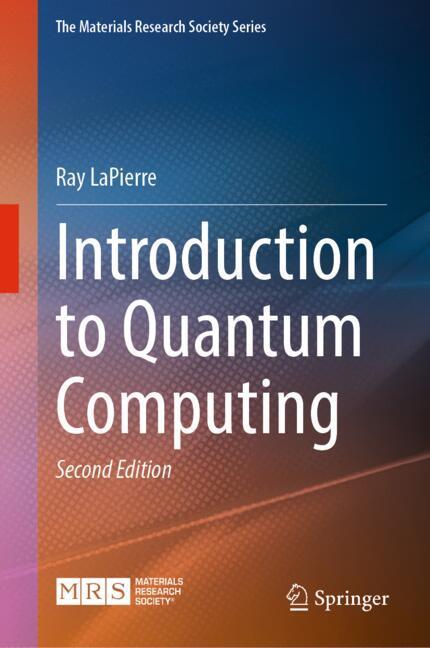
This book, now in an expanded second edition, provides a self-contained undergraduate course on quantum computing based on classroom-tested lecture notes. It reviews the fundamentals of quantum mechanics from the double-slit experiment to entanglement, before progressing to the basics of qubits, quantum gates, quantum circuits, quantum key distribution, and some of the famous quantum algorithms. As well as covering quantum gates in depth, it also describes promising platforms for their physical implementation, along with error correction, and topological quantum computing. With quantum computing expanding rapidly in the private sector, understanding quantum computing has never been so important for graduates entering the workplace or PhD programs. Assuming minimal background knowledge, this book is highly accessible, with rigorous step-by-step explanations of the principles behind quantum computation, further reading, and exercises, ensuring that undergraduate students in physics and engineering emerge well prepared for the future. This edition contains new material on quantum metrology, random circuit sampling, electric dipole spin resonance, dilution refrigeration, photon detection, boson sampling, and continuous variable quantum computing. It also features around 50 new exercises, and lecture slides for course instructors.