
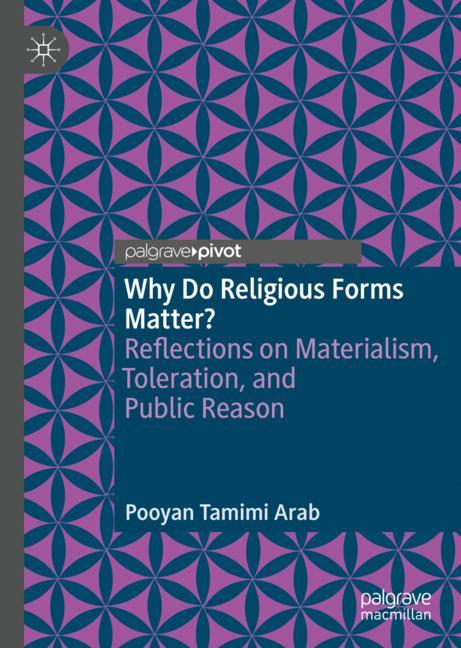
Why Do Religious Forms Matter?
☆☆☆☆☆
(0 reviews)
Lowest price (incl. delivery)
37,44 USD
Typical price44,10 PLN
Lowest (90 days)37,44 PLN
Offers8
Last updated1 hafta önce
Price history (90 days)
Full history
2026-08-08
2026-08-14
| Güncellenme Tarihi | Fiyat |
|---|---|
| 2026-08-08 | 37,44 |
| 2026-08-14 | 37,44 |
| Satıcı | Product price | Delivery | Toplam | Stok Durumu | Updated | |
|---|---|---|---|---|---|---|
| SP SpringerNatureLink Shop INT | 37,44 USD | free | 37,44 USD | Mevcut | 1 hafta önce | View offer |
| SP SpringerNatureLink Shop INT | 39,99 USD | free | 39,99 USD | Mevcut | 1 hafta önce | View offer |
| SP SpringerNatureLink Shop INT | 44,99 USD | free | 44,99 USD | Mevcut | 1 hafta önce | View offer |
| SP SpringerNatureLink Shop INT | 44,99 USD | 19,00 USD | 63,99 USD | Mevcut | 1 hafta önce | View offer |
| SP SpringerNatureLink Shop INT | 49,99 USD | 25,00 USD | 74,99 USD | Mevcut | 6 gün önce | View offer |
| SP SpringerNatureLink Shop INT | 49,99 USD | free | 49,99 USD | Mevcut | 6 gün önce | View offer |
| SP Springer Nature Author | 49,99 USD | 19,00 USD | 68,99 USD | Mevcut | 1 hafta önce | View offer |
| SP SpringerNatureLink Shop INT | 48,14 EUR | free | 48,14 EUR | Mevcut | 6 gün önce | View offer |
Fiyatlar ve stok durumu değişebilir. Son Güncelleme: 08.08.2026 09:14.
0,0
☆☆☆☆☆
0 reviews
5★
0%
4★
0%
3★
0%
2★
0%
1★
0%
Product reviews
No reviews yet — be the first!
In Why Do Religious Forms Matter?, Pooyan Tamimi Arab reflects on the Early Modern roots and contemporary relevance of a materialist perspective on the politics of religious diversity. Taking as a starting point the insight that religions manifest in myriad sensible forms—in architecture, in images, in the use of objects in rituals, and in distinctive ways of speaking—Tamimi Arab traces to Spinoza the material-religion approach prevalent in anthropology and religious studies. It is in Locke’s political philosophy, however, that forms are tied to toleration—understood as a neutrally applied civil right—which Tamimi Arab discusses through contemporary case studies of mosque construction, amplified calls to prayer, and the right to ritual slaughter. Going beyond the Enlightenment criticism and toleration of religions, the book concludes with an inclusive reading of Rawls’s ideal of public reason, which assumes forms of discourse—religious and non-religious—to always be several. Religious forms thus turn out to be indispensable to liberal democracy itself.
Similar products
 50 Years of Philosophy and Medicine
from $107.30
50 Years of Philosophy and Medicine
from $107.30
 Understanding Cybersecurity Law and Digital Privacy
from $122.63
Understanding Cybersecurity Law and Digital Privacy
from $122.63
 Decisions in International Trade and Logistics
from $122.63
Decisions in International Trade and Logistics
from $122.63
 Advances in Economic Measurement
from $122.63
Advances in Economic Measurement
from $122.63
 Nanomaterials
from $137.96
Nanomaterials
from $137.96
 Sustainable Scaffolds-based Strategies in Tissue Engineering and Regenerative Medicine
from $162.87
Sustainable Scaffolds-based Strategies in Tissue Engineering and Regenerative Medicine
from $162.87
 Narratives in Educational Research
from $162.87
Narratives in Educational Research
from $162.87
 Environmental Biology of the Young Chinese Sturgeon
from $210.78
Environmental Biology of the Young Chinese Sturgeon
from $210.78