
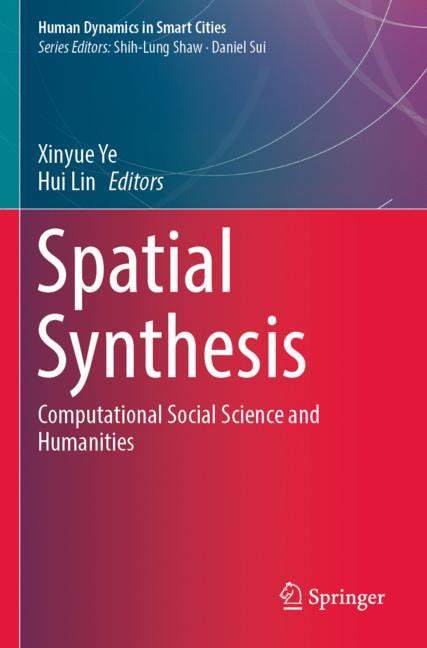
Spatial Synthesis
☆☆☆☆☆
(0 reviews)
Lowest price (incl. delivery)
7 168,00 JPY
Typical price494,87 PLN
Lowest (90 days)35,99 PLN
Offers6
Last updated1 hafta önce
Price history (90 days)
Full history
2026-08-08
2026-08-15
| Güncellenme Tarihi | Fiyat |
|---|---|
| 2026-08-08 | 39,99 |
| 2026-08-14 | 35,99 |
| 2026-08-15 | 51,99 |
| Satıcı | Product price | Delivery | Toplam | Stok Durumu | Updated | |
|---|---|---|---|---|---|---|
| SP SpringerNatureLink Shop INT | 7 149,00 JPY | 19,00 JPY | 7 168,00 JPY | Mevcut | 3 gün önce | View offer |
| SP Springer Nature Author | 7 149,00 JPY | free | 7 149,00 JPY | Mevcut | 1 hafta önce | View offer |
| SP SpringerNatureLink Shop INT | 49,99 USD | 25,00 USD | 74,99 USD | Mevcut | 4 gün önce | View offer |
| SP SpringerNatureLink Shop INT | 54,99 USD | free | 54,99 USD | Mevcut | 4 gün önce | View offer |
| SP SpringerNatureLink Shop INT | 54,99 USD | 15,00 USD | 69,99 USD | Mevcut | 4 gün önce | View offer |
| SP SpringerNatureLink Shop INT | 59,00 EUR | 29,00 EUR | 88,00 EUR | Mevcut | 4 gün önce | View offer |
Fiyatlar ve stok durumu değişebilir. Son Güncelleme: 08.08.2026 23:08.
0,0
☆☆☆☆☆
0 reviews
5★
0%
4★
0%
3★
0%
2★
0%
1★
0%
Product reviews
No reviews yet — be the first!
This book describes how powerful computing technology, emerging big and open data sources, and theoretical perspectives on spatial synthesis have revolutionized the way in which we investigate social sciences and humanities. It summarizes the principles and applications of human-centered computing and spatial social science and humanities research, thereby providing fundamental information that will help shape future research. The book illustrates how big spatiotemporal socioeconomic data facilitate the modelling of individuals’ economic behavior in space and time and how the outcomes of such models can reveal information about economic trends across spatial scales. It describes how spatial social science and humanities research has shifted from a data-scarce to a data-rich environment. The chapters also describe how a powerful analytical framework for identifying space-time research gaps and frontiers is fundamental to comparative study of spatiotemporal phenomena, and how research topics have evolved from structure and function to dynamic and predictive. As such this book provides an interesting read for researchers, students and all those interested in computational and spatial social sciences and humanities.
Similar products
 50 Years of Philosophy and Medicine
from $107.30
50 Years of Philosophy and Medicine
from $107.30
 Understanding Cybersecurity Law and Digital Privacy
from $122.63
Understanding Cybersecurity Law and Digital Privacy
from $122.63
 Decisions in International Trade and Logistics
from $122.63
Decisions in International Trade and Logistics
from $122.63
 Advances in Economic Measurement
from $122.63
Advances in Economic Measurement
from $122.63
 Nanomaterials
from $137.96
Nanomaterials
from $137.96
 Sustainable Scaffolds-based Strategies in Tissue Engineering and Regenerative Medicine
from $162.87
Sustainable Scaffolds-based Strategies in Tissue Engineering and Regenerative Medicine
from $162.87
 Narratives in Educational Research
from $162.87
Narratives in Educational Research
from $162.87
 Environmental Biology of the Young Chinese Sturgeon
from $210.78
Environmental Biology of the Young Chinese Sturgeon
from $210.78