Roos
☆☆☆☆☆
(0 reviews)
Lowest price (incl. delivery)
43,95 USD
- Offers
- 2
- Last updated
- 2 ay önce
| Satıcı | Product price | Delivery | Toplam | Stok Durumu | Updated | |
|---|---|---|---|---|---|---|
| Monotype | Product price 24,95 USD | Delivery 19,00 USD | Toplam 43,95 USD | Stok Durumu Mevcut | Updated 2 ay önce | View offer |
| Fontspring | Product price 150,00 USD | Delivery free | Toplam 150,00 USD | Stok Durumu Mevcut | Updated 2 ay önce | View offer |
Fiyatlar ve stok durumu değişebilir. Son Güncelleme: 19.08.2026 21:51.
0,0
☆☆☆☆☆
0 reviews
5★
0%
4★
0%
3★
0%
2★
0%
1★
0%
Product reviews
No reviews yet — be the first!
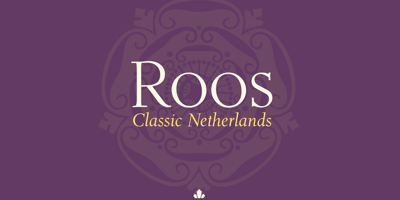
Roos Font Family was designed by Sjoerd Hendrik de Roos, Hans van Maanen, Patrick Griffin and published by Canada Type. Roos contains 10 styles and family package options. The Roos family is a digitization and expansion of the last typeface designed by Sjoerd Hendrik De Roos, called De Roos Romein (and Cursief). It was designed and produced during the years of the second World War, and unveiled in the summer of 1947 to celebrate De Roos's 70th birthday. In 1948, the first fonts produced were used for a special edition of the Dutch Constitution on which Juliana took the oath during her inauguration as the Queen of the Netherlands. To this day this typeface is widely regarded as De Roos's best design, with one of the most beautiful italics ever drawn. In contrast with all his previous roman faces, which were based on the Jenson model, De Roos's last type recalls the letter forms of the Renaissance, specifically those of Claude Garamont from around 1530, but with a much refined and elegant treatment, with stems sloping towards the ascending, slightly cupped serifs, a tall and distinguished lowercase, and an economic width that really shines in the spectacular italic, which harmonizes extremely well with its roman partner. The Roos family contains romans, italics and small caps in regular, semibold and display weights, as well as a magnificent set of initial caps. All the fonts contain extended language support, surpassing the usual Western Latin codepages to include characters for Central and Eastern European languages, as well as Baltic, Celtic/Welsh, Esperanto, Maltese, and Turkish.