
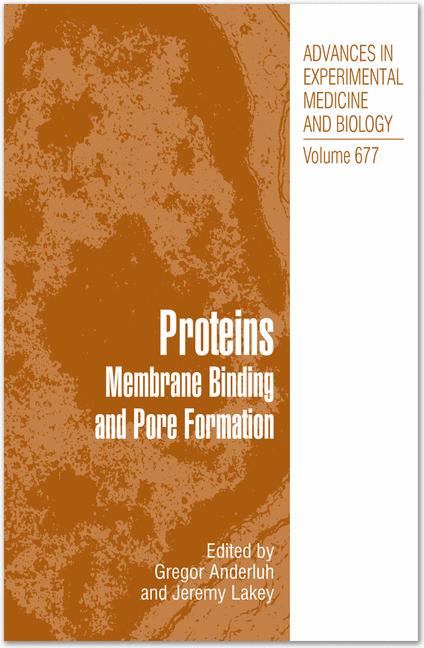
Proteins
☆☆☆☆☆
(0 reviews)
Lowest price (incl. delivery)
26 727,00 JPY
Typical price2 859,51 PLN
Lowest (90 days)197,18 PLN
Offers4
Last updated5 gün önce
Price history (90 days)
Full history
2026-08-08
2026-08-15
| Güncellenme Tarihi | Fiyat |
|---|---|
| 2026-08-08 | 199,98 |
| 2026-08-15 | 197,18 |
| Satıcı | Product price | Delivery | Toplam | Stok Durumu | Updated | |
|---|---|---|---|---|---|---|
| SP SpringerNatureLink Shop INT | 26 727,00 JPY | free | 26 727,00 JPY | Mevcut | 5 gün önce | View offer |
| SP SpringerNatureLink Shop INT | 186,90 USD | 25,00 USD | 211,90 USD | Mevcut | 5 gün önce | View offer |
| SP SpringerNatureLink Shop INT | 221,00 EUR | free | 221,00 EUR | Mevcut | 5 gün önce | View offer |
| SP Springer Nature Author | 221,00 EUR | 25,00 EUR | 246,00 EUR | Mevcut | 1 hafta önce | View offer |
Fiyatlar ve stok durumu değişebilir. Son Güncelleme: 15.08.2026 08:13.
EAN
9781493940981
Springer Nature
0,0
☆☆☆☆☆
0 reviews
5★
0%
4★
0%
3★
0%
2★
0%
1★
0%
Product reviews
No reviews yet — be the first!
Formation of transmembrane pores is a very effective way of killing cells. It is thus not surprising that many bacterial and eukaryotic toxic agents are pore-forming proteins. Pore formation in a target membrane is a complex process composed of several steps; proteins need to attach to the lipid membrane, possibly aggregate in the plane of the membrane and finally form a pore by inserting part of the polypeptide chain across the lipid bilayer. Structural information about toxins at each stage is indispensible for the biochemical and molecular biological studies that aim to - derstand how pores are formed at the molecular level. There are currently only two Staphylococcus aureus and hemolysin E from Escherichia coli. Therefore, what we know about these proteins was obtained over many years of intense experimentation. We have nevertheless, in the last couple of years, witnessed a significant rise in structural information on the soluble forms of pore-forming proteins. Surprisingly, many unexpected similarities with other proteins were noted, despite extremely low or insignificant sequence similarity. It appears that lipid membrane binding and formation of transmembrane channels is achieved in many cases by a limited repertoire of structures. This book describes how several of the important pore forming toxin families achieve membrane bi- ing and which structural elements are used for formation of transmembrane pores. Our contributors have thus provided the means for a comparative analysis of several unrelated families.
Similar products
 50 Years of Philosophy and Medicine
from $107.30
50 Years of Philosophy and Medicine
from $107.30
 Understanding Cybersecurity Law and Digital Privacy
from $122.63
Understanding Cybersecurity Law and Digital Privacy
from $122.63
 Decisions in International Trade and Logistics
from $122.63
Decisions in International Trade and Logistics
from $122.63
 Advances in Economic Measurement
from $122.63
Advances in Economic Measurement
from $122.63
 Nanomaterials
from $137.96
Nanomaterials
from $137.96
 Sustainable Scaffolds-based Strategies in Tissue Engineering and Regenerative Medicine
from $162.87
Sustainable Scaffolds-based Strategies in Tissue Engineering and Regenerative Medicine
from $162.87
 Narratives in Educational Research
from $162.87
Narratives in Educational Research
from $162.87
 Environmental Biology of the Young Chinese Sturgeon
from $210.78
Environmental Biology of the Young Chinese Sturgeon
from $210.78