
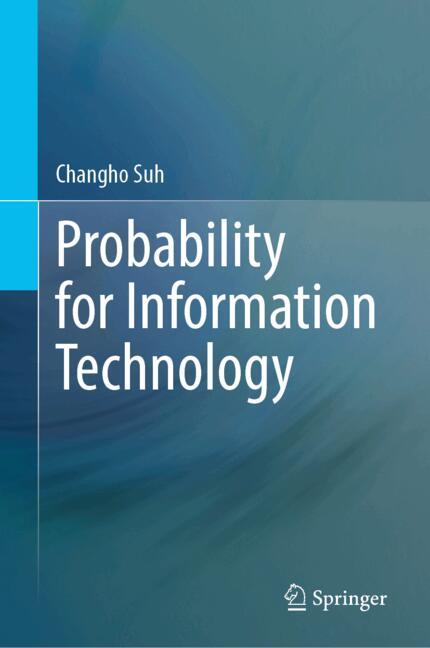
Probability for Information Technology
☆☆☆☆☆
(0 reviews)
Lowest price (incl. delivery)
11 458,00 JPY
Typical price546,77 PLN
Lowest (90 days)54,99 PLN
Offers6
Last updated1 hafta önce
Price history (90 days)
Full history
2026-08-08
2026-08-15
| Güncellenme Tarihi | Fiyat |
|---|---|
| 2026-08-08 | 59,99 |
| 2026-08-15 | 54,99 |
| Satıcı | Product price | Delivery | Toplam | Stok Durumu | Updated | |
|---|---|---|---|---|---|---|
| SP SpringerNatureLink Shop INT | 11 439,00 JPY | 19,00 JPY | 11 458,00 JPY | Mevcut | 6 gün önce | View offer |
| SP Springer Nature Author | 11 439,00 JPY | free | 11 439,00 JPY | Mevcut | 1 hafta önce | View offer |
| SP SpringerNatureLink Shop INT | 79,99 USD | 15,00 USD | 94,99 USD | Mevcut | 1 hafta önce | View offer |
| SP SpringerNatureLink Shop INT | 89,99 USD | 15,00 USD | 104,99 USD | Mevcut | 1 hafta önce | View offer |
| SP SpringerNatureLink Shop INT | 89,99 USD | 29,00 USD | 118,99 USD | Mevcut | 1 hafta önce | View offer |
| SP SpringerNatureLink Shop INT | 87,99 EUR | 29,00 EUR | 116,99 EUR | Mevcut | 1 hafta önce | View offer |
Fiyatlar ve stok durumu değişebilir. Son Güncelleme: 08.08.2026 13:01.
0,0
☆☆☆☆☆
0 reviews
5★
0%
4★
0%
3★
0%
2★
0%
1★
0%
Product reviews
No reviews yet — be the first!
This book introduces probabilistic modelling and explores its role in solving a broad spectrum of engineering problems that arise in Information Technology (IT). Divided into three parts, it begins by laying the foundation of basic probability concepts such as sample space, events, conditional probability, independence, total probability law and random variables. The second part delves into more advanced topics including random processes and key principles like Maximum A Posteriori (MAP) estimation, the law of large numbers and the central limit theorem. The last part applies these principles to various IT domains like communication, social networks, speech recognition, and machine learning, emphasizing the practical aspect of probability through real-world examples, case studies, and Python coding exercises. A notable feature of this book is its narrative style, seamlessly weaving together probability theories with both classical and contemporary IT applications. Each concept is reinforced with tightly-coupled exercise sets, and the associated fundamentals are explored mostly from first principles. Furthermore, it includes programming implementations of illustrative examples and algorithms, complemented by a brief Python tutorial. Departing from traditional organization, the book adopts a lecture-notes format, presenting interconnected themes and storylines. Primarily tailored for sophomore-level undergraduates, it also suits junior and senior-level courses. While readers benefit from mathematical maturity and programming exposure, supplementary materials and exercise problems aid understanding. Part III serves to inspire and provide insights for students and professionals alike, underscoring the pragmatic relevance of probabilistic concepts in IT.
Similar products
 50 Years of Philosophy and Medicine
from $107.30
50 Years of Philosophy and Medicine
from $107.30
 Understanding Cybersecurity Law and Digital Privacy
from $122.63
Understanding Cybersecurity Law and Digital Privacy
from $122.63
 Decisions in International Trade and Logistics
from $122.63
Decisions in International Trade and Logistics
from $122.63
 Advances in Economic Measurement
from $122.63
Advances in Economic Measurement
from $122.63
 Nanomaterials
from $137.96
Nanomaterials
from $137.96
 Sustainable Scaffolds-based Strategies in Tissue Engineering and Regenerative Medicine
from $162.87
Sustainable Scaffolds-based Strategies in Tissue Engineering and Regenerative Medicine
from $162.87
 Narratives in Educational Research
from $162.87
Narratives in Educational Research
from $162.87
 Environmental Biology of the Young Chinese Sturgeon
from $210.78
Environmental Biology of the Young Chinese Sturgeon
from $210.78