
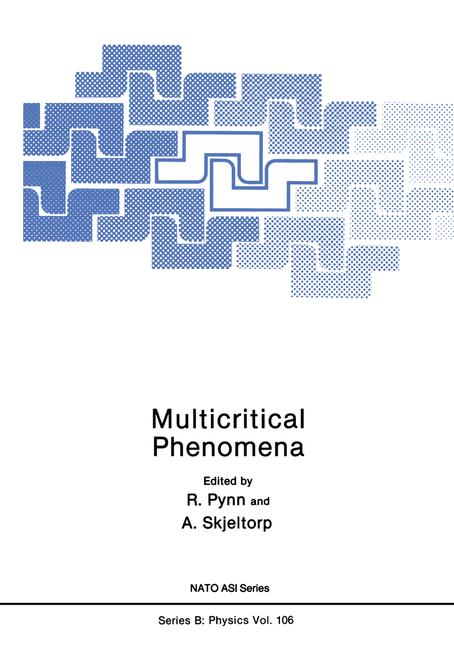
Multicritical Phenomena
☆☆☆☆☆
(0 reviews)
Lowest price (incl. delivery)
7 149,00 JPY
Typical price416,51 PLN
Lowest (90 days)44,99 PLN
Offers6
Last updated1 hafta önce
Price history (90 days)
Full history
2026-08-08
2026-08-15
| Güncellenme Tarihi | Fiyat |
|---|---|
| 2026-08-08 | 49,99 |
| 2026-08-14 | 44,99 |
| 2026-08-15 | 51,99 |
| Satıcı | Product price | Delivery | Toplam | Stok Durumu | Updated | |
|---|---|---|---|---|---|---|
| SP SpringerNatureLink Shop INT | 7 149,00 JPY | free | 7 149,00 JPY | Mevcut | 6 gün önce | View offer |
| SP Springer Nature Author | 7 149,00 JPY | 19,00 JPY | 7 168,00 JPY | Mevcut | 1 hafta önce | View offer |
| SP SpringerNatureLink Shop INT | 49,99 USD | free | 49,99 USD | Mevcut | 6 gün önce | View offer |
| SP SpringerNatureLink Shop INT | 54,99 USD | 25,00 USD | 79,99 USD | Mevcut | 6 gün önce | View offer |
| SP SpringerNatureLink Shop INT | 54,99 USD | 19,00 USD | 73,99 USD | Mevcut | 6 gün önce | View offer |
| SP SpringerNatureLink Shop INT | 59,00 EUR | 19,00 EUR | 78,00 EUR | Mevcut | 6 gün önce | View offer |
Fiyatlar ve stok durumu değişebilir. Son Güncelleme: 08.08.2026 23:12.
0,0
☆☆☆☆☆
0 reviews
5★
0%
4★
0%
3★
0%
2★
0%
1★
0%
Product reviews
No reviews yet — be the first!
This book comprises the Proceedings of a NATO Advanced Study Institute on Mu1ticritica1 Phenomena held in Geilo, Norway, between 10-21 April 1983. This school was the seventh to be held in Gei10, on various aspects of phase transitions. In spite of its apparently restrictive title the school was planned as a forum for the discus sion of phase transitions and instabilities in systems, with competing interactions and competing order parameters. Thus, in addition to the canonical multicritical points, subjects were diverse as critical phenomena in random magnetic systems and routes to chaos were discussed. The subject matter of the school is naturally divided into a series of categories which to some extent, reflect the historical development of interest in competing phenomena at phase transitions. Multicritical points in equilibrium systems, defined phenomenolo gically as points of sudden change of behaviour on an otherwise smooth phase boundary, were the first topics of the school. The theo retical consensus which has emerged during the past decade, largely as a result of calculations with the renormalisation group, was reviewed in some detail. The results presented, however, apply only to pure systems (in which dirt and other manifestations of reality are irrelevant) in that small realm close to the phase transition knoYln as "asymtopia.
Similar products
 50 Years of Philosophy and Medicine
from $107.30
50 Years of Philosophy and Medicine
from $107.30
 Understanding Cybersecurity Law and Digital Privacy
from $122.63
Understanding Cybersecurity Law and Digital Privacy
from $122.63
 Decisions in International Trade and Logistics
from $122.63
Decisions in International Trade and Logistics
from $122.63
 Advances in Economic Measurement
from $122.63
Advances in Economic Measurement
from $122.63
 Nanomaterials
from $137.96
Nanomaterials
from $137.96
 Sustainable Scaffolds-based Strategies in Tissue Engineering and Regenerative Medicine
from $162.87
Sustainable Scaffolds-based Strategies in Tissue Engineering and Regenerative Medicine
from $162.87
 Narratives in Educational Research
from $162.87
Narratives in Educational Research
from $162.87
 Environmental Biology of the Young Chinese Sturgeon
from $210.78
Environmental Biology of the Young Chinese Sturgeon
from $210.78