
Illite
☆☆☆☆☆
(0 reviews)
Lowest price (incl. delivery)
21 449,00 JPY
Typical price2 864,19 PLN
Lowest (90 days)129,99 PLN
Offers6
Last updated1 hafta önce
Price history (90 days)
Full history
2026-08-08
2026-08-15
| Güncellenme Tarihi | Fiyat |
|---|---|
| 2026-08-08 | 129,99 |
| 2026-08-15 | 155,99 |
| Satıcı | Product price | Delivery | Toplam | Stok Durumu | Updated | |
|---|---|---|---|---|---|---|
| SP SpringerNatureLink Shop INT | 21 449,00 JPY | free | 21 449,00 JPY | Mevcut | 3 gün önce | View offer |
| SP Springer Nature Author | 21 449,00 JPY | free | 21 449,00 JPY | Mevcut | 1 hafta önce | View offer |
| SP SpringerNatureLink Shop INT | 149,99 USD | 29,00 USD | 178,99 USD | Mevcut | 3 gün önce | View offer |
| SP SpringerNatureLink Shop INT | 169,99 USD | 29,00 USD | 198,99 USD | Mevcut | 3 gün önce | View offer |
| SP SpringerNatureLink Shop INT | 169,99 USD | free | 169,99 USD | Mevcut | 3 gün önce | View offer |
| SP SpringerNatureLink Shop INT | 177,00 EUR | free | 177,00 EUR | Mevcut | 3 gün önce | View offer |
Fiyatlar ve stok durumu değişebilir. Son Güncelleme: 08.08.2026 23:34.
0,0
☆☆☆☆☆
0 reviews
5★
0%
4★
0%
3★
0%
2★
0%
1★
0%
Product reviews
No reviews yet — be the first!
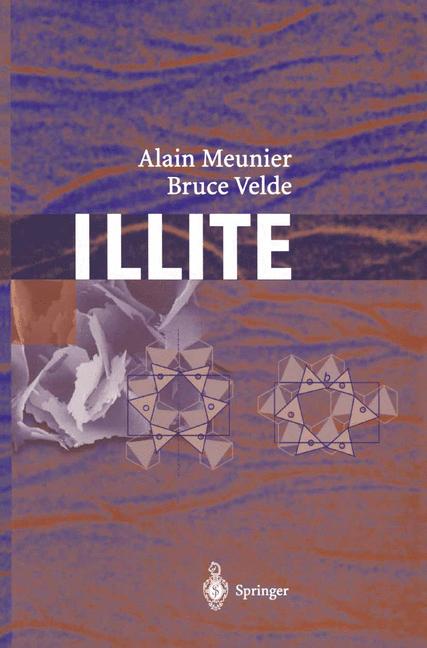
It is our pleasure to present this large body of information and thoughts of many mineral scientists which has accumulated over decades. Illite is a mineral that has been discovered relatively recently, even though it has great importance in the geological cycles of weathering, sedimentation and burial. Illite is the major potassium mineral among silicates in the surface environment. Potassium represents the only alkaline metal, to be bound in silicate structures during the great chemical reshuffling called weathering. The weathering environment is one of strong chemical segregation, where Si and AI become the resistant, of silicate rocks. Iron forms an oxide and potassium forms residual elements the stable clay illite. Then Si and Al form smectites and kaolinite. Sodium, calcium and to a large extent magnesium are extracted from the solids as dissolved ionic species of the altering fluids. Ca and Mg are reintroduced into solid minerals via carbonate precipitation, and Na remains to make the sea saline. This mineral has been difficult to study because it is of fine grain size, as are all clays: 2 pm in diameter. Illite, along with other clays, had to wait to be discovered until a useful method of X-ray detection became available. With such a tool clays, whose definition was initially based upon the resolving power of an optical microscope (2 ]. lm), could be efficiently investigated. In fact the study of illite parallels the use and development of X -ray diffraction techniques.
Similar products
 50 Years of Philosophy and Medicine
from $107.30
50 Years of Philosophy and Medicine
from $107.30
 Understanding Cybersecurity Law and Digital Privacy
from $122.63
Understanding Cybersecurity Law and Digital Privacy
from $122.63
 Decisions in International Trade and Logistics
from $122.63
Decisions in International Trade and Logistics
from $122.63
 Advances in Economic Measurement
from $122.63
Advances in Economic Measurement
from $122.63
 Nanomaterials
from $137.96
Nanomaterials
from $137.96
 Sustainable Scaffolds-based Strategies in Tissue Engineering and Regenerative Medicine
from $162.87
Sustainable Scaffolds-based Strategies in Tissue Engineering and Regenerative Medicine
from $162.87
 Narratives in Educational Research
from $162.87
Narratives in Educational Research
from $162.87
 Environmental Biology of the Young Chinese Sturgeon
from $210.78
Environmental Biology of the Young Chinese Sturgeon
from $210.78