
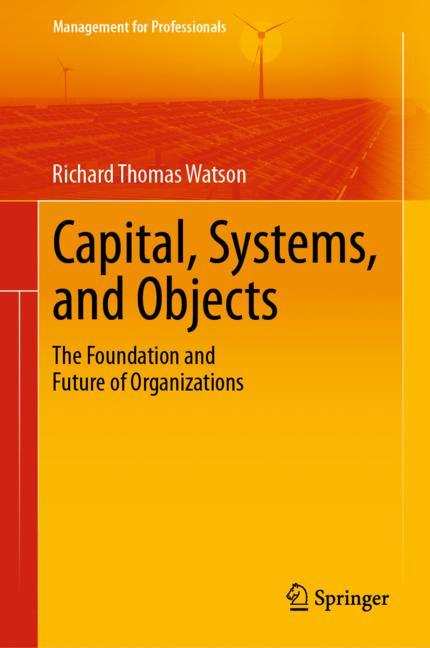
Capital, Systems, and Objects
☆☆☆☆☆
(0 reviews)
Lowest price (incl. delivery)
10 724,00 JPY
Typical price414,17 PLN
Lowest (90 days)77,99 PLN
Offers3
Last updated1 hafta önce
Price history (90 days)
Full history
2026-08-08
2026-08-15
| Güncellenme Tarihi | Fiyat |
|---|---|
| 2026-08-08 | 77,99 |
| 2026-08-15 | 77,99 |
| Satıcı | Product price | Delivery | Toplam | Stok Durumu | Updated | |
|---|---|---|---|---|---|---|
| SP SpringerNatureLink Shop INT | 10 724,00 JPY | free | 10 724,00 JPY | Mevcut | 5 gün önce | View offer |
| SP Springer Nature Author | 10 724,00 JPY | 29,00 JPY | 10 753,00 JPY | Mevcut | 1 hafta önce | View offer |
| SP SpringerNatureLink Shop INT | 88,50 EUR | 15,00 EUR | 103,50 EUR | Mevcut | 5 gün önce | View offer |
Fiyatlar ve stok durumu değişebilir. Son Güncelleme: 08.08.2026 23:19.
EAN
9789811594175
Springer Nature
0,0
☆☆☆☆☆
0 reviews
5★
0%
4★
0%
3★
0%
2★
0%
1★
0%
Product reviews
No reviews yet — be the first!
This book provides a set of integrated frameworks—capital, systems, and objects—that transcend managerial or technology hype by focusing on the long-term fundamentals that sustain organizational success. Many organizations are currently addressing two important transformational issues: ecological sustainability and digitization. Sustainability is a goal, an end, and digitization is a process, a means to achieve a goal. This book introduces a flexible model that can be applied to current and future organizational challenges, including sustainability and digitization, because the fundamentals are constant. This book is designed to serve two purposes for the readers: first, to present three conceptual foundations for designing and operating organizations (capital, systems, and objects in Part I); and second, to provide a reference source for implementing these ideas in an organization (Parts II and III). The Part I of the book, chapters 1 through 7, sets forth the conceptual foundations. The chapters mix concepts and practical examples to give a new way of thinking about the setting in which one may work many days each year. The Part II provides details and associated examples of every one of the thirty-six forms of capital conversion. It also illustrates how the five foundational systems support capital conversion in a variety of ways. Finally, the Part III is about measuring capital and systems. The book will resonate with practitioners and students of strategy, leadership, and organizational design. It is critical reading for leaders, industry experts, and general readers who want to understand how over thousands of years the capital creation system has developed today’s world and will fashion its future.
Similar products
 50 Years of Philosophy and Medicine
from $107.30
50 Years of Philosophy and Medicine
from $107.30
 Understanding Cybersecurity Law and Digital Privacy
from $122.63
Understanding Cybersecurity Law and Digital Privacy
from $122.63
 Decisions in International Trade and Logistics
from $122.63
Decisions in International Trade and Logistics
from $122.63
 Advances in Economic Measurement
from $122.63
Advances in Economic Measurement
from $122.63
 Nanomaterials
from $137.96
Nanomaterials
from $137.96
 Sustainable Scaffolds-based Strategies in Tissue Engineering and Regenerative Medicine
from $162.87
Sustainable Scaffolds-based Strategies in Tissue Engineering and Regenerative Medicine
from $162.87
 Narratives in Educational Research
from $162.87
Narratives in Educational Research
from $162.87
 Environmental Biology of the Young Chinese Sturgeon
from $210.78
Environmental Biology of the Young Chinese Sturgeon
from $210.78