
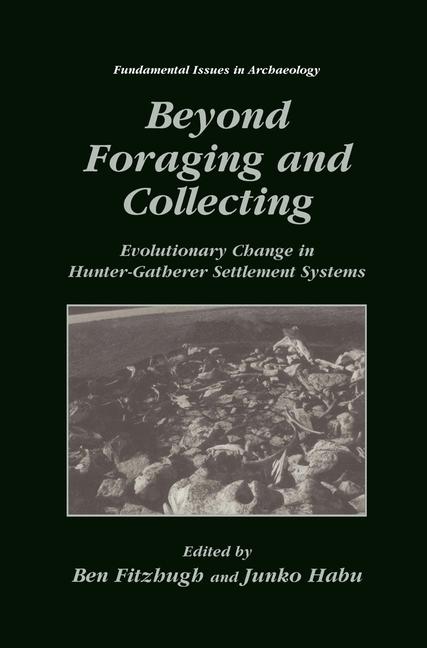
Beyond Foraging and Collecting
☆☆☆☆☆
(0 reviews)
Lowest price (incl. delivery)
22 904,00 JPY
Typical price3 123,53 PLN
Lowest (90 days)139,99 PLN
Offers7
Last updated1 hafta önce
Price history (90 days)
Full history
2026-08-08
2026-08-15
| Güncellenme Tarihi | Fiyat |
|---|---|
| 2026-08-08 | 139,99 |
| 2026-08-15 | 139,99 |
| Satıcı | Product price | Delivery | Toplam | Stok Durumu | Updated | |
|---|---|---|---|---|---|---|
| SP SpringerNatureLink Shop INT | 22 879,00 JPY | 25,00 JPY | 22 904,00 JPY | Mevcut | 4 gün önce | View offer |
| SP Springer Nature Author | 22 879,00 JPY | 15,00 JPY | 22 894,00 JPY | Mevcut | 1 hafta önce | View offer |
| SP SpringerNatureLink Shop INT | 159,99 USD | 19,00 USD | 178,99 USD | Mevcut | 4 gün önce | View offer |
| SP SpringerNatureLink Shop INT | 169,99 USD | 29,00 USD | 198,99 USD | Mevcut | 4 gün önce | View offer |
| SP SpringerNatureLink Shop INT | 179,99 USD | free | 179,99 USD | Mevcut | 4 gün önce | View offer |
| SP SpringerNatureLink Shop INT | 179,99 USD | 15,00 USD | 194,99 USD | Mevcut | 4 gün önce | View offer |
| SP SpringerNatureLink Shop INT | 189,00 EUR | 29,00 EUR | 218,00 EUR | Mevcut | 4 gün önce | View offer |
Fiyatlar ve stok durumu değişebilir. Son Güncelleme: 08.08.2026 23:33.
0,0
☆☆☆☆☆
0 reviews
5★
0%
4★
0%
3★
0%
2★
0%
1★
0%
Product reviews
No reviews yet — be the first!
LEWIS R. BINFORD AND AMBER L. JOHNSON The organizers of this volume have brought together authors who have worked on local sequences, much as traditional archaeologists tended to do, however, with the modern goal of addressing evolutionary change in hunter-gatherer systems over long time spans. Given this ambitious goal they wisely chose to ask the authors to build their treatments around a focal question, the utility of the forager-eollector continuum (Binford 1980) for research on archaeological sequences. Needless to say, Binford was flat tered by their choice and understandably read the papers with a great deal of interest. When he was asked to write the foreword to this provoca tive book he expected to learn new things and in this he has not been disappointed. The common organizing questions addressed among the contributors to this volume are simply, how useful is the forager-eollector continuum for explanatory research on sequences, and what else might we need to know to explain evolutionary change in hunter-gatherer adaptations? Most sequences document systems change, in some sense. Though we don't necessarily know how much synchronous systemic variability there might have been relative to the documented sequence, most authors have tried to address the problem of within systems variability. In this sense, most are operating with sophistication not seen among traditional culture historians. The primary problem for archaeologists of the generation prior to Binford was how to date archaeological materials.
Similar products
 50 Years of Philosophy and Medicine
from $107.30
50 Years of Philosophy and Medicine
from $107.30
 Understanding Cybersecurity Law and Digital Privacy
from $122.63
Understanding Cybersecurity Law and Digital Privacy
from $122.63
 Decisions in International Trade and Logistics
from $122.63
Decisions in International Trade and Logistics
from $122.63
 Advances in Economic Measurement
from $122.63
Advances in Economic Measurement
from $122.63
 Nanomaterials
from $137.96
Nanomaterials
from $137.96
 Sustainable Scaffolds-based Strategies in Tissue Engineering and Regenerative Medicine
from $162.87
Sustainable Scaffolds-based Strategies in Tissue Engineering and Regenerative Medicine
from $162.87
 Narratives in Educational Research
from $162.87
Narratives in Educational Research
from $162.87
 Environmental Biology of the Young Chinese Sturgeon
from $210.78
Environmental Biology of the Young Chinese Sturgeon
from $210.78