
Basic Homological Algebra
☆☆☆☆☆
(0 reviews)

Lowest price (incl. delivery)
66,19 EUR
Typical price535,73 PLN
Lowest (90 days)41,19 PLN
Offers7
Last updated1 hafta önce
Price history (90 days)
Full history
2026-08-08
2026-08-15
| Güncellenme Tarihi | Fiyat |
|---|---|
| 2026-08-08 | 41,19 |
| 2026-08-15 | 41,19 |
| Satıcı | Product price | Delivery | Toplam | Stok Durumu | Updated | |
|---|---|---|---|---|---|---|
| SP Springer Nature Author | 41,19 EUR | 25,00 EUR | 66,19 EUR | Mevcut | 1 hafta önce | View offer |
| SP SpringerNatureLink Shop INT | 14 299,00 JPY | free | 14 299,00 JPY | Mevcut | 5 gün önce | View offer |
| SP Springer Nature Author | 14 299,00 JPY | free | 14 299,00 JPY | Mevcut | 1 hafta önce | View offer |
| SP SpringerNatureLink Shop INT | 99,99 USD | free | 99,99 USD | Mevcut | 5 gün önce | View offer |
| SP SpringerNatureLink Shop INT | 109,00 USD | free | 109,00 USD | Mevcut | 5 gün önce | View offer |
| SP SpringerNatureLink Shop INT | 109,00 USD | 25,00 USD | 134,00 USD | Mevcut | 5 gün önce | View offer |
| SP SpringerNatureLink Shop INT | 118,00 EUR | 19,00 EUR | 137,00 EUR | Mevcut | 5 gün önce | View offer |
Fiyatlar ve stok durumu değişebilir. Son Güncelleme: 08.08.2026 21:58.
0,0
☆☆☆☆☆
0 reviews
5★
0%
4★
0%
3★
0%
2★
0%
1★
0%
Product reviews
No reviews yet — be the first!
Five years ago, I taught a one-quarter course in homological algebra. I discovered that there was no book which was really suitable as a text for such a short course, so I decided to write one. The point was to cover both Ext and Tor early, and still have enough material for a larger course (one semester or two quarters) going off in any of several possible directions. This book is 'also intended to be readable enough for independent study. The core of the subject is covered in Chapters 1 through 3 and the first two sections ofChapter 4. At that point there are several options. Chapters 4 and 5 cover the more traditional aspects of dimension and ring changes. Chapters 6 and 7 cover derived functors in general. Chapter 8 focuses on a special property of Tor. These three groupings are independent, as are various sections from Chapter 9, which is intended as a source of special topics. (The prerequisites for each section of Chapter 9 are stated at the beginning.) Some things have been included simply because they are hard to find else where, and they naturally fit into the discussion. Lazard's theorem (Section 8.4)-is an example; Sections4,5, and 7ofChapter 9 containother examples, as do the appendices at the end.
Similar products
 Gamma Knife Neurosurgery in the Management of Intracranial Disorders
from $210.78
Gamma Knife Neurosurgery in the Management of Intracranial Disorders
from $210.78
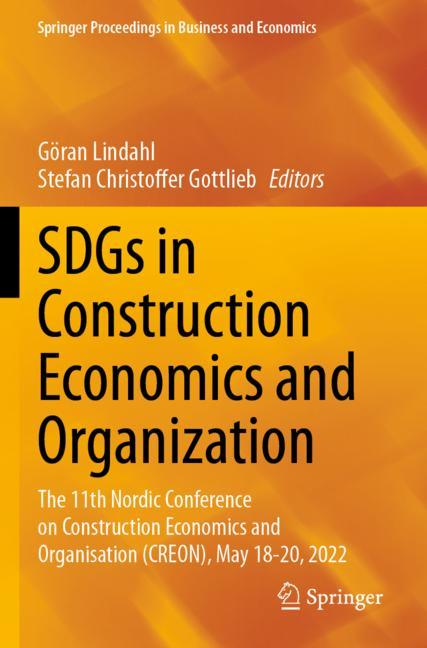 SDGs in Construction Economics and Organization
from $210.78
SDGs in Construction Economics and Organization
from $210.78
 Emerging Therapies in Neurorehabilitation III
from $210.78
Emerging Therapies in Neurorehabilitation III
from $210.78
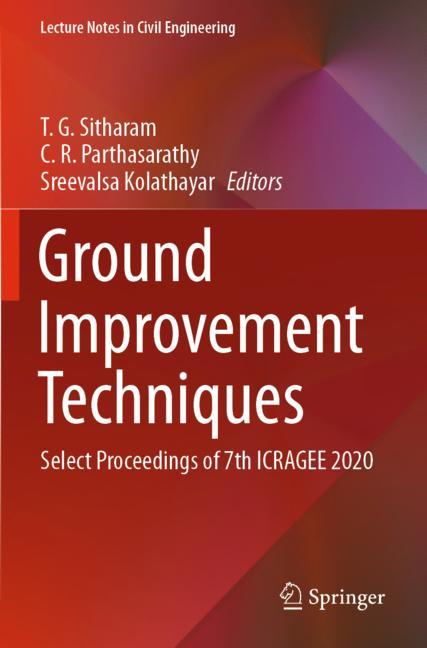 Ground Improvement Techniques
from $220.36
Ground Improvement Techniques
from $220.36
 Anomaly Detection in Video Surveillance
from $220.36
Anomaly Detection in Video Surveillance
from $220.36
 Mechanism and Machine Science
from $287.42
Mechanism and Machine Science
from $287.42
 Protein-Protein Interactions as New Drug Targets
from $287.42
Protein-Protein Interactions as New Drug Targets
from $287.42
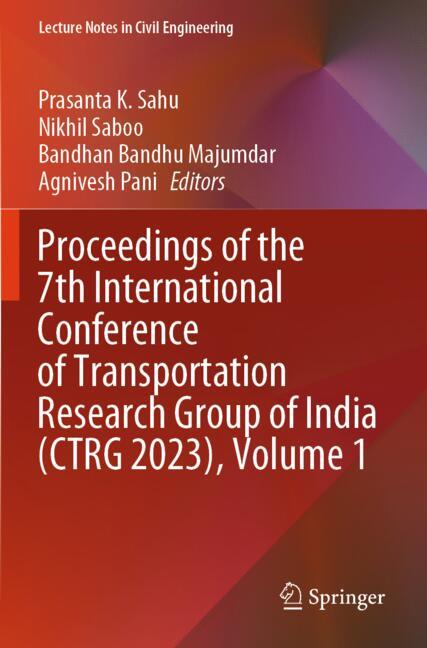 Proceedings of the 7th International Conference of Transportation Research Group of India (CTRG 2023
from $287.42
Proceedings of the 7th International Conference of Transportation Research Group of India (CTRG 2023
from $287.42