
The Afghan Patchwork State
☆☆☆☆☆
(0 reviews)
Lowest price (incl. delivery)
56,99 USD
Typical price1 063,83 PLN
Lowest (90 days)27,99 PLN
Offers7
Last updated1 สัปดาห์ที่แล้ว
Price history (90 days)
Full history
2026-08-08
2026-08-15
| อัปเดตเมื่อ | ราคา |
|---|---|
| 2026-08-08 | 37,99 |
| 2026-08-14 | 27,99 |
| 2026-08-15 | 109,99 |
| ผู้ขาย | Product price | Delivery | รวม | ความพร้อมจำหน่าย | Updated | |
|---|---|---|---|---|---|---|
| SP SpringerNatureLink Shop INT | 37,99 USD | 19,00 USD | 56,99 USD | มีจำหน่าย | 3 วันที่แล้ว | View offer |
| SP SpringerNatureLink Shop INT | 17 159,00 JPY | 15,00 JPY | 17 174,00 JPY | มีจำหน่าย | 3 วันที่แล้ว | View offer |
| SP Springer Nature Author | 17 159,00 JPY | 25,00 JPY | 17 184,00 JPY | มีจำหน่าย | 1 สัปดาห์ที่แล้ว | View offer |
| SP SpringerNatureLink Shop INT | 119,99 USD | 29,00 USD | 148,99 USD | มีจำหน่าย | 3 วันที่แล้ว | View offer |
| SP SpringerNatureLink Shop INT | 129,99 USD | free | 129,99 USD | มีจำหน่าย | 3 วันที่แล้ว | View offer |
| SP SpringerNatureLink Shop INT | 129,99 USD | 15,00 USD | 144,99 USD | มีจำหน่าย | 3 วันที่แล้ว | View offer |
| SP SpringerNatureLink Shop INT | 141,50 EUR | free | 141,50 EUR | มีจำหน่าย | 3 วันที่แล้ว | View offer |
ราคาและความพร้อมจำหน่ายอาจมีการเปลี่ยนแปลง อัปเดตล่าสุด: 08.08.2026 22:18.
0,0
☆☆☆☆☆
0 reviews
5★
0%
4★
0%
3★
0%
2★
0%
1★
0%
Product reviews
No reviews yet — be the first!
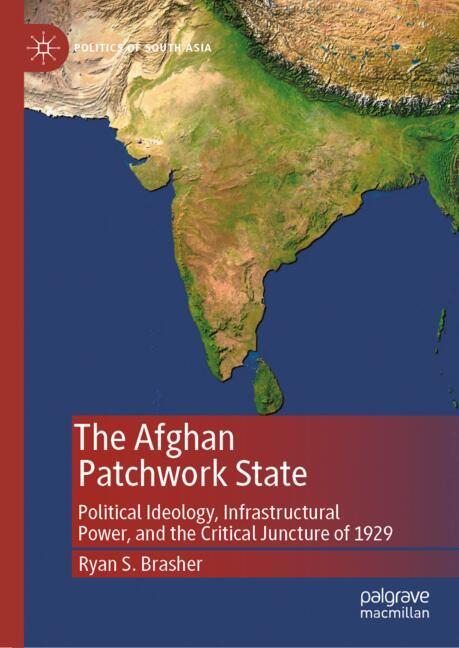
This book provides a theoretically grounded and empirically fine-grained analysis of uneven state development in Afghanistan beginning in the early 20th Century. Based on archival research, the book shows that after Amanullah Shah’s abortive modernist authoritarian experiment and Habibullah Kalakani’s brief rule, a newly empowered Musahiban dynasty charted a patrimonial absolutist course. The new regime delegated considerable authority to traditional tribal areas in the southeastern and eastern part of the country, while pursuing a coercive strategy in other parts of the country that usurped traditional leadership at the regional and local levels. Previous explanations of the weakness of the Afghan state tend to emphasize structural determinants such as difficult geography, acephalous tribal organization, ethnic heterogeneity, as well as colonial interventions. Others have focused only on events after the Soviet or NATO interventions, pointing out faulty external decision-making, corrupt government officials and warlords, neighboring insurgent safe havens, or the international aid-fueled rentier economy. This book proposes an intermediate explanation for the patchwork nature of the Afghan state rooted in institutional choices made by a new ruling elite that took over in 1929. The year represents one critical juncture in Afghan history, where individual agency based on certain ideological preferences set in motion a path-dependent process that shaped its politics well into the latter half of the century.
Similar products
 50 Years of Philosophy and Medicine
from $107.30
50 Years of Philosophy and Medicine
from $107.30
 Understanding Cybersecurity Law and Digital Privacy
from $122.63
Understanding Cybersecurity Law and Digital Privacy
from $122.63
 Decisions in International Trade and Logistics
from $122.63
Decisions in International Trade and Logistics
from $122.63
 Advances in Economic Measurement
from $122.63
Advances in Economic Measurement
from $122.63
 Nanomaterials
from $137.96
Nanomaterials
from $137.96
 Sustainable Scaffolds-based Strategies in Tissue Engineering and Regenerative Medicine
from $162.87
Sustainable Scaffolds-based Strategies in Tissue Engineering and Regenerative Medicine
from $162.87
 Narratives in Educational Research
from $162.87
Narratives in Educational Research
from $162.87
 Environmental Biology of the Young Chinese Sturgeon
from $210.78
Environmental Biology of the Young Chinese Sturgeon
from $210.78