
SIGMA
☆☆☆☆☆
(0 reviews)
Lowest price (incl. delivery)
14 318,00 JPY
Typical price414,77 PLN
Lowest (90 days)89,99 PLN
Offers6
Last updated6 วันที่แล้ว
Price history (90 days)
Full history
2026-08-08
2026-08-15
| อัปเดตเมื่อ | ราคา |
|---|---|
| 2026-08-08 | 89,99 |
| 2026-08-15 | 89,99 |
| ผู้ขาย | Product price | Delivery | รวม | ความพร้อมจำหน่าย | Updated | |
|---|---|---|---|---|---|---|
| SP Springer Nature Author | 14 299,00 JPY | 19,00 JPY | 14 318,00 JPY | มีจำหน่าย | 6 วันที่แล้ว | View offer |
| SP SpringerNatureLink Shop INT | 99,99 USD | 15,00 USD | 114,99 USD | มีจำหน่าย | 4 ชั่วโมงที่แล้ว | View offer |
| SP SpringerNatureLink Shop INT | 99,99 USD | 19,00 USD | 118,99 USD | มีจำหน่าย | 4 ชั่วโมงที่แล้ว | View offer |
| SP SpringerNatureLink Shop INT | 109,99 USD | 29,00 USD | 138,99 USD | มีจำหน่าย | 4 ชั่วโมงที่แล้ว | View offer |
| SP SpringerNatureLink Shop INT | 109,99 USD | 25,00 USD | 134,99 USD | มีจำหน่าย | 4 ชั่วโมงที่แล้ว | View offer |
| SP SpringerNatureLink Shop INT | 118,00 EUR | 15,00 EUR | 133,00 EUR | มีจำหน่าย | 3 ชั่วโมงที่แล้ว | View offer |
ราคาและความพร้อมจำหน่ายอาจมีการเปลี่ยนแปลง อัปเดตล่าสุด: 08.08.2026 23:23.
0,0
☆☆☆☆☆
0 reviews
5★
0%
4★
0%
3★
0%
2★
0%
1★
0%
Product reviews
No reviews yet — be the first!
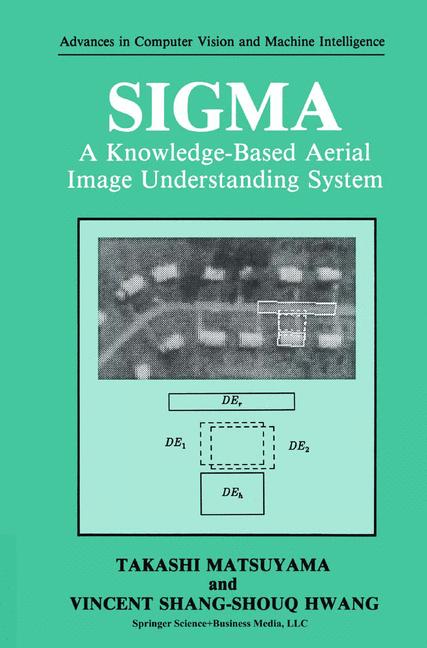
It has long been a dream to realize machines with flexible visual perception capability. Research on digital image processing by computers was initiated about 30 years ago, and since then a wide variety of image processing algorithms have been devised. Using such image processing algorithms and advanced hardware technologies, many practical ma chines with visual recognition capability have been implemented and are used in various fields: optical character readers and design chart readers in offices, position-sensing and inspection systems in factories, computer tomography and medical X-ray and microscope examination systems in hospitals, and so on. Although these machines are useful for specific tasks, their capabilities are limited. That is, they can analyze only simple images which are recorded under very carefully adjusted photographic conditions: objects to be recognized are isolated against a uniform background and under well-controlled artificial lighting. In the late 1970s, many image understanding systems were de veloped to study the automatic interpretation of complex natural scenes. They introduced artificial intelligence techniques to represent the knowl edge about scenes and to realize flexible control structures. The first author developed an automatic aerial photograph interpretation system based on the blackboard model (Naga1980). Although these systems could analyze fairly complex scenes, their capabilities were still limited; the types of recognizable objects were limited and various recognition vii viii Preface errors occurred due to noise and the imperfection of segmentation algorithms.
Similar products
 Discovering Cybersecurity
from $42.15
Discovering Cybersecurity
from $42.15
 Microsoft Orleans for Developers
from $42.15
Microsoft Orleans for Developers
from $42.15
 Energieeffizienz-Benchmark Industrie
from $42.97
Energieeffizienz-Benchmark Industrie
from $42.97
 Pohls Einführung in die Physik
from $42.97
Pohls Einführung in die Physik
from $42.97
 Die Bedeutung von Nachhaltigkeit in einem strategischen Kontext
from $42.97
Die Bedeutung von Nachhaltigkeit in einem strategischen Kontext
from $42.97
 Wissen von Kindern über den Nationalsozialismus
from $42.97
Wissen von Kindern über den Nationalsozialismus
from $42.97
 Zero Outage
from $42.97
Zero Outage
from $42.97
 Resilienz im Wandel
from $46.55
Resilienz im Wandel
from $46.55