
Microsimulation and Population Dynamics
☆☆☆☆☆
(0 reviews)
Lowest price (incl. delivery)
17 184,00 JPY
Typical price1 108,38 PLN
Lowest (90 days)87,50 PLN
Offers6
Last updated1 สัปดาห์ที่แล้ว
Price history (90 days)
Full history
2026-08-08
2026-08-15
| อัปเดตเมื่อ | ราคา |
|---|---|
| 2026-08-08 | 87,50 |
| 2026-08-15 | 87,50 |
| ผู้ขาย | Product price | Delivery | รวม | ความพร้อมจำหน่าย | Updated | |
|---|---|---|---|---|---|---|
| SP SpringerNatureLink Shop INT | 17 159,00 JPY | 25,00 JPY | 17 184,00 JPY | มีจำหน่าย | 4 วันที่แล้ว | View offer |
| SP Springer Nature Author | 17 159,00 JPY | 15,00 JPY | 17 174,00 JPY | มีจำหน่าย | 1 สัปดาห์ที่แล้ว | View offer |
| SP SpringerNatureLink Shop INT | 119,99 USD | 29,00 USD | 148,99 USD | มีจำหน่าย | 4 วันที่แล้ว | View offer |
| SP SpringerNatureLink Shop INT | 129,99 USD | 29,00 USD | 158,99 USD | มีจำหน่าย | 4 วันที่แล้ว | View offer |
| SP SpringerNatureLink Shop INT | 129,99 USD | free | 129,99 USD | มีจำหน่าย | 4 วันที่แล้ว | View offer |
| SP SpringerNatureLink Shop INT | 142,00 EUR | 15,00 EUR | 157,00 EUR | มีจำหน่าย | 4 วันที่แล้ว | View offer |
ราคาและความพร้อมจำหน่ายอาจมีการเปลี่ยนแปลง อัปเดตล่าสุด: 08.08.2026 22:18.
0,0
☆☆☆☆☆
0 reviews
5★
0%
4★
0%
3★
0%
2★
0%
1★
0%
Product reviews
No reviews yet — be the first!
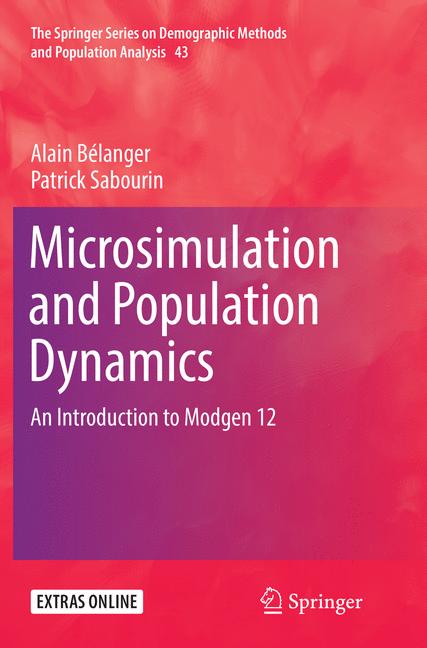
This book is a practical, step-by-step introduction to microsimulation in demography. It shows how to use Modgen, a powerful and free microsimulation platform built by Statistics Canada. The authors' hands-on explanation of model development will help readers make their own. The book teaches how to create and run a simple cohort model with a single fixed-rate event, and builds upon this concept. It introduces how to develop both a single state life table as well as a multiple increment-decrement life table using the tools provided by Modgen. The authors illustrate how to easily upgrade an existing model by adding new modules and new dimensions as determinants of a risk already modeled. The integration of a fertility module and a base population allows the user to bring new actors into the simulation and transform a cohort-based model into a population-based one. The final addition of an international migration module allows the user to accomplish fully open, multi-regional projections.This accessible introduction will be of interest to researchers and students in population studies and other social sciences. It will also appeal to anyone interested in the computational modeling of population dynamics.
Similar products
 50 Years of Philosophy and Medicine
from $107.30
50 Years of Philosophy and Medicine
from $107.30
 Understanding Cybersecurity Law and Digital Privacy
from $122.63
Understanding Cybersecurity Law and Digital Privacy
from $122.63
 Decisions in International Trade and Logistics
from $122.63
Decisions in International Trade and Logistics
from $122.63
 Advances in Economic Measurement
from $122.63
Advances in Economic Measurement
from $122.63
 Nanomaterials
from $137.96
Nanomaterials
from $137.96
 Sustainable Scaffolds-based Strategies in Tissue Engineering and Regenerative Medicine
from $162.87
Sustainable Scaffolds-based Strategies in Tissue Engineering and Regenerative Medicine
from $162.87
 Narratives in Educational Research
from $162.87
Narratives in Educational Research
from $162.87
 Environmental Biology of the Young Chinese Sturgeon
from $210.78
Environmental Biology of the Young Chinese Sturgeon
from $210.78