
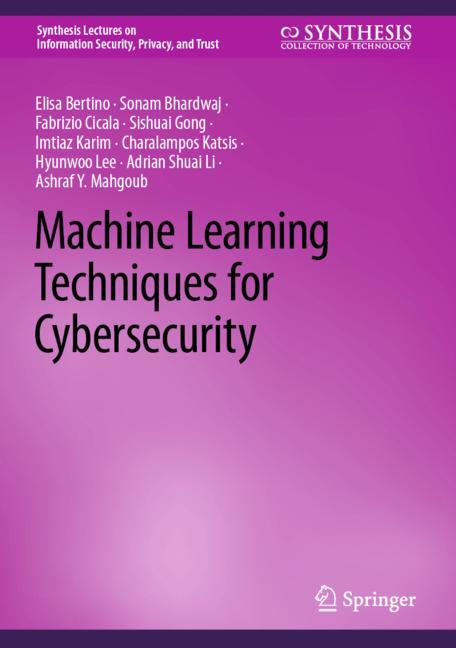
Machine Learning Techniques for Cybersecurity
☆☆☆☆☆
(0 reviews)
Lowest price (incl. delivery)
45,10 EUR
Typical price595,99 PLN
Lowest (90 days)23,09 PLN
Offers2
Last updated15 ชั่วโมงที่แล้ว
| ผู้ขาย | Product price | Delivery | รวม | ความพร้อมจำหน่าย | Updated | |
|---|---|---|---|---|---|---|
| SP SpringerNatureLink Shop INT | 30,10 EUR | 15,00 EUR | 45,10 EUR | มีจำหน่าย | 1 วันที่แล้ว | View offer |
| SP Springer Nature Author | 5 147,00 JPY | 29,00 JPY | 5 176,00 JPY | มีจำหน่าย | 15 ชั่วโมงที่แล้ว | View offer |
ราคาและความพร้อมจำหน่ายอาจมีการเปลี่ยนแปลง อัปเดตล่าสุด: 08.08.2026 23:06.
EAN
9783031282591
Springer Nature
0,0
☆☆☆☆☆
0 reviews
5★
0%
4★
0%
3★
0%
2★
0%
1★
0%
Product reviews
No reviews yet — be the first!
This book explores machine learning (ML) defenses against the many cyberattacks that make our workplaces, schools, private residences, and critical infrastructures vulnerable as a consequence of the dramatic increase in botnets, data ransom, system and network denials of service, sabotage, and data theft attacks. The use of ML techniques for security tasks has been steadily increasing in research and also in practice over the last 10 years. Covering efforts to devise more effective defenses, the book explores security solutions that leverage machine learning (ML) techniques that have recently grown in feasibility thanks to significant advances in ML combined with big data collection and analysis capabilities. Since the use of ML entails understanding which techniques can be best used for specific tasks to ensure comprehensive security, the book provides an overview of the current state of the art of ML techniques for security and a detailed taxonomy of security tasks and corresponding ML techniques that can be used for each task. It also covers challenges for the use of ML for security tasks and outlines research directions. While many recent papers have proposed approaches for specific tasks, such as software security analysis and anomaly detection, these approaches differ in many aspects, such as with respect to the types of features in the model and the dataset used for training the models. In a way that no other available work does, this book provides readers with a comprehensive view of the complex area of ML for security, explains its challenges, and highlights areas for future research. This book is relevant to graduate students in computer science and engineering as well as information systems studies, and will also be useful to researchers and practitioners who work in the area of ML techniques for security tasks.
Similar products
 Patient Safety Coaching
from $91.97
Patient Safety Coaching
from $91.97
 Ethnography and Diversity
from $69.30
Ethnography and Diversity
from $69.30
 Smart Villages
from $91.97
Smart Villages
from $91.97
 Nuclear Non-Proliferation in International Law - Volume VI
from $91.97
Nuclear Non-Proliferation in International Law - Volume VI
from $91.97
 The Price of Freedom
from $91.97
The Price of Freedom
from $91.97
 Eco-Social Policy in the OECD and the World Bank
from $91.97
Eco-Social Policy in the OECD and the World Bank
from $91.97
 Special Topics in Policing
from $122.58
Special Topics in Policing
from $122.58
 Music from the Heart
from $91.97
Music from the Heart
from $91.97