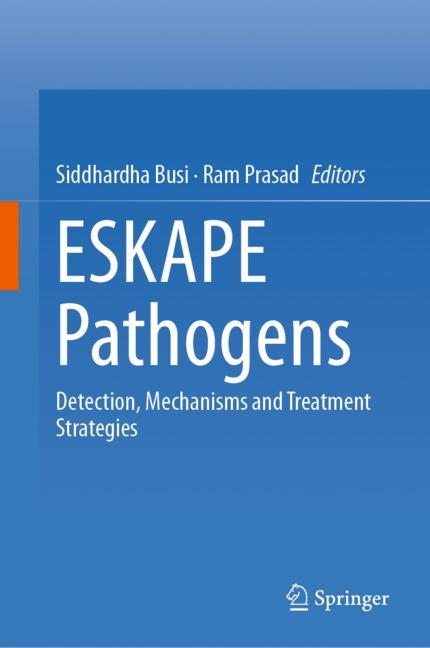
ESKAPE Pathogens
☆☆☆☆☆
(0 reviews)
EAN: 9789819987993
Lowest price (incl. delivery)
18 328,00 JPY
- Typical price
- 4 686,00 PLN
- Lowest (90 days)
- 139,00 PLN
- Offers
- 3
- Last updated
- 2 เดือนที่แล้ว
Price history (90 days)
Full history
2026-08-08
2026-08-15
| อัปเดตเมื่อ | ราคา |
|---|---|
| 2026-08-08 | 139,00 |
| 2026-08-15 | 151,00 |
| ผู้ขาย | Product price | Delivery | รวม | ความพร้อมจำหน่าย | Updated | |
|---|---|---|---|---|---|---|
| SpringerNatureLink Shop INT | Product price 18 303,00 JPY | Delivery 25,00 JPY | รวม 18 328,00 JPY | ความพร้อมจำหน่าย มีจำหน่าย | Updated 2 เดือนที่แล้ว | View offer |
| SpringerNatureLink Shop INT | Product price 151,00 EUR | Delivery 19,00 EUR | รวม 170,00 EUR | ความพร้อมจำหน่าย มีจำหน่าย | Updated 2 เดือนที่แล้ว | View offer |
| Springer Nature Author | Product price 18 303,00 JPY ▲ 13 067,6% | Delivery free | รวม 18 303,00 JPY | ความพร้อมจำหน่าย มีจำหน่าย | Updated 2 เดือนที่แล้ว | View offer |
ราคาและความพร้อมจำหน่ายอาจมีการเปลี่ยนแปลง อัปเดตล่าสุด: 15.08.2026 05:36.
EAN
9789819987993
Springer Nature
0,0
☆☆☆☆☆
0 reviews
5★
0%
4★
0%
3★
0%
2★
0%
1★
0%
Product reviews
No reviews yet — be the first!
This book explores the medical importance of Enterococcus faecium, Staphylococcus aureus, Klebsiella pneumoniae, Acinetobacter baumannii, Pseudomonas aeruginosa, and Enterobacter spp. (ESKAPE) pathogens, and the challenges posed by antibiotic resistance. It covers the antibiotic resistance profile and detection of ESKAPE pathogens, as well as the mechanistic understanding of antibiotic resistance in these pathogens. The book discusses standard microbiological techniques, including staining, morphological and cultural characteristics, biochemical properties, and serotyping, as well as nucleic acid amplification and molecular diagnostic techniques for the detection of ESKAPE pathogens. In addition, the book explores biochemical, molecular, and computational techniques for the determination of virulence factors of ESKAPE pathogens. It also examines the synthesis, structure, function, and inhibitors of virulence factors and biofilm componentsin these pathogens. The book explores various strategies for combating ESKAPE pathogens, including antibiotic adjuvants and their synergistic activity, phytochemicals as potential antibacterial agents, photodynamic therapy, antimicrobial peptides and antibacterial antibodies, antimicrobial activity of Nanomaterials and Nanocomposites, and bacteriophage therapy. Finally, the book discusses in silico and computational approaches for the inhibition of ESKAPE pathogens. This comprehensive book is of interest to researchers, students, and healthcare professionals interested in the diagnosis, prevention, and treatment of ESKAPE pathogens.
Similar products