
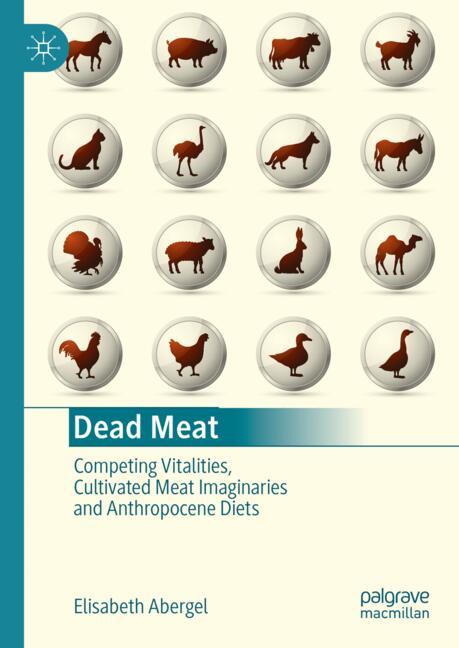
Dead Meat
☆☆☆☆☆
(0 reviews)
Lowest price (incl. delivery)
14 890,00 JPY
Typical price4 372,27 PLN
Lowest (90 days)111,27 PLN
Offers4
Last updated1 สัปดาห์ที่แล้ว
Price history (90 days)
Full history
2026-08-08
2026-08-15
| อัปเดตเมื่อ | ราคา |
|---|---|
| 2026-08-08 | 111,27 |
| 2026-08-15 | 123,00 |
| ผู้ขาย | Product price | Delivery | รวม | ความพร้อมจำหน่าย | Updated | |
|---|---|---|---|---|---|---|
| SP SpringerNatureLink Shop INT | 14 871,00 JPY | 19,00 JPY | 14 890,00 JPY | มีจำหน่าย | 6 วันที่แล้ว | View offer |
| SP Springer Nature Author | 14 871,00 JPY | 19,00 JPY | 14 890,00 JPY | มีจำหน่าย | 1 สัปดาห์ที่แล้ว | View offer |
| SP SpringerNatureLink Shop INT | 111,27 USD | 29,00 USD | 140,27 USD | มีจำหน่าย | 6 วันที่แล้ว | View offer |
| SP SpringerNatureLink Shop INT | 123,00 EUR | free | 123,00 EUR | มีจำหน่าย | 6 วันที่แล้ว | View offer |
ราคาและความพร้อมจำหน่ายอาจมีการเปลี่ยนแปลง อัปเดตล่าสุด: 08.08.2026 23:26.
EAN
9789819790494
Springer Nature
0,0
☆☆☆☆☆
0 reviews
5★
0%
4★
0%
3★
0%
2★
0%
1★
0%
Product reviews
No reviews yet — be the first!
As we confront the environmental challenges of the Anthropocene, cellular agriculture has emerged as a revolutionary technology promising to reshape global food systems. Dead Meat offers a critical examination of this biotechnological shift, exploring how cultivated meat production reconfigures the relationship between life, death, and food in the context of competing ecological, social, and ethical imperatives. Elisabeth Abergel provides a compelling analysis of cultivated meat through the lens of “competing vitalities”, questioning how these new forms of food production are narrated and imagined in the Anthropocene. She delves into the sociotechnical imaginaries that promise sustainability, animal welfare, and climate resilience, while probing the tensions between these narratives and the political economy of industrial food production. Drawing on interdisciplinary perspectives from the environmental humanities, science and technology studies, political economy, and political ecology, Abergel critiques the idea that cultivated meat is a simple technological fix to the climate crisis. Instead, she exposes how these innovations both challenge and reinforce capitalist logics that dominate agricultural systems. Dead Meat is essential reading for scholars and students in environmental sociology, food politics, science and technology studies, environmental humanities, and political economy, as well as for activists and policymakers interested in sustainable food futures and planetary health.
Similar products
 50 Years of Philosophy and Medicine
from $107.30
50 Years of Philosophy and Medicine
from $107.30
 Understanding Cybersecurity Law and Digital Privacy
from $122.63
Understanding Cybersecurity Law and Digital Privacy
from $122.63
 Decisions in International Trade and Logistics
from $122.63
Decisions in International Trade and Logistics
from $122.63
 Advances in Economic Measurement
from $122.63
Advances in Economic Measurement
from $122.63
 Nanomaterials
from $137.96
Nanomaterials
from $137.96
 Sustainable Scaffolds-based Strategies in Tissue Engineering and Regenerative Medicine
from $162.87
Sustainable Scaffolds-based Strategies in Tissue Engineering and Regenerative Medicine
from $162.87
 Narratives in Educational Research
from $162.87
Narratives in Educational Research
from $162.87
 Environmental Biology of the Young Chinese Sturgeon
from $210.78
Environmental Biology of the Young Chinese Sturgeon
from $210.78