
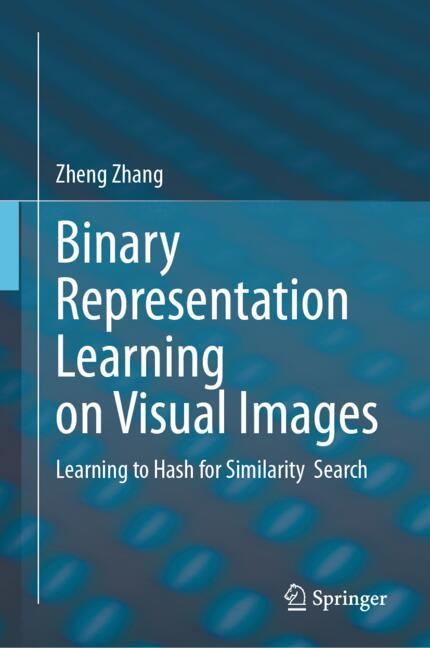
Binary Representation Learning on Visual Images
☆☆☆☆☆
(0 reviews)
Lowest price (incl. delivery)
24 324,00 JPY
Typical price194,63 PLN
Lowest (90 days)176,79 PLN
Offers3
Last updated13 ชั่วโมงที่แล้ว
Price history (90 days)
Full history
2026-08-08
2026-08-15
| อัปเดตเมื่อ | ราคา |
|---|---|
| 2026-08-08 | 176,79 |
| 2026-08-15 | 201,00 |
| ผู้ขาย | Product price | Delivery | รวม | ความพร้อมจำหน่าย | Updated | |
|---|---|---|---|---|---|---|
| SP SpringerNatureLink Shop INT | 24 309,00 JPY | 15,00 JPY | 24 324,00 JPY | มีจำหน่าย | 13 ชั่วโมงที่แล้ว | View offer |
| SP SpringerNatureLink Shop INT | 201,00 EUR | 19,00 EUR | 220,00 EUR | มีจำหน่าย | 15 ชั่วโมงที่แล้ว | View offer |
| SP Springer Nature Author | 201,00 EUR | 29,00 EUR | 230,00 EUR | มีจำหน่าย | 6 วันที่แล้ว | View offer |
ราคาและความพร้อมจำหน่ายอาจมีการเปลี่ยนแปลง อัปเดตล่าสุด: 15.08.2026 08:12.
EAN
9789819721115
Springer Nature
0,0
☆☆☆☆☆
0 reviews
5★
0%
4★
0%
3★
0%
2★
0%
1★
0%
Product reviews
No reviews yet — be the first!
This book introduces pioneering developments in binary representation learning on visual images, a state-of-the-art data transformation methodology within the fields of machine learning and multimedia. Binary representation learning, often known as learning to hash or hashing, excels in converting high-dimensional data into compact binary codes meanwhile preserving the semantic attributes and maintaining the similarity measurements. The book provides a comprehensive introduction to the latest research in hashing-based visual image retrieval, with a focus on binary representations. These representations are crucial in enabling fast and reliable feature extraction and similarity assessments on large-scale data. This book offers an insightful analysis of various research methodologies in binary representation learning for visual images, ranging from basis shallow hashing, advanced high-order similarity-preserving hashing, deep hashing, as well as adversarial and robust deep hashing techniques. These approaches can empower readers to proficiently grasp the fundamental principles of the traditional and state-of-the-art methods in binary representations, modeling, and learning. The theories and methodologies of binary representation learning expounded in this book will be beneficial to readers from diverse domains such as machine learning, multimedia, social network analysis, web search, information retrieval, data mining, and others.
Similar products
 50 Years of Philosophy and Medicine
from $107.30
50 Years of Philosophy and Medicine
from $107.30
 Understanding Cybersecurity Law and Digital Privacy
from $122.63
Understanding Cybersecurity Law and Digital Privacy
from $122.63
 Decisions in International Trade and Logistics
from $122.63
Decisions in International Trade and Logistics
from $122.63
 Advances in Economic Measurement
from $122.63
Advances in Economic Measurement
from $122.63
 Nanomaterials
from $137.96
Nanomaterials
from $137.96
 Sustainable Scaffolds-based Strategies in Tissue Engineering and Regenerative Medicine
from $162.87
Sustainable Scaffolds-based Strategies in Tissue Engineering and Regenerative Medicine
from $162.87
 Narratives in Educational Research
from $162.87
Narratives in Educational Research
from $162.87
 Environmental Biology of the Young Chinese Sturgeon
from $210.78
Environmental Biology of the Young Chinese Sturgeon
from $210.78