
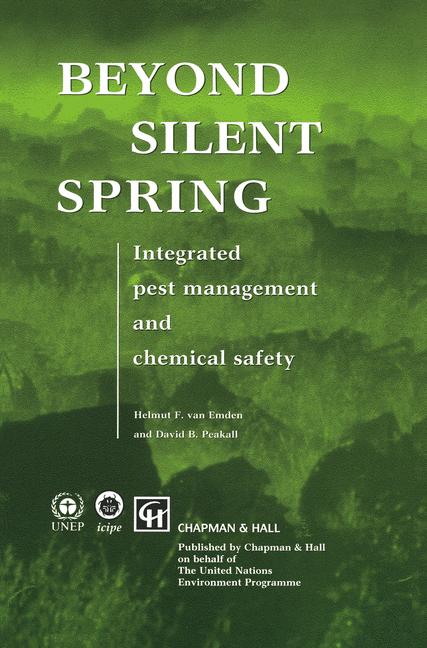
Beyond Silent Spring
☆☆☆☆☆
(0 reviews)
Lowest price (incl. delivery)
21 464,00 JPY
Typical price3 268,59 PLN
Lowest (90 days)155,99 PLN
Offers7
Last updated1 สัปดาห์ที่แล้ว
Price history (90 days)
Full history
2026-08-08
2026-08-15
| อัปเดตเมื่อ | ราคา |
|---|---|
| 2026-08-08 | 155,99 |
| 2026-08-15 | 155,99 |
| ผู้ขาย | Product price | Delivery | รวม | ความพร้อมจำหน่าย | Updated | |
|---|---|---|---|---|---|---|
| SP SpringerNatureLink Shop INT | 21 449,00 JPY | 15,00 JPY | 21 464,00 JPY | มีจำหน่าย | 6 วันที่แล้ว | View offer |
| SP Springer Nature Author | 21 449,00 JPY | 29,00 JPY | 21 478,00 JPY | มีจำหน่าย | 1 สัปดาห์ที่แล้ว | View offer |
| SP SpringerNatureLink Shop INT | 149,99 USD | free | 149,99 USD | มีจำหน่าย | 6 วันที่แล้ว | View offer |
| SP SpringerNatureLink Shop INT | 149,99 USD | 19,00 USD | 168,99 USD | มีจำหน่าย | 6 วันที่แล้ว | View offer |
| SP SpringerNatureLink Shop INT | 169,99 USD | free | 169,99 USD | มีจำหน่าย | 6 วันที่แล้ว | View offer |
| SP SpringerNatureLink Shop INT | 169,99 USD | free | 169,99 USD | มีจำหน่าย | 6 วันที่แล้ว | View offer |
| SP SpringerNatureLink Shop INT | 177,00 EUR | 15,00 EUR | 192,00 EUR | มีจำหน่าย | 6 วันที่แล้ว | View offer |
ราคาและความพร้อมจำหน่ายอาจมีการเปลี่ยนแปลง อัปเดตล่าสุด: 08.08.2026 23:33.
0,0
☆☆☆☆☆
0 reviews
5★
0%
4★
0%
3★
0%
2★
0%
1★
0%
Product reviews
No reviews yet — be the first!
More than 32 years ago, Rachel Carson's Silent Spring appeared upon the scene as a landmark of literary achievement which contributed greatly to the foundation of the modern environmental movement. Rachel Carson had designed Silent Spring to shock the public into action against the misuse of chemical pesticides. More than anything else, the book also served as an ecological primer, demonstrating the interrelationship of all things and the dependence of each on a healthy environment for survival. Today, Silent Spring is generally credited with providing impetus to the whole range of anti-pollution laws that came into force in the 1970s. It is also perceived as having played a crucial role in the eventual banning of DDT as well as in the restricted use or total phasing out of the most notorious hard pesticides identified in the book. The vigorous growth of the chemical industry geared to the production of newer and ever more powerful pesticides can be traced to the introduc tion of the organochlorine insecticide DDT in the 1940s. These pesticides were meant not only to control insects but also animal pests, disease and weeds. Initially their development was based on the belief that they would provide a definitive solution to pest and vector problems.
Similar products
 50 Years of Philosophy and Medicine
from $107.30
50 Years of Philosophy and Medicine
from $107.30
 Understanding Cybersecurity Law and Digital Privacy
from $122.63
Understanding Cybersecurity Law and Digital Privacy
from $122.63
 Decisions in International Trade and Logistics
from $122.63
Decisions in International Trade and Logistics
from $122.63
 Advances in Economic Measurement
from $122.63
Advances in Economic Measurement
from $122.63
 Nanomaterials
from $137.96
Nanomaterials
from $137.96
 Sustainable Scaffolds-based Strategies in Tissue Engineering and Regenerative Medicine
from $162.87
Sustainable Scaffolds-based Strategies in Tissue Engineering and Regenerative Medicine
from $162.87
 Narratives in Educational Research
from $162.87
Narratives in Educational Research
from $162.87
 Environmental Biology of the Young Chinese Sturgeon
from $210.78
Environmental Biology of the Young Chinese Sturgeon
from $210.78