
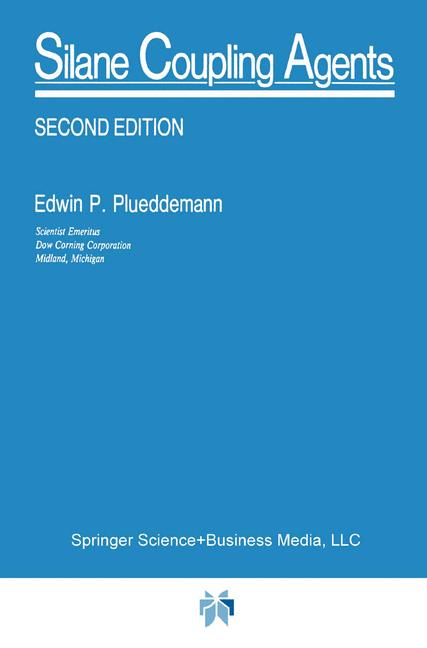
Silane Coupling Agents
☆☆☆☆☆
(0 reviews)
Lowest price (incl. delivery)
204,99 USD
Typical price193,49 PLN
Lowest (90 days)192,59 PLN
Offers7
Last updatedför 5 dagar sedan
Price history (90 days)
Full history
2026-08-08
2026-08-15
| Uppdaterad | Pris |
|---|---|
| 2026-08-08 | 192,59 |
| 2026-08-15 | 192,59 |
| Säljare | Product price | Delivery | Totalt | Tillgänglighet | Updated | |
|---|---|---|---|---|---|---|
| SP SpringerNatureLink Shop INT | 179,99 USD | 25,00 USD | 204,99 USD | Tillgänglig | för 5 dagar sedan | View offer |
| SP SpringerNatureLink Shop INT | 179,99 USD | free | 179,99 USD | Tillgänglig | för 5 dagar sedan | View offer |
| SP SpringerNatureLink Shop INT | 187,19 EUR | free | 187,19 EUR | Tillgänglig | för 5 dagar sedan | View offer |
| SP Springer Nature Author | 192,59 EUR | 19,00 EUR | 211,59 EUR | Tillgänglig | för 1 vecka sedan | View offer |
| SP SpringerNatureLink Shop INT | 197,99 EUR | 29,00 EUR | 226,99 EUR | Tillgänglig | för 5 dagar sedan | View offer |
| SP SpringerNatureLink Shop INT | 279,99 USD | 19,00 USD | 298,99 USD | Tillgänglig | för 5 dagar sedan | View offer |
| SP SpringerNatureLink Shop INT | 279,99 USD | 15,00 USD | 294,99 USD | Tillgänglig | för 5 dagar sedan | View offer |
Priser och tillgänglighet kan ändras. Senast uppdaterad: 15.08.2026 07:27.
0,0
☆☆☆☆☆
0 reviews
5★
0%
4★
0%
3★
0%
2★
0%
1★
0%
Product reviews
No reviews yet — be the first!
* Much progress has been made in the last 8 years in understanding the theory and practice of silane coupling agents. A major advance in this direction was the measurement of true equilibrium constants for the hydroly sis and formation of siloxane bonds. Equilibrium constants for bond reten tion are so favorable that a silane coupling agent on silica has a thousandfold advantage for bond retention in the presence of water over an alkoxysilane bond formed from hydroxy-functional polymers and silica. In practice, the bonds of certain epoxies to silane-primed glass resist debonding by water about a thousand times as long as the epoxy bond to unprimed glass. Oxane bonds of silane coupling agents to metal oxides seem to follow the same mechanism of equilibrium hydrolysis and rebonding, although equilibrium constants have not been measured for individual metal-oxygen silicon bonds. This suggests, however, that methods of improving bond retention to glass will also improve the water resistance of bonds to metals. of standard coupling agents with a hydrophobic silane or one Modification with extra siloxane cross-linking have improved the water resistance of bonds to glass and metals another hundredfold over that obtained with single coupling agents.
Similar products
 50 Years of Philosophy and Medicine
from $107.30
50 Years of Philosophy and Medicine
from $107.30
 Understanding Cybersecurity Law and Digital Privacy
from $122.63
Understanding Cybersecurity Law and Digital Privacy
from $122.63
 Decisions in International Trade and Logistics
from $122.63
Decisions in International Trade and Logistics
from $122.63
 Advances in Economic Measurement
from $122.63
Advances in Economic Measurement
from $122.63
 Nanomaterials
from $137.96
Nanomaterials
from $137.96
 Sustainable Scaffolds-based Strategies in Tissue Engineering and Regenerative Medicine
from $162.87
Sustainable Scaffolds-based Strategies in Tissue Engineering and Regenerative Medicine
from $162.87
 Narratives in Educational Research
from $162.87
Narratives in Educational Research
from $162.87
 Environmental Biology of the Young Chinese Sturgeon
from $210.78
Environmental Biology of the Young Chinese Sturgeon
from $210.78