
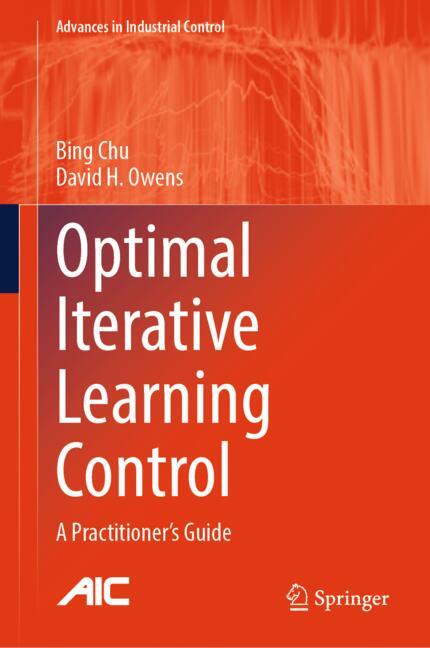
Optimal Iterative Learning Control
☆☆☆☆☆
(0 reviews)
Lowest price (incl. delivery)
119,99 USD
Typical price2 303,93 PLN
Lowest (90 days)124,79 PLN
Offers7
Last updatedför 1 vecka sedan
Price history (90 days)
Full history
2026-08-08
2026-08-15
| Uppdaterad | Pris |
|---|---|
| 2026-08-08 | 124,79 |
| 2026-08-15 | 124,79 |
| Säljare | Product price | Delivery | Totalt | Tillgänglighet | Updated | |
|---|---|---|---|---|---|---|
| SP SpringerNatureLink Shop INT | 119,99 USD | free | 119,99 USD | Tillgänglig | för 3 dagar sedan | View offer |
| SP SpringerNatureLink Shop INT | 22 879,00 JPY | free | 22 879,00 JPY | Tillgänglig | för 3 dagar sedan | View offer |
| SP Springer Nature Author | 22 879,00 JPY | free | 22 879,00 JPY | Tillgänglig | för 1 vecka sedan | View offer |
| SP SpringerNatureLink Shop INT | 159,99 USD | free | 159,99 USD | Tillgänglig | för 3 dagar sedan | View offer |
| SP SpringerNatureLink Shop INT | 179,99 USD | 29,00 USD | 208,99 USD | Tillgänglig | för 3 dagar sedan | View offer |
| SP SpringerNatureLink Shop INT | 179,99 USD | 29,00 USD | 208,99 USD | Tillgänglig | för 3 dagar sedan | View offer |
| SP SpringerNatureLink Shop INT | 189,00 EUR | 19,00 EUR | 208,00 EUR | Tillgänglig | för 3 dagar sedan | View offer |
Priser och tillgänglighet kan ändras. Senast uppdaterad: 08.08.2026 23:28.
0,0
☆☆☆☆☆
0 reviews
5★
0%
4★
0%
3★
0%
2★
0%
1★
0%
Product reviews
No reviews yet — be the first!
This book introduces an optimal iterative learning control (ILC) design framework from the end user's point of view. Its central theme is the understanding of model dynamics, the construction of a procedure for systematic input updating and their contribution to successful algorithm design. The authors discuss the many applications of ILC in industrial systems, applications such as robotics and mechanical testing. The text covers a number of optimal ILC design methods, including gradient-based and norm-optimal ILC. Their convergence properties are described and detailed design guidelines, including performance-improvement mechanisms, are presented. Readers are given a clear picture of the nature of ILC and the benefits of the optimization-based approach from the conceptual and mathematical foundations of the problem of algorithm construction to the impact of available parameters in making acceleration of algorithmic convergence possible. Three case studies on robotic platforms, an electro-mechanical machine, and robot-assisted stroke rehabilitation are included to demonstrate the application of these methods in the real-world. With its emphasis on basic concepts, detailed design guidelines and examples of benefits, Optimal Iterative Learning Control will be of value to practising engineers and academic researchers alike.
Similar products
 50 Years of Philosophy and Medicine
from $107.30
50 Years of Philosophy and Medicine
from $107.30
 Understanding Cybersecurity Law and Digital Privacy
from $122.63
Understanding Cybersecurity Law and Digital Privacy
from $122.63
 Decisions in International Trade and Logistics
from $122.63
Decisions in International Trade and Logistics
from $122.63
 Advances in Economic Measurement
from $122.63
Advances in Economic Measurement
from $122.63
 Nanomaterials
from $137.96
Nanomaterials
from $137.96
 Sustainable Scaffolds-based Strategies in Tissue Engineering and Regenerative Medicine
from $162.87
Sustainable Scaffolds-based Strategies in Tissue Engineering and Regenerative Medicine
from $162.87
 Narratives in Educational Research
from $162.87
Narratives in Educational Research
from $162.87
 Environmental Biology of the Young Chinese Sturgeon
from $210.78
Environmental Biology of the Young Chinese Sturgeon
from $210.78