
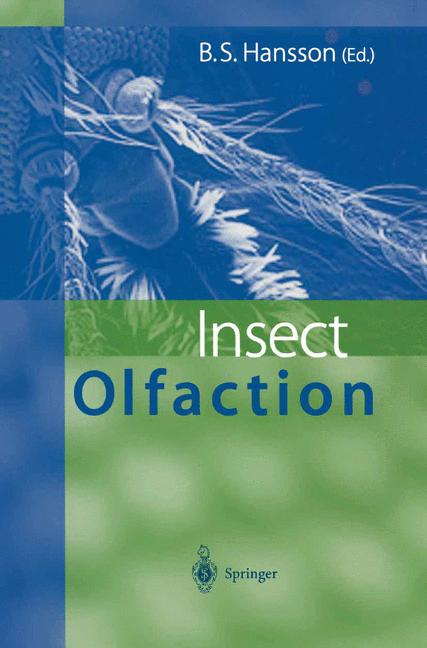
Insect Olfaction
☆☆☆☆☆
(0 reviews)
Lowest price (incl. delivery)
398,99 USD
Typical price360,71 PLN
Lowest (90 days)343,19 PLN
Offers3
Last updatedför 1 vecka sedan
Price history (90 days)
Full history
2026-08-08
2026-08-15
| Uppdaterad | Pris |
|---|---|
| 2026-08-08 | 343,19 |
| 2026-08-15 | 343,19 |
| Säljare | Product price | Delivery | Totalt | Tillgänglighet | Updated | |
|---|---|---|---|---|---|---|
| SP SpringerNatureLink Shop INT | 379,99 USD | 19,00 USD | 398,99 USD | Tillgänglig | för 6 dagar sedan | View offer |
| SP SpringerNatureLink Shop INT | 389,50 EUR | 15,00 EUR | 404,50 EUR | Tillgänglig | för 6 dagar sedan | View offer |
| SP Springer Nature Author | 389,50 EUR | 25,00 EUR | 414,50 EUR | Tillgänglig | för 1 vecka sedan | View offer |
Priser och tillgänglighet kan ändras. Senast uppdaterad: 08.08.2026 23:03.
EAN
9783642084492
Springer Nature
0,0
☆☆☆☆☆
0 reviews
5★
0%
4★
0%
3★
0%
2★
0%
1★
0%
Product reviews
No reviews yet — be the first!
JOHN G. HILDEBRAND Research on insect olfaction is important for at least two reasons. First, the olfactory systems of insects and their arthropod kin are experi mentally favourable models for studies aimed at learning about general principles of olfaction that apply to vertebrates and invertebrates alike. Detailed comparisons between the olfactory pathways in vertebrates and insects have revealed striking similarities of functional organisation, physiol ogy, and development, suggesting that olfactory information is processed through neural mechanisms more similar than different in these evolution arily remote creatures. Second, insect olfaction itself is important because of the economic and medical impact of insects that are agricultural pests and disease vectors, as well as positive impact of beneficial species, such as the bees and moths responsible for pollination and production of honey. The harm or benefit attributable to an insect is a function of what it does - that is, of its behaviour - which is shaped by sensory information. Often olfaction is the key modality for control of basic insect behaviour, such as ori entation and movement toward, and interactions with, potential mates, appro priate sites for oviposition, and sources of food. Not surprisingly, therefore, much work on insect olfaction has been motivated by long-term hopes of using knowledge of this pivotal sensory system to design strategies for mon itoring and managing harmful species and fostering the welfare of beneficial ones.
Similar products
 50 Years of Philosophy and Medicine
from $107.30
50 Years of Philosophy and Medicine
from $107.30
 Understanding Cybersecurity Law and Digital Privacy
from $122.63
Understanding Cybersecurity Law and Digital Privacy
from $122.63
 Decisions in International Trade and Logistics
from $122.63
Decisions in International Trade and Logistics
from $122.63
 Advances in Economic Measurement
from $122.63
Advances in Economic Measurement
from $122.63
 Nanomaterials
from $137.96
Nanomaterials
from $137.96
 Sustainable Scaffolds-based Strategies in Tissue Engineering and Regenerative Medicine
from $162.87
Sustainable Scaffolds-based Strategies in Tissue Engineering and Regenerative Medicine
from $162.87
 Narratives in Educational Research
from $162.87
Narratives in Educational Research
from $162.87
 Environmental Biology of the Young Chinese Sturgeon
from $210.78
Environmental Biology of the Young Chinese Sturgeon
from $210.78