
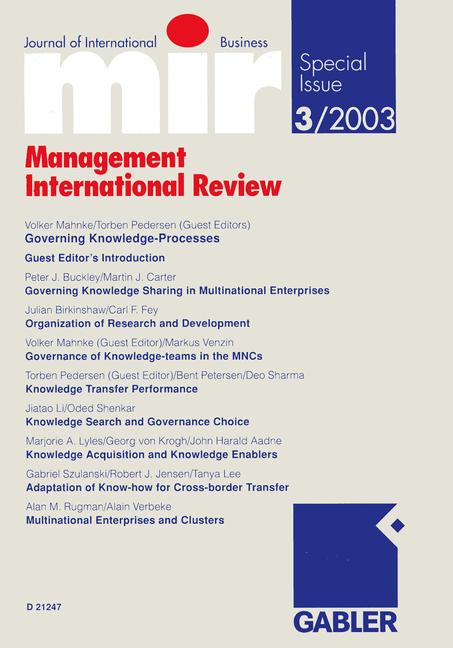
Governing Knowledge-Processes
☆☆☆☆☆
(0 reviews)
Lowest price (incl. delivery)
6 434,00 JPY
Typical price252,55 PLN
Lowest (90 days)22,51 PLN
Offers5
Last updatedpred 1 týždňom
Price history (90 days)
Full history
2026-08-07
2026-08-14
| Aktualizované | Cena |
|---|---|
| 2026-08-07 | 22,51 |
| 2026-08-08 | 46,79 |
| 2026-08-14 | 46,79 |
| Predajca | Product price | Delivery | Spolu | Dostupnosť | Updated | |
|---|---|---|---|---|---|---|
| SP SpringerNatureLink Shop INT | 6 434,00 JPY | free | 6 434,00 JPY | Dostupné | pred 2 dňami | View offer |
| SP Springer Nature Author | 6 434,00 JPY | 25,00 JPY | 6 459,00 JPY | Dostupné | pred 1 týždňom | View offer |
| VI VitalSource | 48,14 EUR | 15,00 EUR | 63,14 EUR | Dostupné | pred 1 týždňom | View offer |
| SP SpringerNatureLink Shop INT | 49,04 EUR | 19,00 EUR | 68,04 EUR | Dostupné | pred 2 dňami | View offer |
| KN Knetbooks.com | 54,67 USD | 15,00 USD | 69,67 USD | Dostupné | pred 1 týždňom | View offer |
Ceny a dostupnosť sa môžu zmeniť. Naposledy aktualizované: 08.08.2026 10:24.
EAN
9783409124942
Springer Nature
0,0
☆☆☆☆☆
0 reviews
5★
0%
4★
0%
3★
0%
2★
0%
1★
0%
Product reviews
No reviews yet — be the first!
lication. Key criteria for inclusion included a sound combination of conceptuali zation and empirical grounding in response to the questions above. Peter J. Buckley and Martin J. Carter in their paper Governing Knowledge Sharing in Multinational Enterprises examines knowledge-sharing processes in four UK MNCs. A key challenge is to design governance architectures so that application strategy (uses of a given portfolio of knowledge) and discovery strategy (new combinations of knowledge) can be supported through knowledge sharing. A key trade-off obtains here between integration and partitioning of knowledge assets, whereby increased partitioning facilitates local knowledge sharing but complicates global integration. In addition, coordination mechanisms employed in the governance of knowledge sharing may be organized centrally or decentrally, whereby central organization may lead to knowledge loss and managerial overload while decentral organization may lead to loss of control. An important contingency in resolving these governance problems is the extent to which firms follow application and discovery strategies. In addition, the authors recommend to closely integrate incentive systems with attempts for knowledge sharing including individual incentives and rewards. Julian Birkinshaw and Carl F. Fey examine the Organization of Research and Development in Large Multinational Firms in a sample of 107 firms based in the UK and Sweden. The key challenge addressed in this paper is how knowledge creation is governed and how this impacts R&D performance. Several trade-offs obtain. First, headquarter centred vs.