
Monopoly Control
☆☆☆☆☆
(0 reviews)
Lowest price (incl. delivery)
13 756,00 JPY
Typical price7 483,01 PLN
Lowest (90 days)102,71 PLN
Offers4
Last updated1 неделю назад
Price history (90 days)
Full history
2026-08-08
2026-08-15
| Обновлено | Цена |
|---|---|
| 2026-08-08 | 102,71 |
| 2026-08-15 | 13 727,00 |
| Продавец | Product price | Delivery | Всего | Наличие | Updated | |
|---|---|---|---|---|---|---|
| SP SpringerNatureLink Shop INT | 13 727,00 JPY | 29,00 JPY | 13 756,00 JPY | Доступно | 5 дней назад | View offer |
| SP Springer Nature Author | 13 727,00 JPY | 19,00 JPY | 13 746,00 JPY | Доступно | 1 неделю назад | View offer |
| SP SpringerNatureLink Shop INT | 102,71 USD | free | 102,71 USD | Доступно | 5 дней назад | View offer |
| SP SpringerNatureLink Shop INT | 102,71 EUR | 19,00 EUR | 121,71 EUR | Доступно | 5 дней назад | View offer |
Цены и наличие могут меняться. Последнее обновление: 08.08.2026 23:22.
EAN
9789819927265
Springer Nature
0,0
☆☆☆☆☆
0 reviews
5★
0%
4★
0%
3★
0%
2★
0%
1★
0%
Product reviews
No reviews yet — be the first!
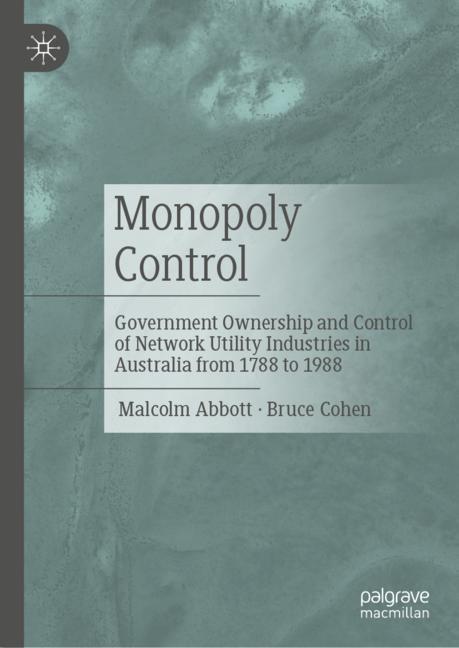
This book traces the historical development of the network utilities sector in Australia (communications, rail, gas, electricity, water supply, and sewerage services). It looks across industries, time periods and the state and federal jurisdictions, to identify what motivated the various governments to establish these enterprises and what issues arose. The book is therefore informed by the relationship between politics and society on the one hand and economic history on the other; as well as the efforts of governments in Australia to promote economic growth and the wealth of Australians. The main focus of the book is to identify and analyse the following two main questions: (i) What were the main drivers and motivations for governments establishing government-owned business in the network utilities sector? (ii) To what degree were these government-owned businesses successful at achieving the aims of these governments? In doing so the inherent characteristics of these industries areidentified, in terms of their need for rights of way, network effects, the monopoly characteristics, and the potential for stimulating growth.
Similar products
 50 Years of Philosophy and Medicine
from $107.30
50 Years of Philosophy and Medicine
from $107.30
 Understanding Cybersecurity Law and Digital Privacy
from $122.63
Understanding Cybersecurity Law and Digital Privacy
from $122.63
 Decisions in International Trade and Logistics
from $122.63
Decisions in International Trade and Logistics
from $122.63
 Advances in Economic Measurement
from $122.63
Advances in Economic Measurement
from $122.63
 Nanomaterials
from $137.96
Nanomaterials
from $137.96
 Sustainable Scaffolds-based Strategies in Tissue Engineering and Regenerative Medicine
from $162.87
Sustainable Scaffolds-based Strategies in Tissue Engineering and Regenerative Medicine
from $162.87
 Narratives in Educational Research
from $162.87
Narratives in Educational Research
from $162.87
 Environmental Biology of the Young Chinese Sturgeon
from $210.78
Environmental Biology of the Young Chinese Sturgeon
from $210.78