
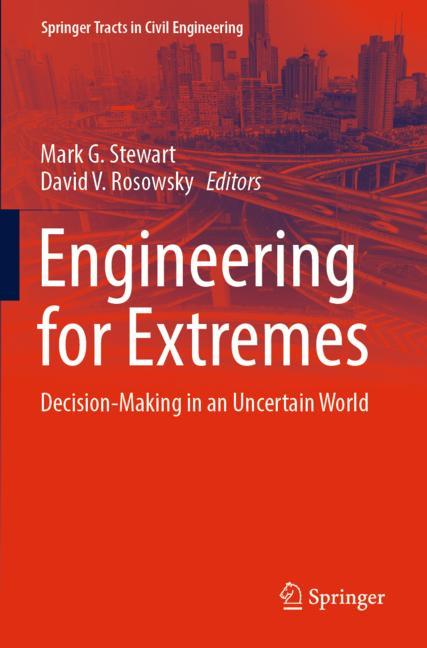
Engineering for Extremes
☆☆☆☆☆
(0 reviews)
Lowest price (incl. delivery)
169,99 USD
Typical price176,35 PLN
Lowest (90 days)139,09 PLN
Offers6
Last updated3 дня назад
Price history (90 days)
Full history
2026-08-08
2026-08-15
| Обновлено | Цена |
|---|---|
| 2026-08-08 | 139,09 |
| 2026-08-15 | 149,99 |
| Продавец | Product price | Delivery | Всего | Наличие | Updated | |
|---|---|---|---|---|---|---|
| SP SpringerNatureLink Shop INT | 169,99 USD | free | 169,99 USD | Доступно | 3 дня назад | View offer |
| SP SpringerNatureLink Shop INT | 169,99 USD | free | 169,99 USD | Доступно | 3 дня назад | View offer |
| SP SpringerNatureLink Shop INT | 199,99 USD | 15,00 USD | 214,99 USD | Доступно | 3 дня назад | View offer |
| SP SpringerNatureLink Shop INT | 199,99 USD | 29,00 USD | 228,99 USD | Доступно | 3 дня назад | View offer |
| SP Springer Nature Author | 199,99 USD | free | 199,99 USD | Доступно | 1 неделю назад | View offer |
| SP SpringerNatureLink Shop INT | 186,99 EUR | 25,00 EUR | 211,99 EUR | Доступно | 3 дня назад | View offer |
Цены и наличие могут меняться. Последнее обновление: 15.08.2026 06:38.
0,0
☆☆☆☆☆
0 reviews
5★
0%
4★
0%
3★
0%
2★
0%
1★
0%
Product reviews
No reviews yet — be the first!
The volume explains how risk and decision-making analytics can be applied to the wicked problem of protecting infrastructure and society from extreme events. There is increasing research that takes into account the risks associated with the timing and severity of extreme events in engineering to reduce the vulnerability or increase the resiliency of infrastructure. "Engineering for extremes" is defined as measures taken to reduce the vulnerability or increase the resiliency of built infrastructure to climate change, hurricanes, storms, floods, earthquakes, heat waves, fires, and malevolent and abnormal events that include terrorism, gas explosions, vehicle impact and vehicle overload. The book introduces the key concepts needed to assess the economic and social well-being risks, costs and benefits of infrastructure to extreme events. This includes hazard modelling (likelihood and severity), infrastructure vulnerability, resilience or exposure (likelihood and extent of damage),social and economic loss models, risk reduction from protective measures, and decision theory (cost-benefit and utility analyses). Case studies authored by experts from around the world describe the practical aspects of risk assessment when deciding on the most cost-efficient measures to reduce infrastructure vulnerability to extreme events for housing, buildings, bridges, roads, tunnels, pipelines, and electricity infrastructure in the developed and developing worlds.
Similar products
 50 Years of Philosophy and Medicine
from $107.30
50 Years of Philosophy and Medicine
from $107.30
 Understanding Cybersecurity Law and Digital Privacy
from $122.63
Understanding Cybersecurity Law and Digital Privacy
from $122.63
 Decisions in International Trade and Logistics
from $122.63
Decisions in International Trade and Logistics
from $122.63
 Advances in Economic Measurement
from $122.63
Advances in Economic Measurement
from $122.63
 Nanomaterials
from $137.96
Nanomaterials
from $137.96
 Sustainable Scaffolds-based Strategies in Tissue Engineering and Regenerative Medicine
from $162.87
Sustainable Scaffolds-based Strategies in Tissue Engineering and Regenerative Medicine
from $162.87
 Narratives in Educational Research
from $162.87
Narratives in Educational Research
from $162.87
 Environmental Biology of the Young Chinese Sturgeon
from $210.78
Environmental Biology of the Young Chinese Sturgeon
from $210.78