
Digital Robbery
☆☆☆☆☆
(0 reviews)
Lowest price (incl. delivery)
8 022,00 JPY
Typical price2 051,25 PLN
Lowest (90 days)66,00 PLN
Offers2
Last updated6 дней назад
Price history (90 days)
Full history
2026-08-08
2026-08-15
| Обновлено | Цена |
|---|---|
| 2026-08-08 | 66,00 |
| 2026-08-15 | 66,00 |
| Продавец | Product price | Delivery | Всего | Наличие | Updated | |
|---|---|---|---|---|---|---|
| SP Springer Nature Author | 8 007,00 JPY | 15,00 JPY | 8 022,00 JPY | Доступно | 6 дней назад | View offer |
| SP SpringerNatureLink Shop INT | 66,00 EUR | 19,00 EUR | 85,00 EUR | Доступно | 4 часа назад | View offer |
Цены и наличие могут меняться. Последнее обновление: 08.08.2026 23:17.
EAN
9783030707064
Springer Nature
0,0
☆☆☆☆☆
0 reviews
5★
0%
4★
0%
3★
0%
2★
0%
1★
0%
Product reviews
No reviews yet — be the first!
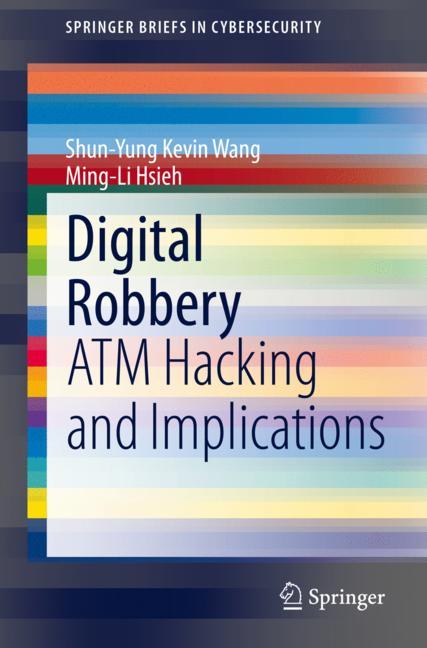
This book begins with a broader discussion of cybercrime and attacks targeting ATMs and then focuses on a specific type of cybercrime named “ATM Hacking.” It discusses ATM Hacking from a more full scope of aspects, including technology, modus operandi, law enforcement, socio-economic and geopolitical context, and theory development. After unpacking a classic case of ATM Hacking and its modus operandi, implications for cybersecurity and prevention, intra- and inter-agency collaboration, and theory development are presented. This book also demonstrates the analysis of extensive qualitative data collected from a high-profile case in which European criminal group hacked into a London voice mail server belonging to a Taiwanese financial institution – First Commercial Bank,. Then it programmed dozens of ATMs to “spit out” millions of dollars of cash. The successful crackdown on this type of crime is rare, if not unique, while the number of similar crimes has increased enormously in recent years and the trend seem to continue unabatingly. Further, the implications go beyond a country or a continent. Intra- and inter-agency collaboration among players of law enforcement is essential to the case especially in the police context of “turf jealousies.” The authors seek to document the ways in which agencies collaborate, as well as the perceived benefits and challenges of cooperation. Whether the broader political and contextual climates in which these agencies operate, limit the extent to which they can cooperate. This book is useful as a reference for researchers and professionals working in the area of cybercrime and cybersecurity. University professors can also use this book as a case study for senior seminars or graduate courses.
Similar products
 The Industrialisation of Soviet Russia Volume 4: Crisis and Progress in the Soviet Economy, 1931-193
from $149.99
The Industrialisation of Soviet Russia Volume 4: Crisis and Progress in the Soviet Economy, 1931-193
from $149.99
 Ideen zu einer reinen Phänomenologie und phänomenologischen Philosophie. Zweites Buch: Phänomenologi
from $149.99
Ideen zu einer reinen Phänomenologie und phänomenologischen Philosophie. Zweites Buch: Phänomenologi
from $149.99
 Strategic Design for Sustainable Futures
from $190.49
Strategic Design for Sustainable Futures
from $190.49
 Strategisches Bauunternehmensmanagement
from $149.99
Strategisches Bauunternehmensmanagement
from $149.99
 Operationsatlas für die orthopädisch-unfallchirurgische Weiterbildung
from $149.99
Operationsatlas für die orthopädisch-unfallchirurgische Weiterbildung
from $149.99
 Der Vertrag von Lissabon vor dem Bundesverfassungsgericht
from $149.99
Der Vertrag von Lissabon vor dem Bundesverfassungsgericht
from $149.99
 Electronic Business Engineering
from $161.99
Electronic Business Engineering
from $161.99
 Proteomics: Biomedical and Pharmaceutical Applications
from $190.49
Proteomics: Biomedical and Pharmaceutical Applications
from $190.49