
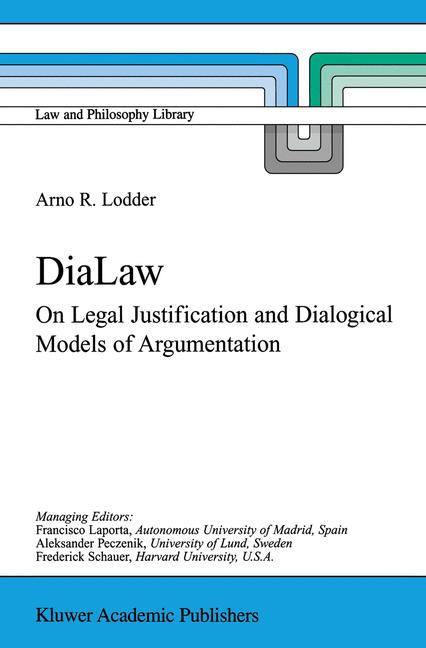
DiaLaw
☆☆☆☆☆
(0 reviews)
Lowest price (incl. delivery)
21 449,00 JPY
Typical price2 706,57 PLN
Lowest (90 days)117,69 PLN
Offers6
Last updated1 неделю назад
Price history (90 days)
Full history
2026-08-08
2026-08-15
| Обновлено | Цена |
|---|---|
| 2026-08-08 | 117,69 |
| 2026-08-15 | 117,69 |
| Продавец | Product price | Delivery | Всего | Наличие | Updated | |
|---|---|---|---|---|---|---|
| SP SpringerNatureLink Shop INT | 21 449,00 JPY | free | 21 449,00 JPY | Доступно | 2 дня назад | View offer |
| SP Springer Nature Author | 21 449,00 JPY | 19,00 JPY | 21 468,00 JPY | Доступно | 1 неделю назад | View offer |
| SP SpringerNatureLink Shop INT | 149,99 USD | free | 149,99 USD | Доступно | 2 дня назад | View offer |
| SP SpringerNatureLink Shop INT | 169,99 USD | 29,00 USD | 198,99 USD | Доступно | 2 дня назад | View offer |
| SP SpringerNatureLink Shop INT | 169,99 USD | 15,00 USD | 184,99 USD | Доступно | 2 дня назад | View offer |
| SP SpringerNatureLink Shop INT | 177,00 EUR | free | 177,00 EUR | Доступно | 2 дня назад | View offer |
Цены и наличие могут меняться. Последнее обновление: 08.08.2026 23:28.
0,0
☆☆☆☆☆
0 reviews
5★
0%
4★
0%
3★
0%
2★
0%
1★
0%
Product reviews
No reviews yet — be the first!
This book is a revised version of my dissertation 'DiaLaw - on legal th justification and dialog games' that I defended on June 5 1998 at the Universiteit Maastricht. The chapters 1, 4 & 5 (now: 1, 5 & 6) of my dissertation have remained largely unaltered. In chapter 2 I added explicitly the distinction between constructing legal justification and reconstructing it, and tried to elucidate the differences (and similarities) between the product and process of justification. Chapter 3 is divided into two chapters: one on the general characteristics of DiaLaw (now: chapter 3), and the other on specific, legal characteristics of DiaLaw (now: chapter 4). In order to improve readability, all rules in these chapters have been rewritten considerably. The section on the implementation of DiaLaw is moved to the appendix. In chapter 7 (the former chapter 6), a discussion of the notions 'procedural' and 'structural' arguments is added, and different layers in argumentation models are discussed. Finally, in chapter 8 (the former chapter 7) is added a recapitulation of my view on legal justification, and a discussion on the future use in legal practice of dialog models that represent argumentation in a natural way. The main thesis has remained unaltered: legal justification should be modeled as a procedural, dialogical model in which not only products of argumentation are allowed, but, even in formal models, rhetorical, psychological aspects of argument are dealt with.
Similar products
 50 Years of Philosophy and Medicine
from $107.30
50 Years of Philosophy and Medicine
from $107.30
 Understanding Cybersecurity Law and Digital Privacy
from $122.63
Understanding Cybersecurity Law and Digital Privacy
from $122.63
 Decisions in International Trade and Logistics
from $122.63
Decisions in International Trade and Logistics
from $122.63
 Advances in Economic Measurement
from $122.63
Advances in Economic Measurement
from $122.63
 Nanomaterials
from $137.96
Nanomaterials
from $137.96
 Sustainable Scaffolds-based Strategies in Tissue Engineering and Regenerative Medicine
from $162.87
Sustainable Scaffolds-based Strategies in Tissue Engineering and Regenerative Medicine
from $162.87
 Narratives in Educational Research
from $162.87
Narratives in Educational Research
from $162.87
 Environmental Biology of the Young Chinese Sturgeon
from $210.78
Environmental Biology of the Young Chinese Sturgeon
from $210.78