
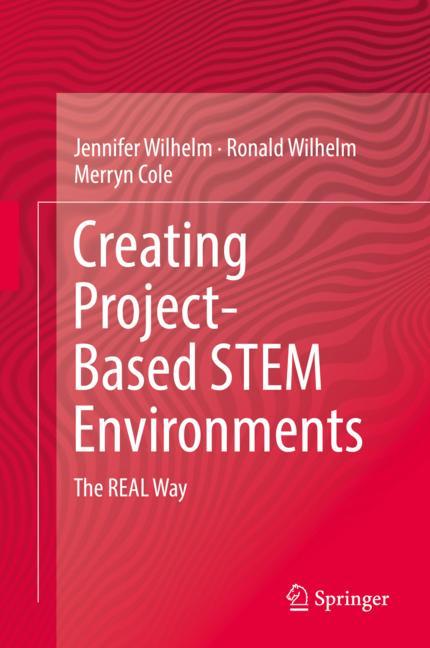
Creating Project-Based STEM Environments
☆☆☆☆☆
(0 reviews)
Lowest price (incl. delivery)
18 614,00 JPY
Typical price1 352,95 PLN
Lowest (90 days)87,50 PLN
Offers6
Last updated6 дней назад
Price history (90 days)
Full history
2026-08-08
2026-08-15
| Обновлено | Цена |
|---|---|
| 2026-08-08 | 87,50 |
| 2026-08-15 | 87,50 |
| Продавец | Product price | Delivery | Всего | Наличие | Updated | |
|---|---|---|---|---|---|---|
| SP SpringerNatureLink Shop INT | 18 589,00 JPY | 25,00 JPY | 18 614,00 JPY | Доступно | 5 часов назад | View offer |
| SP Springer Nature Author | 18 589,00 JPY | 19,00 JPY | 18 608,00 JPY | Доступно | 6 дней назад | View offer |
| SP SpringerNatureLink Shop INT | 129,99 USD | free | 129,99 USD | Доступно | 8 часов назад | View offer |
| SP SpringerNatureLink Shop INT | 139,99 USD | 29,00 USD | 168,99 USD | Доступно | 8 часов назад | View offer |
| SP SpringerNatureLink Shop INT | 139,99 USD | 19,00 USD | 158,99 USD | Доступно | 8 часов назад | View offer |
| SP SpringerNatureLink Shop INT | 153,50 EUR | 19,00 EUR | 172,50 EUR | Доступно | 8 часов назад | View offer |
Цены и наличие могут меняться. Последнее обновление: 08.08.2026 22:23.
0,0
☆☆☆☆☆
0 reviews
5★
0%
4★
0%
3★
0%
2★
0%
1★
0%
Product reviews
No reviews yet — be the first!
This book models project-based environments that are intentionally designed around the United States Common Core State Standards (CCSS, 2010) for Mathematics, the Next Generation Science Standards (NGSS Lead States, 2013) for Science, and the National Educational Technology Standards (ISTE, 2008). The primary purpose of this book is to reveal how middle school STEM classrooms can be purposefully designed for 21st Century learners and provide evidence regarding how situated learning experiences will result in more advanced learning. This Project-Based Instruction (PBI) resource illustrates how to design and implement interdisciplinary project-based units based on the REAL (Realistic Explorations in Astronomical Learning – Unit 1) and CREATES (Chemical Reactions Engineered to Address Thermal Energy Situations – Unit 2). The content of the book details these two PBI units with authentic student work, explanations and research behind each lesson (including misconceptions students might hold regarding STEM content), pre/post research results of unit implementation with over 40 teachers and thousands of students. In addition to these two units, there are chapters describing how to design one’s own research-based PBI units incorporating teacher commentaries regarding strategies, obstacles overcome, and successes as they designed and implemented their PBI units for the first time after learning how to create PBI STEM Environments the “REAL” way.
Similar products
 50 Years of Philosophy and Medicine
from $107.30
50 Years of Philosophy and Medicine
from $107.30
 Understanding Cybersecurity Law and Digital Privacy
from $122.63
Understanding Cybersecurity Law and Digital Privacy
from $122.63
 Decisions in International Trade and Logistics
from $122.63
Decisions in International Trade and Logistics
from $122.63
 Advances in Economic Measurement
from $122.63
Advances in Economic Measurement
from $122.63
 Nanomaterials
from $137.96
Nanomaterials
from $137.96
 Sustainable Scaffolds-based Strategies in Tissue Engineering and Regenerative Medicine
from $162.87
Sustainable Scaffolds-based Strategies in Tissue Engineering and Regenerative Medicine
from $162.87
 Narratives in Educational Research
from $162.87
Narratives in Educational Research
from $162.87
 Environmental Biology of the Young Chinese Sturgeon
from $210.78
Environmental Biology of the Young Chinese Sturgeon
from $210.78