
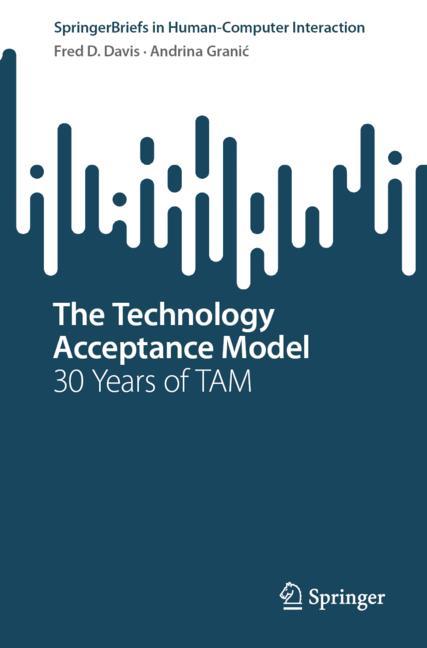
The Technology Acceptance Model
☆☆☆☆☆
(0 reviews)
Lowest price (incl. delivery)
60,99 USD
Typical price35,58 PLN
Lowest (90 days)31,49 PLN
Offers2
Last updated1 zi în urmă
| Vânzător | Product price | Delivery | Total | Disponibilitate | Updated | |
|---|---|---|---|---|---|---|
| SP SpringerNatureLink Shop INT | 41,99 USD | 19,00 USD | 60,99 USD | Disponibil | 1 zi în urmă | View offer |
| SP Springer Nature Author | 41,99 USD | 29,00 USD | 70,99 USD | Disponibil | 15 ore în urmă | View offer |
Prețurile și disponibilitatea se pot modifica. Ultima actualizare: 08.08.2026 11:14.
0,0
☆☆☆☆☆
0 reviews
5★
0%
4★
0%
3★
0%
2★
0%
1★
0%
Product reviews
No reviews yet — be the first!
This SpringerBrief discusses the origins, emergence, evolution, and future of the Technology Acceptance Model (TAM). TAM, simple yet powerful, has been extensively validated, standing as a leading scientific paradigm and a reliable model for explaining, predicting, and improving user acceptance across a spectrum of technological deployments. Over more than three decades since the introduction of TAM, numerous extensions have emerged, incorporating additional variables and collectively referred to as “TAM++”. However, perceived usefulness and perceived ease of use remain the basic beliefs of the core TAM model. The introductory chapter “Once upon a TAM” focuses on the challenging search for a user acceptance crystal ball, showing that it is indeed possible to consistently predict, explain, and improve user acceptance. “Evolution of TAM” traces the model's growth and adaptability, exploring the proliferation of selected TAM-related behavioural intention models, several integrated theoretical approaches, the quest for other behavioural intention antecedents, and TAM’s versatile applications in various contexts. “Revolution of TAM” presents an in-depth systematic review, encompassing a meta-analysis of selected TAM reviews and meta-analyses, and a narrative review of representative primary studies, providing a thorough and extensive understanding of the TAM universe. The epilogue “What will the Future of TAM be Like?” provides insights into its dynamic future. This SpringerBrief concludes with seven actionable principles, serving as a strategic guide for those aiming to customize the TAM++ body of knowledge for application-oriented studies within a particular context. This comprehensive overview of TAM is a valuable source of information for researchers, practitioners, and all interested readers, especially those new to the field.
Similar products
 Patient Safety Coaching
from $91.97
Patient Safety Coaching
from $91.97
 Ethnography and Diversity
from $69.30
Ethnography and Diversity
from $69.30
 Smart Villages
from $91.97
Smart Villages
from $91.97
 Nuclear Non-Proliferation in International Law - Volume VI
from $91.97
Nuclear Non-Proliferation in International Law - Volume VI
from $91.97
 The Price of Freedom
from $91.97
The Price of Freedom
from $91.97
 Eco-Social Policy in the OECD and the World Bank
from $91.97
Eco-Social Policy in the OECD and the World Bank
from $91.97
 Special Topics in Policing
from $122.58
Special Topics in Policing
from $122.58
 Music from the Heart
from $91.97
Music from the Heart
from $91.97