
Rethinking Clusters
☆☆☆☆☆
(0 reviews)
Lowest price (incl. delivery)
91,51 CAD
Typical price90,78 PLN
Lowest (90 days)39,45 PLN
Offers2
Last updated1 săptămână în urmă
| Vânzător | Product price | Delivery | Total | Disponibilitate | Updated | |
|---|---|---|---|---|---|---|
| VI VitalSource | 66,51 CAD | 25,00 CAD | 91,51 CAD | Disponibil | 1 săptămână în urmă | View offer |
| SP Springer Nature Author | 166,39 EUR | 15,00 EUR | 181,39 EUR | Disponibil | 1 săptămână în urmă | View offer |
Prețurile și disponibilitatea se pot modifica. Ultima actualizare: 08.08.2026 22:35.
EAN
9783030619220
Springer Nature
0,0
☆☆☆☆☆
0 reviews
5★
0%
4★
0%
3★
0%
2★
0%
1★
0%
Product reviews
No reviews yet — be the first!
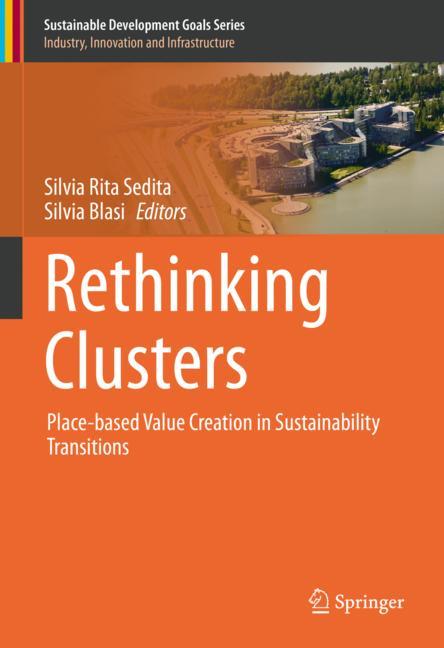
This volume discusses how different geographical spaces can enhance or hinder the capacity of a variety of organizational settings to achieve economic value creation in the pursuit of sustainable regional development. In order to provide the most comprehensive picture of new sources of value creation for sustainable transitions, the book collects contributions that tackle this issue from a variety of perspectives, and adopts a systemic approach where macro, meso and micro-levels of analysis are intertwined in three sections. This multidisciplinary and interdisciplinary approach comes from scholars operating in the fields of planning, economic geography, social entrepreneurship and organizational management. The first section of the book adopts a macro-level approach linking sustainability to the regional development theme, and addresses how organizations work between different social interests to produce outcomes not previously realized. The second section of the book focuses on the spatial dimensions of sustainable development, with particular clusters, industrial districts and regions considered as relevant units of analysis (meso-level analysis). The third section of the book is dedicated to a micro-level approach, illustrating how to drive social entrepreneurship activities, which are based upon sustainable business models centered in the creation of a shared value. The book is geared towards scholars working on sustainable development issues intersecting the disciplines of regional studies, economic geography and management, and will appeal to geographers and researchers in economic development, business innovation, and sustainability transitions.