
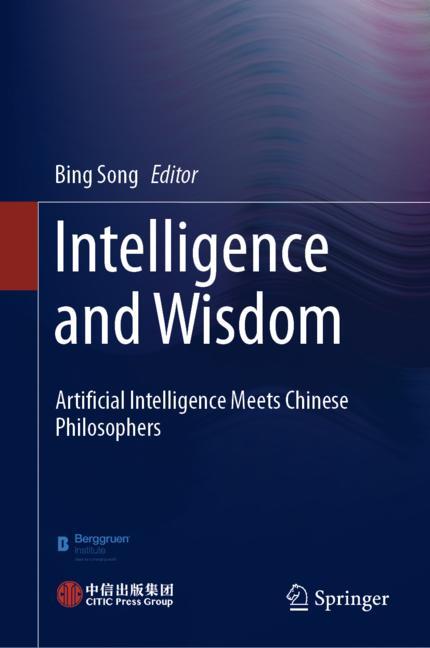
Intelligence and Wisdom
☆☆☆☆☆
(0 reviews)
Lowest price (incl. delivery)
93,08 EUR
Typical price880,47 PLN
Lowest (90 days)89,00 PLN
Offers7
Last updated1 săptămână în urmă
Price history (90 days)
Full history
2026-08-08
2026-08-15
| Actualizat la | Preț |
|---|---|
| 2026-08-08 | 89,00 |
| 2026-08-15 | 89,00 |
| Vânzător | Product price | Delivery | Total | Disponibilitate | Updated | |
|---|---|---|---|---|---|---|
| SP SpringerNatureLink Shop INT | 93,08 EUR | free | 93,08 EUR | Disponibil | 6 zile în urmă | View offer |
| SP SpringerNatureLink Shop INT | 15 729,00 JPY | 15,00 JPY | 15 744,00 JPY | Disponibil | 5 zile în urmă | View offer |
| SP Springer Nature Author | 15 729,00 JPY | 19,00 JPY | 15 748,00 JPY | Disponibil | 1 săptămână în urmă | View offer |
| SP SpringerNatureLink Shop INT | 109,99 USD | free | 109,99 USD | Disponibil | 6 zile în urmă | View offer |
| SP SpringerNatureLink Shop INT | 119,99 USD | 15,00 USD | 134,99 USD | Disponibil | 6 zile în urmă | View offer |
| SP SpringerNatureLink Shop INT | 119,99 USD | free | 119,99 USD | Disponibil | 6 zile în urmă | View offer |
| SP SpringerNatureLink Shop INT | 130,00 EUR | 19,00 EUR | 149,00 EUR | Disponibil | 6 zile în urmă | View offer |
Prețurile și disponibilitatea se pot modifica. Ultima actualizare: 08.08.2026 22:11.
0,0
☆☆☆☆☆
0 reviews
5★
0%
4★
0%
3★
0%
2★
0%
1★
0%
Product reviews
No reviews yet — be the first!
This book centers on rethinking foundational values in the era of frontier technologies by tapping into the wisdom of Chinese philosophical traditions. It tries to answer the following questions: How is the essence underpinning humans, nature, and machines changing in this age of frontier technologies? What is the appropriate ethical framework for regulating human–machine relationships? What human values should be embedded in or learnt by AI? Some interesting points emerged from the discussions. For example, the three dominant schools of Chinese thinking–Confucianism, Daoism and Buddhism– invariably reflect non-anthropocentric perspectives and none of them places humanity in a supreme position in the universe. While many Chinese philosophers are not convinced by the prospect of machine intelligence exceeding that of humans, the strong influence of non-anthropocentrism in the Chinese thinking contributed to much less panic in China than in the West about the existential risks of AI. The thinking is that as human beings have always lived with other forms of existence, living with programs or other forms of “beings,” which may become more capable than humans, will not inevitably lead to a dystopia. Second, all three schools emphasize self-restraint, constant introspection, and the pursuit of sage-hood or enlightenment. These views therefore see the potential risks posed by frontier technologies as an opportunity for the humanity to engage in introspection on the lessons learned from our social and political history. It is long overdue that humanity shall rethink its foundational values to take into account a multi-being planetary outlook. This book consists of nine leading Chinese philosophers’ reflections on AI’s impact on human nature and the human society. This is a groundbreaking work, which has pioneered the in-depth intellectual exploration involving traditional Chinese philosophy and frontier technologies and has inspired multidisciplinary and across area studies on AI, philosophy, and ethical implications. Chapters “1, 3, 5, 7 and 10” are available open access under a Creative Commons Attribution-NonCommercial-NoDerivatives 4.0 International License via link.springer.com.
Similar products
 50 Years of Philosophy and Medicine
from $107.30
50 Years of Philosophy and Medicine
from $107.30
 Understanding Cybersecurity Law and Digital Privacy
from $122.63
Understanding Cybersecurity Law and Digital Privacy
from $122.63
 Decisions in International Trade and Logistics
from $122.63
Decisions in International Trade and Logistics
from $122.63
 Advances in Economic Measurement
from $122.63
Advances in Economic Measurement
from $122.63
 Nanomaterials
from $137.96
Nanomaterials
from $137.96
 Sustainable Scaffolds-based Strategies in Tissue Engineering and Regenerative Medicine
from $162.87
Sustainable Scaffolds-based Strategies in Tissue Engineering and Regenerative Medicine
from $162.87
 Narratives in Educational Research
from $162.87
Narratives in Educational Research
from $162.87
 Environmental Biology of the Young Chinese Sturgeon
from $210.78
Environmental Biology of the Young Chinese Sturgeon
from $210.78