
Human-Robot Interaction
☆☆☆☆☆
(0 reviews)
Lowest price (incl. delivery)
20 616,00 JPY
Typical price5 272,63 PLN
Lowest (90 days)149,00 PLN
Offers3
Last updated1 săptămână în urmă
Price history (90 days)
Full history
2026-08-08
2026-08-15
| Actualizat la | Preț |
|---|---|
| 2026-08-08 | 149,00 |
| 2026-08-15 | 170,00 |
| Vânzător | Product price | Delivery | Total | Disponibilitate | Updated | |
|---|---|---|---|---|---|---|
| SP SpringerNatureLink Shop INT | 20 591,00 JPY | 25,00 JPY | 20 616,00 JPY | Disponibil | 3 zile în urmă | View offer |
| SP Springer Nature Author | 20 591,00 JPY | 15,00 JPY | 20 606,00 JPY | Disponibil | 1 săptămână în urmă | View offer |
| SP SpringerNatureLink Shop INT | 170,00 EUR | free | 170,00 EUR | Disponibil | 3 zile în urmă | View offer |
Prețurile și disponibilitatea se pot modifica. Ultima actualizare: 08.08.2026 23:33.
EAN
9783030423070
Springer Nature
0,0
☆☆☆☆☆
0 reviews
5★
0%
4★
0%
3★
0%
2★
0%
1★
0%
Product reviews
No reviews yet — be the first!
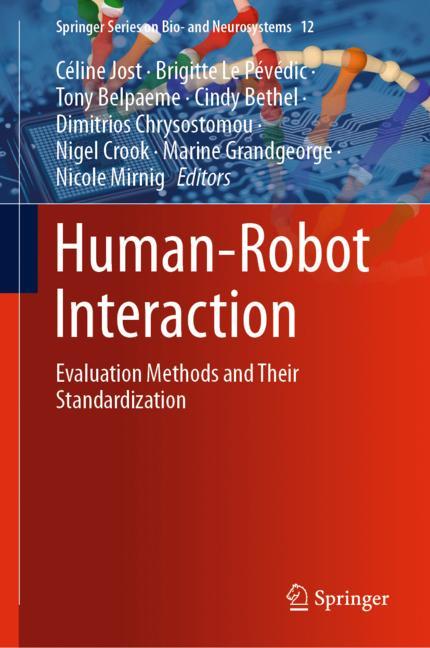
This book offers the first comprehensive yet critical overview of methods used to evaluate interaction between humans and social robots. It reviews commonly used evaluation methods, and shows that they are not always suitable for this purpose. Using representative case studies, the book identifies good and bad practices for evaluating human-robot interactions and proposes new standardized processes as well as recommendations, carefully developed on the basis of intensive discussions between specialists in various HRI-related disciplines, e.g. psychology, ethology, ergonomics, sociology, ethnography, robotics, and computer science. The book is the result of a close, long-standing collaboration between the editors and the invited contributors, including, but not limited to, their inspiring discussions at the workshop on Evaluation Methods Standardization for Human-Robot Interaction (EMSHRI), which have been organized yearly since 2015. By highlighting and weighing good and bad practices in evaluation design for HRI, the book will stimulate the scientific community to search for better solutions, take advantages of interdisciplinary collaborations, and encourage the development of new standards to accommodate the growing presence of robots in the day-to-day and social lives of human beings.
Similar products
 50 Years of Philosophy and Medicine
from $107.30
50 Years of Philosophy and Medicine
from $107.30
 Understanding Cybersecurity Law and Digital Privacy
from $122.63
Understanding Cybersecurity Law and Digital Privacy
from $122.63
 Decisions in International Trade and Logistics
from $122.63
Decisions in International Trade and Logistics
from $122.63
 Advances in Economic Measurement
from $122.63
Advances in Economic Measurement
from $122.63
 Nanomaterials
from $137.96
Nanomaterials
from $137.96
 Sustainable Scaffolds-based Strategies in Tissue Engineering and Regenerative Medicine
from $162.87
Sustainable Scaffolds-based Strategies in Tissue Engineering and Regenerative Medicine
from $162.87
 Narratives in Educational Research
from $162.87
Narratives in Educational Research
from $162.87
 Environmental Biology of the Young Chinese Sturgeon
from $210.78
Environmental Biology of the Young Chinese Sturgeon
from $210.78