
Human-Computer Interaction – INTERACT 2019
☆☆☆☆☆
(0 reviews)

Lowest price (incl. delivery)
13 518,00 JPY
Typical price6 797,25 PLN
Lowest (90 days)79,50 PLN
Offers2
Last updated4 zile în urmă
Price history (90 days)
Full history
2026-08-08
2026-08-15
| Actualizat la | Preț |
|---|---|
| 2026-08-08 | 79,50 |
| 2026-08-15 | 13 499,00 |
| Vânzător | Product price | Delivery | Total | Disponibilitate | Updated | |
|---|---|---|---|---|---|---|
| SP SpringerNatureLink Shop INT | 13 499,00 JPY | 19,00 JPY | 13 518,00 JPY | Disponibil | 4 zile în urmă | View offer |
| SP Springer Nature Author | 111,50 EUR | 19,00 EUR | 130,50 EUR | Disponibil | 1 săptămână în urmă | View offer |
Prețurile și disponibilitatea se pot modifica. Ultima actualizare: 15.08.2026 07:59.
EAN
9783030293819
Springer Nature
0,0
☆☆☆☆☆
0 reviews
5★
0%
4★
0%
3★
0%
2★
0%
1★
0%
Product reviews
No reviews yet — be the first!
The four-volume set LNCS 11746–11749 constitutes the proceedings of the 17th IFIP TC 13 International Conference on Human-Computer Interaction, INTERACT 2019, held in Paphos, Cyprus, in September 2019. The total of 111 full papers presented together with 55 short papers and 48 other papers in these books was carefully reviewed and selected from 385 submissions. The contributions are organized in topical sections named: Part I: accessibility design principles; assistive technology for cognition and neurodevelopment disorders; assistive technology for mobility and rehabilitation; assistive technology for visually impaired; co-design and design methods; crowdsourcing and collaborative work; cyber security and e-voting systems; design methods; design principles for safety/critical systems. Part II: e-commerce; education and HCI curriculum I; education and HCI curriculum II; eye-gaze interaction; games and gamification; human-robot interaction and 3D interaction;information visualization; information visualization and augmented reality; interaction design for culture and development I. Part III: interaction design for culture and development II; interaction design for culture and development III; interaction in public spaces; interaction techniques for writing and drawing; methods for user studies; mobile HCI; personalization and recommender systems; pointing, touch, gesture and speech-based interaction techniques; social networks and social media interaction. Part IV: user modelling and user studies; user experience; users’ emotions, feelings and perception; virtual and augmented reality I; virtual and augmented reality II; wearable and tangible interaction; courses; demonstrations and installations; industry case studies; interactive posters; panels; workshops. The chapter ‘Analyzing Accessibility Barriers Using Cost-Benefit Analysis to Design Reliable Navigation Services for Wheelchair Users’ is open access under a CC BY 4.0 license.
Similar products
 Gamma Knife Neurosurgery in the Management of Intracranial Disorders
from $210.78
Gamma Knife Neurosurgery in the Management of Intracranial Disorders
from $210.78
 SDGs in Construction Economics and Organization
from $210.78
SDGs in Construction Economics and Organization
from $210.78
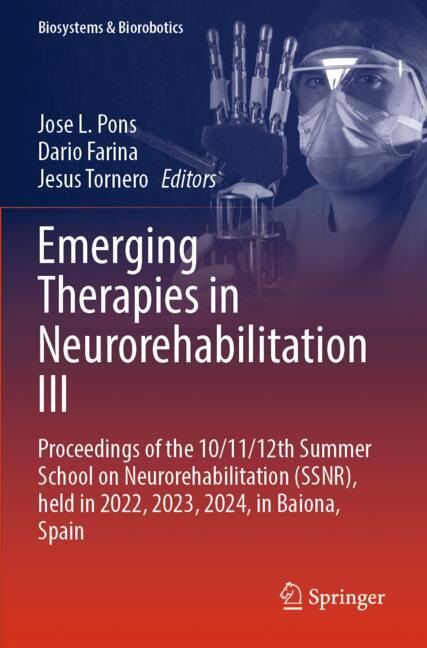 Emerging Therapies in Neurorehabilitation III
from $210.78
Emerging Therapies in Neurorehabilitation III
from $210.78
 Ground Improvement Techniques
from $220.36
Ground Improvement Techniques
from $220.36
 Anomaly Detection in Video Surveillance
from $220.36
Anomaly Detection in Video Surveillance
from $220.36
 Mechanism and Machine Science
from $287.42
Mechanism and Machine Science
from $287.42
 Protein-Protein Interactions as New Drug Targets
from $287.42
Protein-Protein Interactions as New Drug Targets
from $287.42
 Proceedings of the 7th International Conference of Transportation Research Group of India (CTRG 2023
from $287.42
Proceedings of the 7th International Conference of Transportation Research Group of India (CTRG 2023
from $287.42