
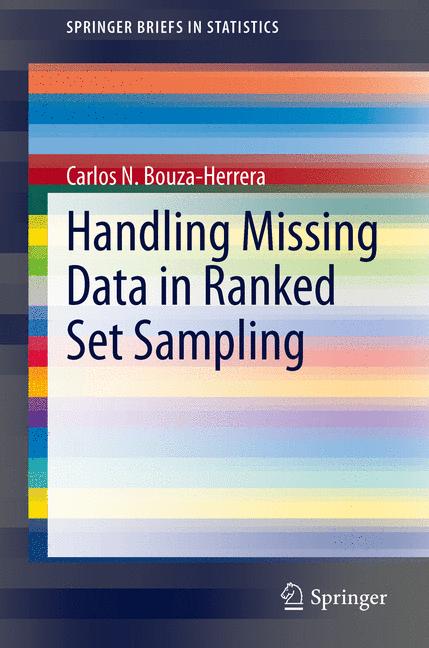
Handling Missing Data in Ranked Set Sampling
☆☆☆☆☆
(0 reviews)
Lowest price (incl. delivery)
7 178,00 JPY
Typical price532,10 PLN
Lowest (90 days)35,99 PLN
Offers6
Last updated1 săptămână în urmă
Price history (90 days)
Full history
2026-08-08
2026-08-15
| Actualizat la | Preț |
|---|---|
| 2026-08-08 | 39,99 |
| 2026-08-14 | 35,99 |
| 2026-08-15 | 51,99 |
| Vânzător | Product price | Delivery | Total | Disponibilitate | Updated | |
|---|---|---|---|---|---|---|
| SP SpringerNatureLink Shop INT | 7 149,00 JPY | 29,00 JPY | 7 178,00 JPY | Disponibil | 5 zile în urmă | View offer |
| SP Springer Nature Author | 7 149,00 JPY | 25,00 JPY | 7 174,00 JPY | Disponibil | 1 săptămână în urmă | View offer |
| SP SpringerNatureLink Shop INT | 49,99 USD | 19,00 USD | 68,99 USD | Disponibil | 5 zile în urmă | View offer |
| SP SpringerNatureLink Shop INT | 54,99 USD | free | 54,99 USD | Disponibil | 5 zile în urmă | View offer |
| SP SpringerNatureLink Shop INT | 54,99 USD | free | 54,99 USD | Disponibil | 5 zile în urmă | View offer |
| SP SpringerNatureLink Shop INT | 54,99 EUR | free | 54,99 EUR | Disponibil | 5 zile în urmă | View offer |
Prețurile și disponibilitatea se pot modifica. Ultima actualizare: 08.08.2026 23:09.
0,0
☆☆☆☆☆
0 reviews
5★
0%
4★
0%
3★
0%
2★
0%
1★
0%
Product reviews
No reviews yet — be the first!
The existence of missing observations is a very important aspect to be considered in the application of survey sampling, for example. In human populations they may be caused by a refusal of some interviewees to give the true value for the variable of interest. Traditionally, simple random sampling is used to select samples. Most statistical models are supported by the use of samples selected by means of this design. In recent decades, an alternative design has started being used, which, in many cases, shows an improvement in terms of accuracy compared with traditional sampling. It is called Ranked Set Sampling (RSS). A random selection is made with the replacement of samples, which are ordered (ranked). The literature on the subject is increasing due to the potentialities of RSS for deriving more effective alternatives to well-established statistical models. In this work, the use of RSS sub-sampling for obtaining information among the non respondents and different imputation procedures are considered. RSS models are developed as counterparts of well-known simple random sampling (SRS) models. SRS and RSS models for estimating the population using missing data are presented and compared both theoretically and using numerical experiments.
Similar products
 50 Years of Philosophy and Medicine
from $107.30
50 Years of Philosophy and Medicine
from $107.30
 Understanding Cybersecurity Law and Digital Privacy
from $122.63
Understanding Cybersecurity Law and Digital Privacy
from $122.63
 Decisions in International Trade and Logistics
from $122.63
Decisions in International Trade and Logistics
from $122.63
 Advances in Economic Measurement
from $122.63
Advances in Economic Measurement
from $122.63
 Nanomaterials
from $137.96
Nanomaterials
from $137.96
 Sustainable Scaffolds-based Strategies in Tissue Engineering and Regenerative Medicine
from $162.87
Sustainable Scaffolds-based Strategies in Tissue Engineering and Regenerative Medicine
from $162.87
 Narratives in Educational Research
from $162.87
Narratives in Educational Research
from $162.87
 Environmental Biology of the Young Chinese Sturgeon
from $210.78
Environmental Biology of the Young Chinese Sturgeon
from $210.78