
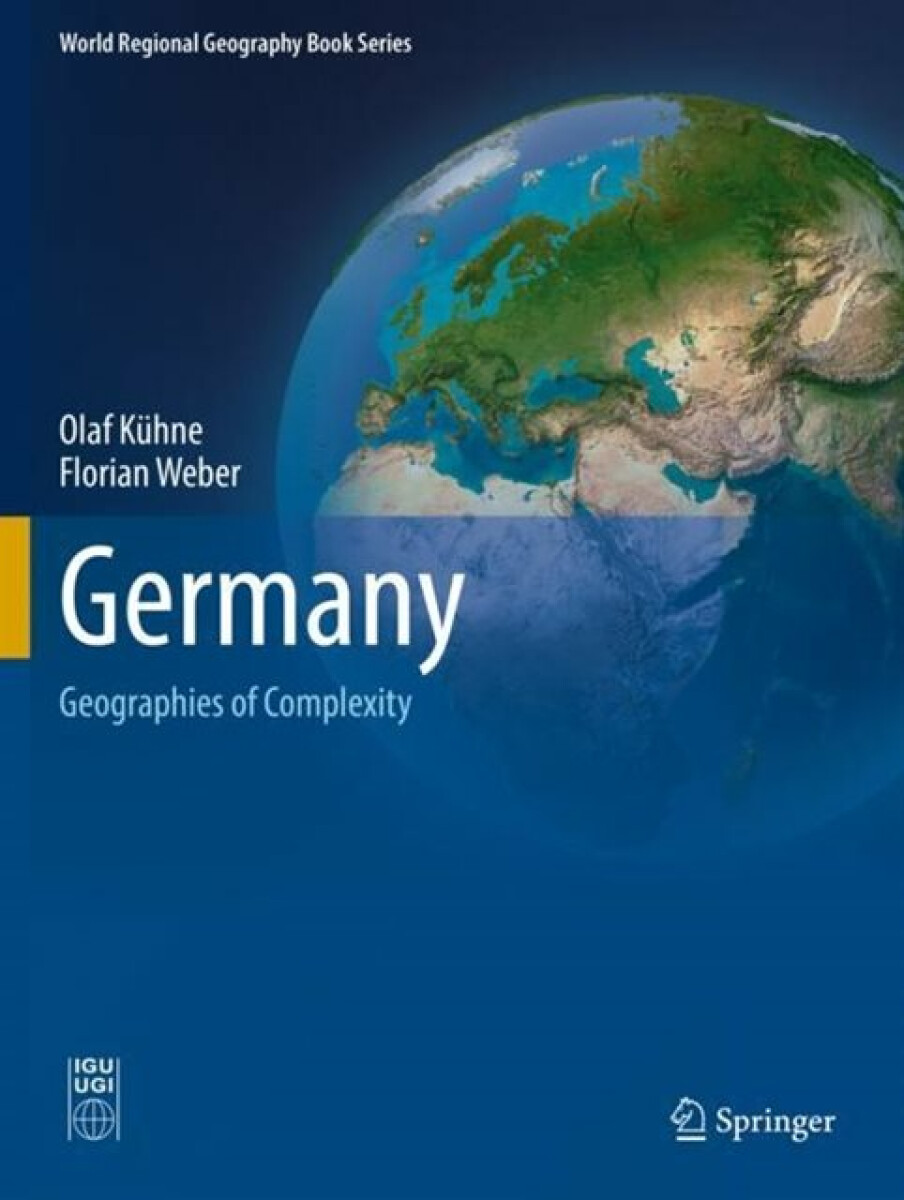
Germany - Florian Weber, Olaf Kuhne
☆☆☆☆☆
(0 reviews)
Lowest price (incl. delivery)
85,15 EUR
Typical price79,54 PLN
Lowest (90 days)66,15 PLN
Offers3
Last updated5 zile în urmă
Price history (90 days)
Full history
2026-08-08
2026-08-15
| Actualizat la | Preț |
|---|---|
| 2026-08-08 | 66,15 |
| 2026-08-15 | 66,15 |
| Vânzător | Product price | Delivery | Total | Disponibilitate | Updated | |
|---|---|---|---|---|---|---|
| SP SpringerNatureLink Shop INT | 66,15 EUR | 19,00 EUR | 85,15 EUR | Disponibil | 6 zile în urmă | View offer |
| SP Springer Nature Author | 87,99 EUR | 25,00 EUR | 112,99 EUR | Disponibil | 1 săptămână în urmă | View offer |
| KN KnihyDobrovsky.cz | 2 310,00 CZK | 25,00 CZK | 2 335,00 CZK | Disponibil | 5 zile în urmă | View offer |
Prețurile și disponibilitatea se pot modifica. Ultima actualizare: 16.08.2026 02:48.
EAN
9783030929558
Springer Nature Switzerland AG
0,0
☆☆☆☆☆
0 reviews
5★
0%
4★
0%
3★
0%
2★
0%
1★
0%
Product reviews
No reviews yet — be the first!
This book addresses the highly differentiated spatial, social, cultural and demographic structure(s) of Germany, with a particular focus on the reciprocal relations between different levels of spatial development. The historical development of Germany serves as a background in order to provide context for the development of spatially relevant ideas and ideals (whether in relation to politics, landscape, or culture). In this regard, questions of divergence and convergence become highly salient. The book makes the complexity of spatial and social developments in Germany comprehensible. The neopragmatic approach adopted here allows bringing together different theoretical strands while providing a basis for independent regional geographic research at the same time. Beginning with an overview of the physical structures of Germany which provides the material point of departure for the societal development of Germany, key aspects of the German history are discussed. Particular attention is paid to the reciprocal influence between material substrate and notions of landscape. Here, specific ‘German’ trajectories of aesthetic and normative conceptions of landscape become clear. A common theme throughout the book are questions of divergence and of efforts towards convergence, which become evident when considering past and present economic, political, and demographic developments. Efforts to tackle current challenges, such as adapting to climate change and mitigating it, or securing raw materials, also become apparent. The complexity of spatial processes in Germany is illustrated in case study regions dealing with the challenges of structural change in traditional industrial regions (such as the Ruhr area), or e.g. efforts of Berlin to position and find itself as the capital of a unified Germany. Overall, the book shows how theory-driven regional geographic research can make spatiotemporal complexities tangible and comprehensible.
Similar products
 50 Years of Philosophy and Medicine
from $107.30
50 Years of Philosophy and Medicine
from $107.30
 Understanding Cybersecurity Law and Digital Privacy
from $122.63
Understanding Cybersecurity Law and Digital Privacy
from $122.63
 Decisions in International Trade and Logistics
from $122.63
Decisions in International Trade and Logistics
from $122.63
 Advances in Economic Measurement
from $122.63
Advances in Economic Measurement
from $122.63
 Nanomaterials
from $137.96
Nanomaterials
from $137.96
 Sustainable Scaffolds-based Strategies in Tissue Engineering and Regenerative Medicine
from $162.87
Sustainable Scaffolds-based Strategies in Tissue Engineering and Regenerative Medicine
from $162.87
 Narratives in Educational Research
from $162.87
Narratives in Educational Research
from $162.87
 Environmental Biology of the Young Chinese Sturgeon
from $210.78
Environmental Biology of the Young Chinese Sturgeon
from $210.78