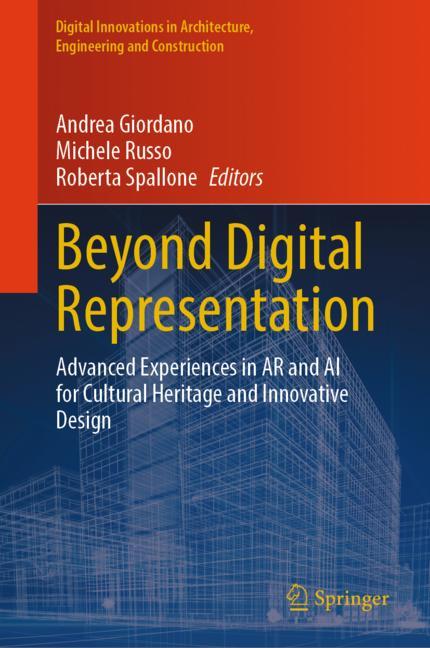
Beyond Digital Representation
☆☆☆☆☆
(0 reviews)
EAN: 9783031361555
Lowest price (incl. delivery)
25 167,00 JPY
- Offers
- 3
- Last updated
- 3 luni în urmă
| Vânzător | Product price | Delivery | Total | Disponibilitate | Updated | |
|---|---|---|---|---|---|---|
| SpringerNatureLink Shop INT | Product price 25 167,00 JPY | Delivery free | Total 25 167,00 JPY | Disponibilitate Disponibil | Updated 3 luni în urmă | View offer |
| SpringerNatureLink Shop INT | Product price 208,50 EUR | Delivery 15,00 EUR | Total 223,50 EUR | Disponibilitate Disponibil | Updated 3 luni în urmă | View offer |
| Springer Nature Author | Product price 25 167,00 JPY ▲ 11 970,5% | Delivery 29,00 JPY | Total 25 196,00 JPY | Disponibilitate Disponibil | Updated 3 luni în urmă | View offer |
Prețurile și disponibilitatea se pot modifica. Ultima actualizare: 08.08.2026 23:37.
EAN
9783031361555
Springer Nature
0,0
☆☆☆☆☆
0 reviews
5★
0%
4★
0%
3★
0%
2★
0%
1★
0%
Product reviews
No reviews yet — be the first!
This book collects contributions which showcase the impact of new augmented reality (AR) and artificial intelligence (AI) technologies considered jointly in the fields of cultural heritage and innovative design. AR is an alternative path of analysis and communication if applied to several fields of research, in particular if related to space and artifacts in it. This happens because the neural network development strengthens the relationship between augmented reality and artificial intelligence, creating processes close to human thought in shorter times. In the last years, the AR/AI expansion and the future scenarios have raised a deep trans-disciplinary speculation. The disciplines of representation (drawing, surveying, visual communication), as a convergence place of multidisciplinary theoretical and applicative studies related to architecture, city, environment, tangible and intangible cultural heritage, are called to contribute to the international debate. The book chapters dealwith augmented reality and artificial intelligence, analyzing their connections as research tools for knowing the environment. In particular, the topics focus on the intersection between real and virtual world and on the heuristic role of drawing in the enhancement and management of cultural heritage, in planning and monitoring the architecture, the environment, or the infrastructures. Scientists involved in AR and AI research applied separately or together in the field of cultural heritage, architectural design, urban planning, and infrastructures analysis, as well as members of public and private organizations make up interdisciplinary groups that fuel the discussion focusing on the priorities and aims of the research related to the disciplines of representation.
Similar products