
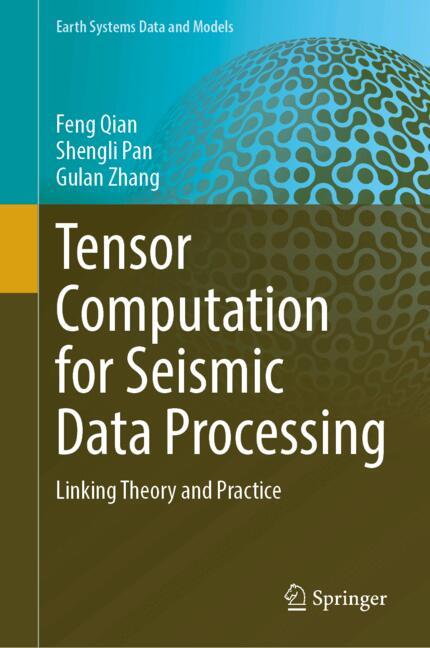
Tensor Computation for Seismic Data Processing
☆☆☆☆☆
(0 reviews)
Lowest price (incl. delivery)
190,19 EUR
Typical price111,90 PLN
Lowest (90 days)44,85 PLN
Offers2
Last updatedhá 1 dia
| Vendedor | Product price | Delivery | Total | Disponibilidade | Updated | |
|---|---|---|---|---|---|---|
| VI VitalSource | 171,19 EUR | 19,00 EUR | 190,19 EUR | Disponível | há 1 dia | View offer |
| SP Springer Nature Author | 186,99 EUR | 25,00 EUR | 211,99 EUR | Disponível | há 1 dia | View offer |
Os preços e a disponibilidade podem mudar. Última Atualização: 08.08.2026 22:44.
EAN
9783031788994
Springer Nature
0,0
☆☆☆☆☆
0 reviews
5★
0%
4★
0%
3★
0%
2★
0%
1★
0%
Product reviews
No reviews yet — be the first!
This book aims to provide a comprehensive understanding of tensor computation and its applications in seismic data analysis, exclusively catering to seasoned researchers, graduate students, and industrial engineers alike. Tensor emerges as a natural representation of multi-dimensional modern seismic data, and tensor computation can help prevent possible harm to the multi-dimensional geological structure of the subsurface that occurred in classical seismic data analysis. It delivers a wealth of theoretical, computational, technical, and experimental details, presenting an engineer's perspective on tensor computation and an extensive investigation of tensor-based seismic data analysis techniques. Embark on a transformative exploration of seismic data processing—unlock the potential of tensor computation and reshape your approach to high-dimensional geological structures. The discussion begins with foundational chapters, providing a solid background in both seismic data processing and tensor computation. The heart of the book lies in its seven chapters on tensor-based seismic data analysis methods. From structured low-tubal-rank tensor completion to cutting-edge techniques like tensor deep learning and tensor convolutional neural networks, each method is meticulously detailed. The superiority of tensor-based data analysis methods over traditional matrix-based data analysis approaches is substantiated through synthetic and real field examples, showcasing their prowess in handling high-dimensional modern seismic data. Notable chapters delve into seismic noise suppression, seismic data interpolation, and seismic data super-resolution using advanced tensor models. The final chapter provides a cohesive summary of the conclusion and future research directions, ensuring readers facilitate a thorough understanding of tensor computation applications in seismic data processing. The appendix includes a hatful of information on existing tensor computation software, enhancing the book's practical utility.