
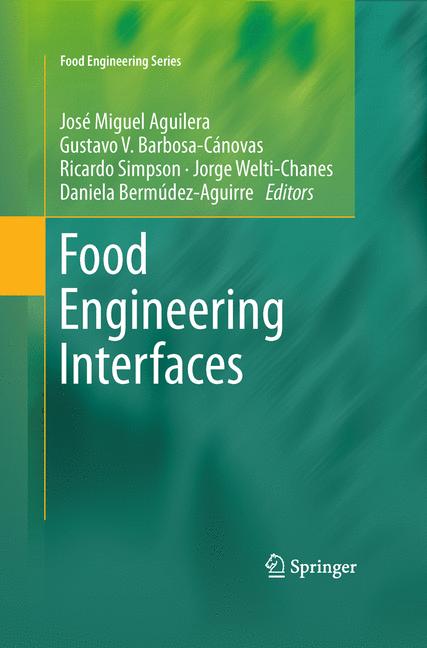
Food Engineering Interfaces
☆☆☆☆☆
(0 reviews)
Lowest price (incl. delivery)
28 599,00 JPY
Typical price4 173,80 PLN
Lowest (90 days)179,99 PLN
Offers7
Last updatedhá 1 semana
Price history (90 days)
Full history
2026-08-08
2026-08-15
| Atualizado em | Preço |
|---|---|
| 2026-08-08 | 179,99 |
| 2026-08-15 | 207,99 |
| Vendedor | Product price | Delivery | Total | Disponibilidade | Updated | |
|---|---|---|---|---|---|---|
| SP SpringerNatureLink Shop INT | 28 599,00 JPY | free | 28 599,00 JPY | Disponível | há 3 dias | View offer |
| SP Springer Nature Author | 28 599,00 JPY | 29,00 JPY | 28 628,00 JPY | Disponível | há 1 semana | View offer |
| SP SpringerNatureLink Shop INT | 199,99 USD | 19,00 USD | 218,99 USD | Disponível | há 3 dias | View offer |
| SP SpringerNatureLink Shop INT | 219,99 USD | 15,00 USD | 234,99 USD | Disponível | há 3 dias | View offer |
| SP SpringerNatureLink Shop INT | 219,99 USD | 19,00 USD | 238,99 USD | Disponível | há 3 dias | View offer |
| SP SpringerNatureLink Shop INT | 219,99 USD | 19,00 USD | 238,99 USD | Disponível | há 3 dias | View offer |
| SP SpringerNatureLink Shop INT | 236,00 EUR | 15,00 EUR | 251,00 EUR | Disponível | há 3 dias | View offer |
Os preços e a disponibilidade podem mudar. Última Atualização: 08.08.2026 23:38.
0,0
☆☆☆☆☆
0 reviews
5★
0%
4★
0%
3★
0%
2★
0%
1★
0%
Product reviews
No reviews yet — be the first!
The International Conference on Food Engineering is held every four years and draws global participation. ICEF 10 will be held in April 2008 in Chile with the theme of food engineering at interfaces. This will not be a typical proceedings with uneven contributions. Papers will be solicited from each plenary speaker plus two or three invited speakers from each topic and the goal is to publish a book that conveys the interdisciplinary spirit of the meeting as well as covers the topics in depth, creating a strong reference work. The idea is to explore how food engineers have to be prepared in years ahead not only to perform in their normal activities but also to engage in new challenges and opportunities that will make the profession more attractive, responsive, and able to create a larger impact. These challenges and opportunities are within the profession and at interfaces with other areas. A major role of engineers is to incorporate new knowledge into the profession and respond to practical needs. The goal is to explore how food engineers are integrating developments in the basic sciences of physics and chemistry, nutrition, informatics, material sciences, genomics (and other -omics), quality and safety, consumer behavior and gastronomy. Interfaces with the environment, the business sector, regulations and export markets are also important to consider.
Similar products
 50 Years of Philosophy and Medicine
from $107.30
50 Years of Philosophy and Medicine
from $107.30
 Understanding Cybersecurity Law and Digital Privacy
from $122.63
Understanding Cybersecurity Law and Digital Privacy
from $122.63
 Decisions in International Trade and Logistics
from $122.63
Decisions in International Trade and Logistics
from $122.63
 Advances in Economic Measurement
from $122.63
Advances in Economic Measurement
from $122.63
 Nanomaterials
from $137.96
Nanomaterials
from $137.96
 Sustainable Scaffolds-based Strategies in Tissue Engineering and Regenerative Medicine
from $162.87
Sustainable Scaffolds-based Strategies in Tissue Engineering and Regenerative Medicine
from $162.87
 Narratives in Educational Research
from $162.87
Narratives in Educational Research
from $162.87
 Environmental Biology of the Young Chinese Sturgeon
from $210.78
Environmental Biology of the Young Chinese Sturgeon
from $210.78