
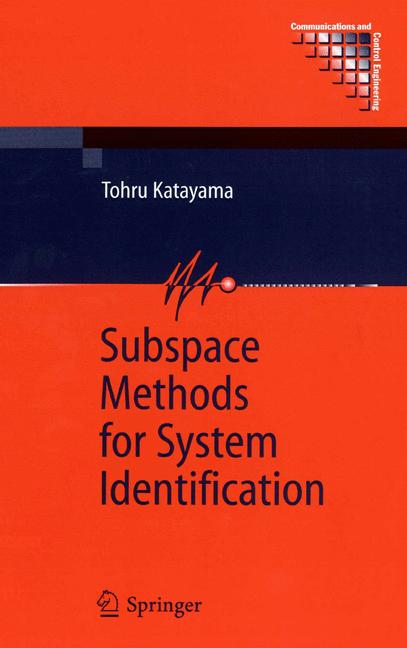
Subspace Methods for System Identification
☆☆☆☆☆
(0 opinii)
Najniższa cena (z dostawą)
24 083,00 JPY
Typowa cena6 948,68 PLN
Najniższa (90 dni)177,46 PLN
Liczba ofert4
Ostatnia aktualizacja1 tydzień temu
Historia ceny (90 dni)
Pełna historia
2026-08-08
2026-08-15
| Zaktualizowano | Cena |
|---|---|
| 2026-08-08 | 179,98 |
| 2026-08-15 | 177,46 |
| Sprzedawca | Cena produktu | Dostawa | Razem | Dostępność | Aktualizacja | |
|---|---|---|---|---|---|---|
| SP SpringerNatureLink Shop INT | 24 054,00 JPY | 29,00 JPY | 24 083,00 JPY | Dostępny | 3 dni temu | Zobacz ofertę |
| SP Springer Nature Author | 24 054,00 JPY | 19,00 JPY | 24 073,00 JPY | Dostępny | 1 tydzień temu | Zobacz ofertę |
| SP SpringerNatureLink Shop INT | 168,21 USD | 29,00 USD | 197,21 USD | Dostępny | 3 dni temu | Zobacz ofertę |
| SP SpringerNatureLink Shop INT | 198,50 EUR | 19,00 EUR | 217,50 EUR | Dostępny | 3 dni temu | Zobacz ofertę |
Ceny i dostępność mogą ulec zmianie. Ostatnia aktualizacja: 08.08.2026 23:36.
EAN
9781849969888
Springer Nature
0,0
☆☆☆☆☆
0 opinii
5★
0%
4★
0%
3★
0%
2★
0%
1★
0%
Opinie o produkcie
Brak opinii — bądź pierwszy!
An in-depth introduction to subspace methods for system identification in discrete-time linear systems thoroughly augmented with advanced and novel results, this text is structured into three parts. Part I deals with the mathematical preliminaries: numerical linear algebra; system theory; stochastic processes; and Kalman filtering. Part II explains realization theory as applied to subspace identification. Stochastic realization results based on spectral factorization and Riccati equations, and on canonical correlation analysis for stationary processes are included. Part III demonstrates the closed-loop application of subspace identification methods. Subspace Methods for System Identification is an excellent reference for researchers and a useful text for tutors and graduate students involved in control and signal processing courses. It can be used for self-study and will be of interest to applied scientists or engineers wishing to use advanced methods in modeling and identification of complex systems.
Podobne produkty
 50 Years of Philosophy and Medicine
od $107.30
50 Years of Philosophy and Medicine
od $107.30
 Understanding Cybersecurity Law and Digital Privacy
od $122.63
Understanding Cybersecurity Law and Digital Privacy
od $122.63
 Decisions in International Trade and Logistics
od $122.63
Decisions in International Trade and Logistics
od $122.63
 Advances in Economic Measurement
od $122.63
Advances in Economic Measurement
od $122.63
 Nanomaterials
od $137.96
Nanomaterials
od $137.96
 Sustainable Scaffolds-based Strategies in Tissue Engineering and Regenerative Medicine
od $162.87
Sustainable Scaffolds-based Strategies in Tissue Engineering and Regenerative Medicine
od $162.87
 Narratives in Educational Research
od $162.87
Narratives in Educational Research
od $162.87
 Environmental Biology of the Young Chinese Sturgeon
od $210.78
Environmental Biology of the Young Chinese Sturgeon
od $210.78