
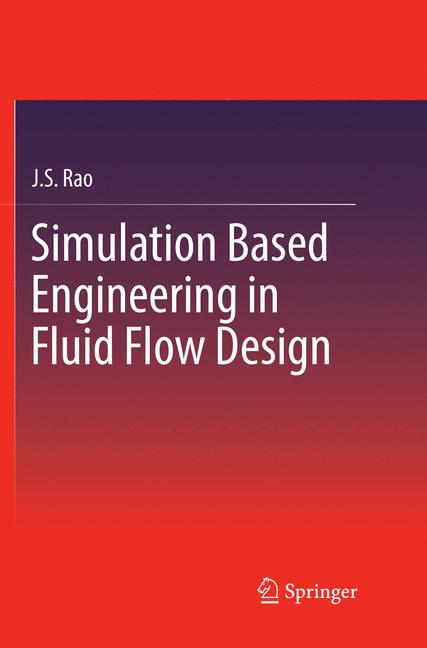
Simulation Based Engineering in Fluid Flow Design
☆☆☆☆☆
(0 opinii)
Najniższa cena (z dostawą)
14 324,00 JPY
Typowa cena1 018,44 PLN
Najniższa (90 dni)71,50 PLN
Liczba ofert6
Ostatnia aktualizacja1 tydzień temu
Historia ceny (90 dni)
Pełna historia
2026-08-08
2026-08-15
| Zaktualizowano | Cena |
|---|---|
| 2026-08-08 | 84,99 |
| 2026-08-15 | 71,50 |
| Sprzedawca | Cena produktu | Dostawa | Razem | Dostępność | Aktualizacja | |
|---|---|---|---|---|---|---|
| SP SpringerNatureLink Shop INT | 14 299,00 JPY | 25,00 JPY | 14 324,00 JPY | Dostępny | 3 dni temu | Zobacz ofertę |
| SP Springer Nature Author | 14 299,00 JPY | 19,00 JPY | 14 318,00 JPY | Dostępny | 1 tydzień temu | Zobacz ofertę |
| SP SpringerNatureLink Shop INT | 99,99 USD | 15,00 USD | 114,99 USD | Dostępny | 3 dni temu | Zobacz ofertę |
| SP SpringerNatureLink Shop INT | 109,99 USD | 29,00 USD | 138,99 USD | Dostępny | 3 dni temu | Zobacz ofertę |
| SP SpringerNatureLink Shop INT | 109,99 USD | 15,00 USD | 124,99 USD | Dostępny | 3 dni temu | Zobacz ofertę |
| SP SpringerNatureLink Shop INT | 118,00 EUR | 15,00 EUR | 133,00 EUR | Dostępny | 3 dni temu | Zobacz ofertę |
Ceny i dostępność mogą ulec zmianie. Ostatnia aktualizacja: 08.08.2026 23:20.
0,0
☆☆☆☆☆
0 opinii
5★
0%
4★
0%
3★
0%
2★
0%
1★
0%
Opinie o produkcie
Brak opinii — bądź pierwszy!
This volume offers a tool for High Performance Computing (HPC). A brief historical background on the subject is first given. Fluid Statics dealing with Pressure in fluids at rest, Buoyancy and Basics of Thermodynamics are next presented. The Finite Volume Method, the most convenient process for HPC, is explained in one-dimensional approach to diffusion with convection and pressure velocity coupling. Adiabatic, isentropic and supersonic flows in quasi-one dimensional flows in axisymmetric nozzles is considered before applying CFD solutions. Though the theory is restricted to one-dimensional cases, three-dimensional CFD examples are also given. Lastly, nozzle flows with normal shocks are presented using turbulence models. Worked examples and exercises aregiven in each chapter. Fluids transport thermal energy for its conversion to kinetic energy, thus playing a major role that is central to all heat engines. With the advent of rotating machinery in the 20th century, Fluid Engineering was developed in the form of hydraulics and hydrodynamics and adapted in engineering Schools across the world until recent times. With the High Performance Computing (HPC) in recent years, Simulation Based Engineering Science (SBES) has gradually replaced the conventional approach in Fluid Flow Design bringing Science directly into Engineering without approximations. Hence this SpringerBrief in Applied Sciences and Technology. This book brings SBES to an entry level allowing young students to quickly adapt to modern design practices.
Podobne produkty
 50 Years of Philosophy and Medicine
od $107.30
50 Years of Philosophy and Medicine
od $107.30
 Understanding Cybersecurity Law and Digital Privacy
od $122.63
Understanding Cybersecurity Law and Digital Privacy
od $122.63
 Decisions in International Trade and Logistics
od $122.63
Decisions in International Trade and Logistics
od $122.63
 Advances in Economic Measurement
od $122.63
Advances in Economic Measurement
od $122.63
 Nanomaterials
od $137.96
Nanomaterials
od $137.96
 Sustainable Scaffolds-based Strategies in Tissue Engineering and Regenerative Medicine
od $162.87
Sustainable Scaffolds-based Strategies in Tissue Engineering and Regenerative Medicine
od $162.87
 Narratives in Educational Research
od $162.87
Narratives in Educational Research
od $162.87
 Environmental Biology of the Young Chinese Sturgeon
od $210.78
Environmental Biology of the Young Chinese Sturgeon
od $210.78