
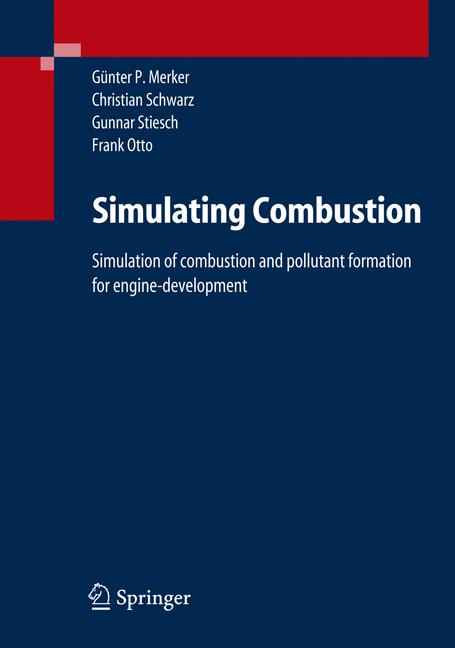
Simulating Combustion
☆☆☆☆☆
(0 opinii)
Najniższa cena (z dostawą)
118,50 GBP
Typowa cena3 091,54 PLN
Najniższa (90 dni)117,69 PLN
Liczba ofert2
Ostatnia aktualizacja2 dni temu
| Sprzedawca | Cena produktu | Dostawa | Razem | Dostępność | Aktualizacja | |
|---|---|---|---|---|---|---|
| SP SpringerNatureLink Shop INT | 103,50 GBP | 15,00 GBP | 118,50 GBP | Dostępny | 2 dni temu | Zobacz ofertę |
| SP Springer Nature Author | 21 449,00 JPY | 15,00 JPY | 21 464,00 JPY | Dostępny | 2 dni temu | Zobacz ofertę |
Ceny i dostępność mogą ulec zmianie. Ostatnia aktualizacja: 08.08.2026 23:28.
0,0
☆☆☆☆☆
0 opinii
5★
0%
4★
0%
3★
0%
2★
0%
1★
0%
Opinie o produkcie
Brak opinii — bądź pierwszy!
The numerical simulation of combustion processes in internal combustion engines, including also the formation of pollutants, has become increasingly important in the recent years, and today the simulation of those processes has already become an indispensable tool when - veloping new combustion concepts. While pure thermodynamic models are well-established tools that are in use for the simulation of the transient behavior of complex systems for a long time, the phenomenological models have become more important in the recent years and have also been implemented in these simulation programs. In contrast to this, the thr- dimensional simulation of in-cylinder combustion, i. e. the detailed, integrated and continuous simulation of the process chain injection, mixture formation, ignition, heat release due to combustion and formation of pollutants, has been significantly improved, but there is still a number of challenging problems to solve, regarding for example the exact description of s- processes like the structure of turbulence during combustion as well as the appropriate choice of the numerical grid. While chapter 2 includes a short introduction of functionality and operating modes of internal combustion engines, the basics of kinetic reactions are presented in chapter 3. In chapter 4 the physical and chemical processes taking place in the combustion chamber are described. Ch- ter 5 is about phenomenological multi-zone models, and in chapter 6 the formation of poll- ants is described.
Podobne produkty
 Patient Safety Coaching
od $91.97
Patient Safety Coaching
od $91.97
 Ethnography and Diversity
od $69.30
Ethnography and Diversity
od $69.30
 Smart Villages
od $91.97
Smart Villages
od $91.97
 Nuclear Non-Proliferation in International Law - Volume VI
od $91.97
Nuclear Non-Proliferation in International Law - Volume VI
od $91.97
 The Price of Freedom
od $91.97
The Price of Freedom
od $91.97
 Eco-Social Policy in the OECD and the World Bank
od $91.97
Eco-Social Policy in the OECD and the World Bank
od $91.97
 Special Topics in Policing
od $122.58
Special Topics in Policing
od $122.58
 Music from the Heart
od $91.97
Music from the Heart
od $91.97