
Shallow Learning vs. Deep Learning
☆☆☆☆☆
(0 opinii)
Najniższa cena (z dostawą)
21 449,00 JPY
Typowa cena2 601,01 PLN
Najniższa (90 dni)128,39 PLN
Liczba ofert6
Ostatnia aktualizacja1 tydzień temu
Historia ceny (90 dni)
Pełna historia
2026-08-08
2026-08-15
| Zaktualizowano | Cena |
|---|---|
| 2026-08-08 | 128,39 |
| 2026-08-15 | 128,39 |
| Sprzedawca | Cena produktu | Dostawa | Razem | Dostępność | Aktualizacja | |
|---|---|---|---|---|---|---|
| SP SpringerNatureLink Shop INT | 21 449,00 JPY | 0 zł | 21 449,00 JPY | Dostępny | 3 dni temu | Zobacz ofertę |
| SP Springer Nature Author | 21 449,00 JPY | 25,00 JPY | 21 474,00 JPY | Dostępny | 1 tydzień temu | Zobacz ofertę |
| SP SpringerNatureLink Shop INT | 149,99 USD | 25,00 USD | 174,99 USD | Dostępny | 3 dni temu | Zobacz ofertę |
| SP SpringerNatureLink Shop INT | 169,99 USD | 0 zł | 169,99 USD | Dostępny | 3 dni temu | Zobacz ofertę |
| SP SpringerNatureLink Shop INT | 169,99 USD | 0 zł | 169,99 USD | Dostępny | 3 dni temu | Zobacz ofertę |
| SP SpringerNatureLink Shop INT | 177,00 EUR | 15,00 EUR | 192,00 EUR | Dostępny | 3 dni temu | Zobacz ofertę |
Ceny i dostępność mogą ulec zmianie. Ostatnia aktualizacja: 08.08.2026 23:28.
0,0
☆☆☆☆☆
0 opinii
5★
0%
4★
0%
3★
0%
2★
0%
1★
0%
Opinie o produkcie
Brak opinii — bądź pierwszy!
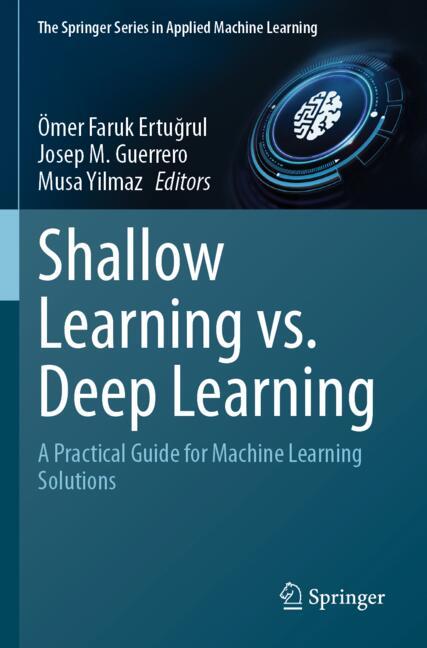
This book explores the ongoing debate between shallow and deep learning in the field of machine learning. It provides a comprehensive survey of machine learning methods, from shallow learning to deep learning, and examines their applications across various domains. Shallow Learning vs Deep Learning: A Practical Guide for Machine Learning Solutions emphasizes that the choice of a machine learning approach should be informed by the specific characteristics of the dataset, the operational environment, and the unique requirements of each application, rather than being influenced by prevailing trends. In each chapter, the book delves into different application areas, such as engineering, real-world scenarios, social applications, image processing, biomedical applications, anomaly detection, natural language processing, speech recognition, recommendation systems, autonomous systems, and smart grid applications. By comparing and contrasting the effectiveness of shallow and deep learning in these areas, the book provides a framework for thoughtful selection and application of machine learning strategies. This guide is designed for researchers, practitioners, and students who seek to deepen their understanding of when and how to apply different machine learning techniques effectively. Through comparative studies and detailed analyses, readers will gain valuable insights to make informed decisions in their respective fields.
Podobne produkty
 50 Years of Philosophy and Medicine
od $107.30
50 Years of Philosophy and Medicine
od $107.30
 Understanding Cybersecurity Law and Digital Privacy
od $122.63
Understanding Cybersecurity Law and Digital Privacy
od $122.63
 Decisions in International Trade and Logistics
od $122.63
Decisions in International Trade and Logistics
od $122.63
 Advances in Economic Measurement
od $122.63
Advances in Economic Measurement
od $122.63
 Nanomaterials
od $137.96
Nanomaterials
od $137.96
 Sustainable Scaffolds-based Strategies in Tissue Engineering and Regenerative Medicine
od $162.87
Sustainable Scaffolds-based Strategies in Tissue Engineering and Regenerative Medicine
od $162.87
 Narratives in Educational Research
od $162.87
Narratives in Educational Research
od $162.87
 Environmental Biology of the Young Chinese Sturgeon
od $210.78
Environmental Biology of the Young Chinese Sturgeon
od $210.78